Engineers Create 3D Printed Bio-Bots That Can Walk, Using Real Muscle Fiber

 There comes a time when technology can become quite scary. We’ve seen movies that depict times when biological robots have come about, in some cases devastating humanity and in other cases coming to our aid. The idea of biological robotics is one which can scare off some people, while exciting others.
Engineers and researchers at the University of Illinois at Urbana-Champaign, have gotten us one step closer to real, walking, biological robots, which they refer to as “bio-bots”.
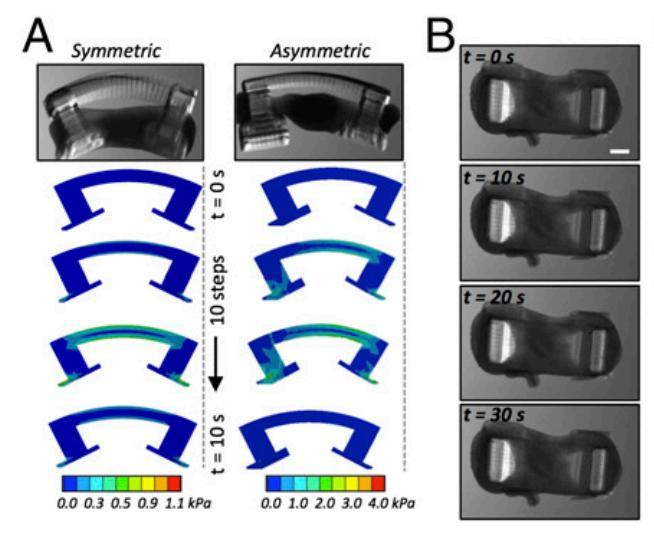
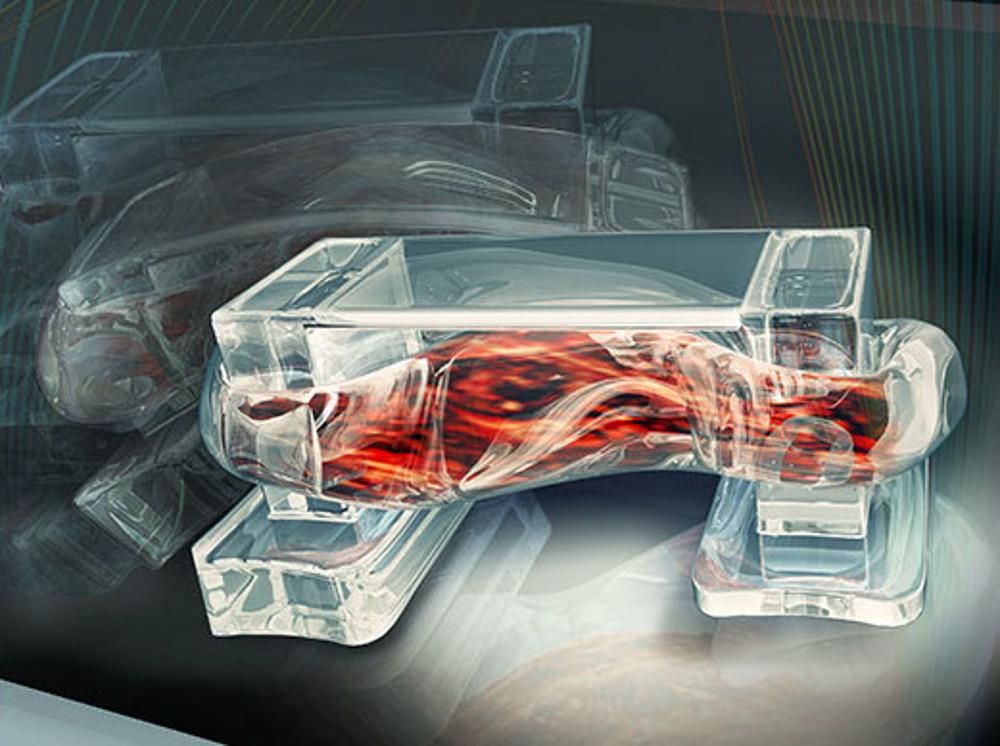
The team of researchers has used 3D printing, more specifically stereolithography, in order to 3D print what could be referred to as immitation bone, using hydrogels. The 3D printed hydrogels form a backbone for the bio-bots, which is flexible enough to act as though it consists of two joints.
In order to create these “bio-bots” the team of engineers anchored living muscle cells to the 3D printed hydrogels, using two specially designed posts that were incorporated into the design. These work like tendons, in that they attach the muscle to the bone.
“The structure of the bio-bot was fabricated from a synthetic hydrogel using stereolithographic 3D printing, which boasts a short fabrication time, potential for scalability, and spatial control, explains the report.”
This isn’t the first time that this group has utilized 3D printing to create similar bio-bots. In the past, they have developed walking bio-bots that used living heart cells, in order to cause muscular contraction. With heart cells, however, they are constantly contracting, thus scientists have no way of controlling them. In this latest project, the developers used skeletal muscle cells, which can be triggered by using electric pulses, thus allowing for them to more easily be controlled.
“Skeletal muscles cells are very attractive because you can pace them using external signals,” said study leader Rashid Bashir. “For example, you would use skeletal muscle when designing a device that you wanted to start functioning when it senses a chemical or when it received a certain signal. To us, it’s part of a design toolbox. We want to have different options that could be used by engineers to design these things.”
The next step for researches is the implementation of neurons, to allow the bio-bots to respond to outside stimuli, such as light or chemicals. The use of 3D printing really provides the engineers with the ability to create all different shapes and sizes to use for their bio-bot backbones. It also allows for different degrees of porosity, which could allow for even more advancements in this technology in the future.
The ultimate goal that researchers see for these bio-bots is for the creation of surgical robots, ‘smart’ implants, and aided drug delivery. “The idea of doing forward engineering with these cell-based structures is very exciting,” Bashir said. “Our goal is for these devices to be used as autonomous sensors. We want it to sense a specific chemical and move towards it, then release agents to neutralize the toxin, for example. Being in control of the actuation is a big step forward toward that goal.”
A bio-bot in action:
What do you think? Will 3D Printing eventually lead to the creation of more advanced bio-bots? Discuss in the 3D printed bio-bot forum thread on 3DPB.com.
Subscribe to Our Email Newsletter
Stay up-to-date on all the latest news from the 3D printing industry and receive information and offers from third party vendors.
Print Services
Upload your 3D Models and get them printed quickly and efficiently.











You May Also Like
Roboze Opens U.S. Aerospace & Defense Headquarters in El Segundo
The manufacturing sector is made up of clusters: “geographic concentrations of interconnected companies” that both cooperate and compete with each other. Of course, this is true about any sector in...
EOS Invests $3M In Its Texas Manufacturing & Logistics Facilities to Serve North American Customers
The trajectory of reshoring under President Trump has been largely a mixed bag so far. While tariffs still seem to be doing more harm than good to the U.S. domestic...
At AIAA SciTech 2026, 3D Printing Was Part of the Workflow — Part I
The AIAA SciTech Forum 2026 brought much of the aerospace community together in one place. With roughly 6,000 attendees, 115 exhibitors, 21 sponsors, and nearly 3,000 technical paper presentations, the...
€73 Million Investment Round into SWISSto12
SWISSto12 is on the move. I think that the firm owns one of the most promising and profitable applications for 3D printing, RF components, and it is showing real growth...