Creating Articulated Figures with the 3Doodled Joint


 Louis DeRosa is the store window artist at MoMA, and 3Doodler says they first discovered his work with their 3D printing pen when he posted a model of his dog Bindi on Twitter. They say they were “blown away by how easy Louis had made 3Doodling look only days after he received his pen,” and they began a mutual collaboration with the artist.
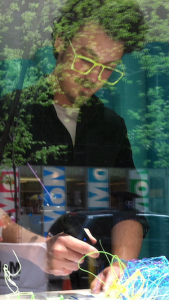
Louis DeRosa
He’s now an Artist in Residence for 3Doodler, and he’s done live demonstrations of the 3D printing pen during CES in Las Vegas and DesignerCon in LA.
“One of my favorite things about the 3Doodler is that every time I use it I come up with new methods to get the results I’m looking for,” DeRosa says. “I don’t anticipate that exploration ever ending with this product.”
He says that when he got his hands on his 3Doodler, he was determined to use it “just like I had used my sketchbooks and pencils.”
“I like to draw,” said DeRosa. “A lot. Growing up, I would fill sketchbooks with all sorts of characters. Oftentimes my favorite cartoon or comic book characters were the focus of my drawings, oftentimes it was characters that I designed myself.”
But after a few attempts to create a figure study with two arms, two legs, one body, and one head in a single solid piece, he wasn’t thrilled with his technique and found it “a little messy.”
Ongoing experimentation led him to refine his process, but he wanted to connect separate pieces and have them move independently.
To make it happen, he developed a technique he calls “The 3Doodled Joint.”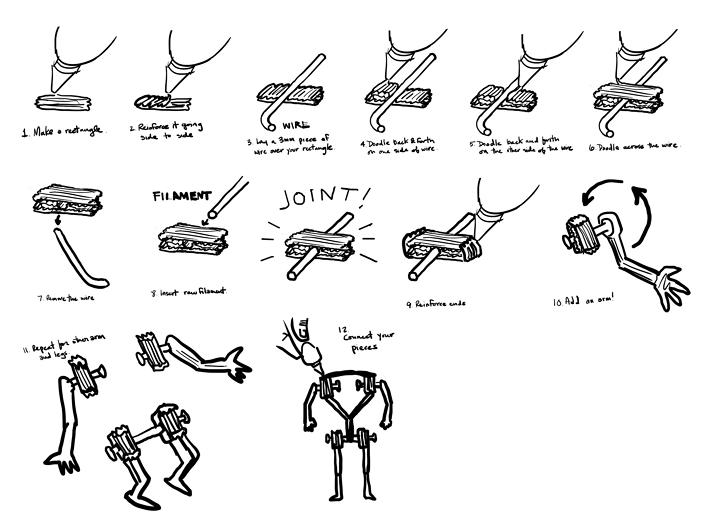
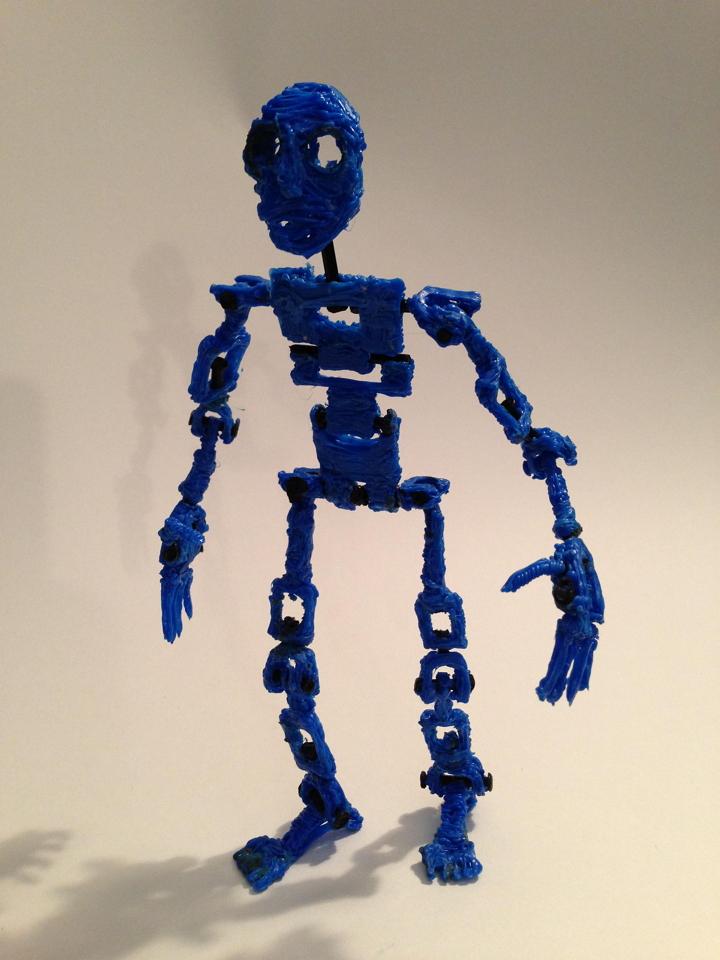
He now says that after a number of iterations, his 3Doodled joints for small action figures allow for the sort of movement which “is as effective as that of your typical store-bought action figure.”
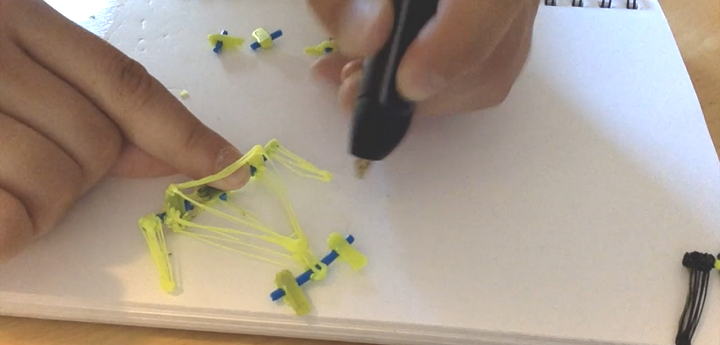
 According to DeRosa, making joints with the 3Doodler begins with ABS plastic rather than PLA as he says the ABS-based joints provide a bit more flexibility. Using a piece of 3mm metal wire which will be removed after the Doodle is complete, he builds a small rectangle of 1cm x 1/2 cm plastic on a base piece of sketchbook paper. He then lays down a piece of wire across the rectangle, holds it in place and begins to Doodle plastic filament in thick, tight mounds on either side of the wire.
As the plastic is built up on both sides of the wire to create a strong, smooth joint, he simply pulls the wire out the piece and pushes in a strand of unmelted plastic filament to replace it.
He cuts the filament to a preferred length and then caps the ends with more melted filament so that it can’t be pulled loose, and voilà! The joint is ready. You can check out his full step-by-step process at 3Doodler.
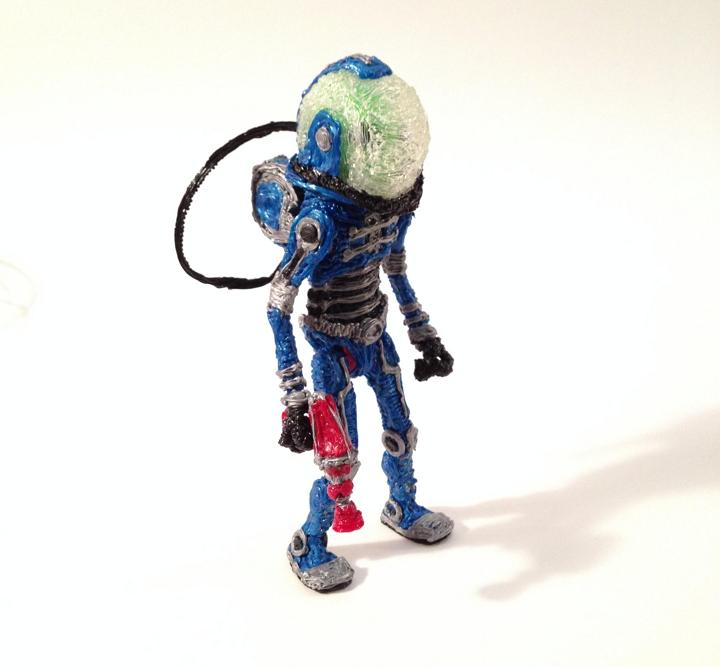
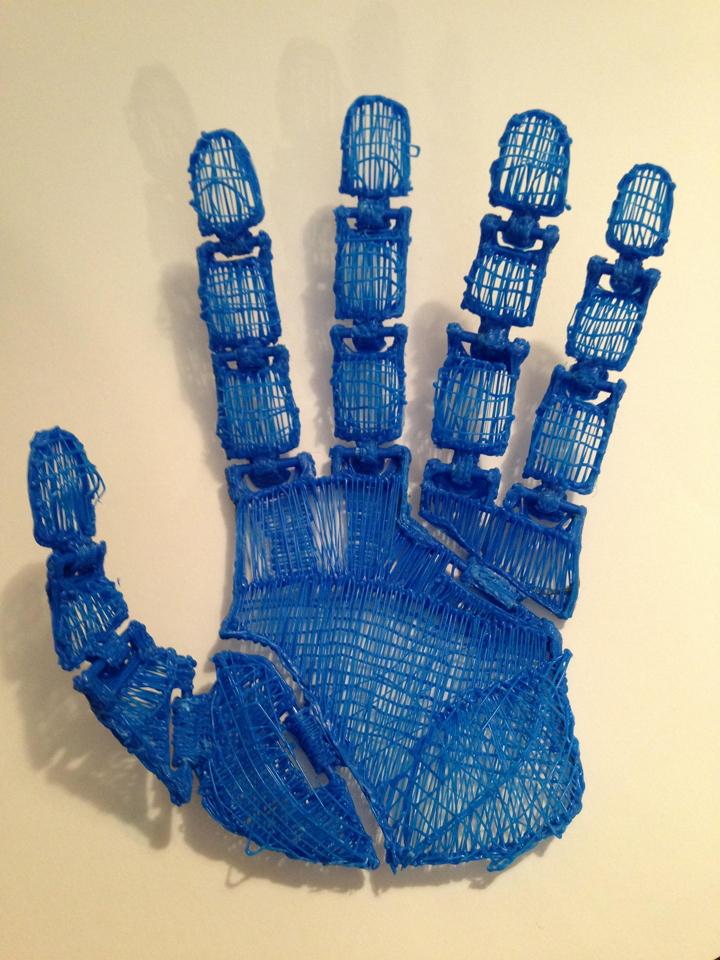
Have you ever used a 3Doodler 3D printing pen? Let us know Articulated Joints With 3Doodler forum thread on 3DPB.com. Check out more examples of his creations below.
Subscribe to Our Email Newsletter
Stay up-to-date on all the latest news from the 3D printing industry and receive information and offers from third party vendors.
Print Services
Upload your 3D Models and get them printed quickly and efficiently.













You May Also Like
AM Pulse Asia: Consumer Metal AM, Nuclear Parts and Rockets Push New Ground
The second half of August produced financing milestones, facility openings, and qualification results across Asia-Pacific additive manufacturing. Rongsu Technology closed a CNY 100 million Series A+ and launched a consumer...
HeyGears G1 Passes $14M on Kickstarter with Full-Color 3D Printing
HeyGears was started in 2015 and has been making value-driven Vat Polymerization systems for dental and home use. The company is marketing savvy and very driven. Now the firm has...
One Machine, Three Worlds of Creation: Inside the HeyGears G1 Series
Turning a digital idea into a finished full-color physical product often requires several machines, multiple software tools, manual coloring, repeated positioning, and outsourced production. For creators and small businesses, this...
AMPulse Asia: India’s Orbital Launch Headlines a Busy Second Half of July
The second half of July brought major developments across Asia’s additive manufacturing sector. Highlights included India’s first private orbital launch powered by 3D printed engines, a billion-yuan ownership change at...