New Airbus A350 XWB Aircraft Contains Over 1,000 3D Printed Parts

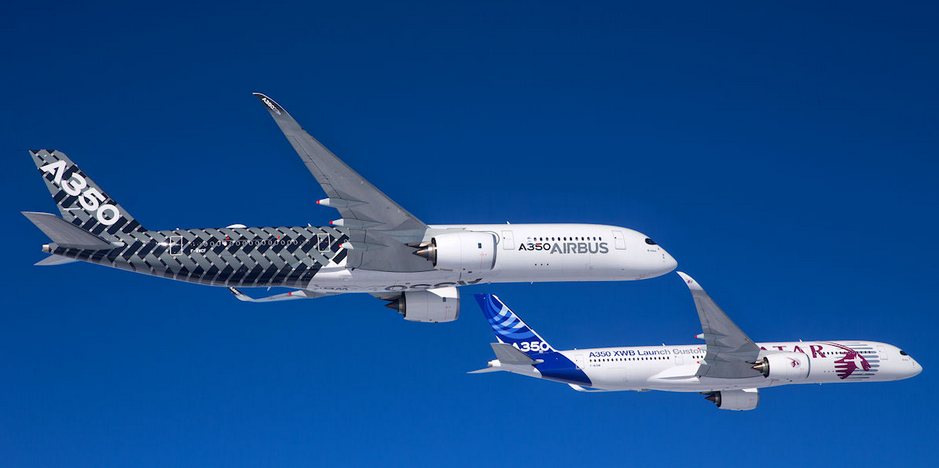
When it comes to manufacturing components within the aerospace industry, 3D printing is gradually inching its way into the process. We have seen numerous applications for end-use 3D printed parts by space agencies such as NASA as well as aircraft manufacturers such as Boeing and Airbus.
The aircraft manufacturing sector will continue to benefit from these technologies as lighter weight, more streamlined aircraft begin rolling off of the production lines. This is certainly true for  Blagnac, France-based manufacturer Airbus, who has very recently introduced their Airbus A350 XWB aircraft to market.
The A350 XWB utilizes state-of-the-art manufacturing techniques to reduce the overall weight and increase aerodynamics, ensuring safer, more fuel efficient travel. Available in three different sizes, the 800, 900 and 1,000 models, the A350 is the first Airbus manufactured aircraft with a fuselage and wingspan which are manufactured out of a light-weight carbon-fiber-reinforced polymer. Officially launching in December with the first plane being delivered to Qatar Airways, it was revealed this week that the company has also relied heavily on 3D printing for its production.
Back in March, Airbus had announced that they would be using 3D printing within the new A350 XWB aircraft, however the scale of such use was not divulged. Today Stratasys has announced that over 1,000 parts within the aircraft are 3D printed, replacing out 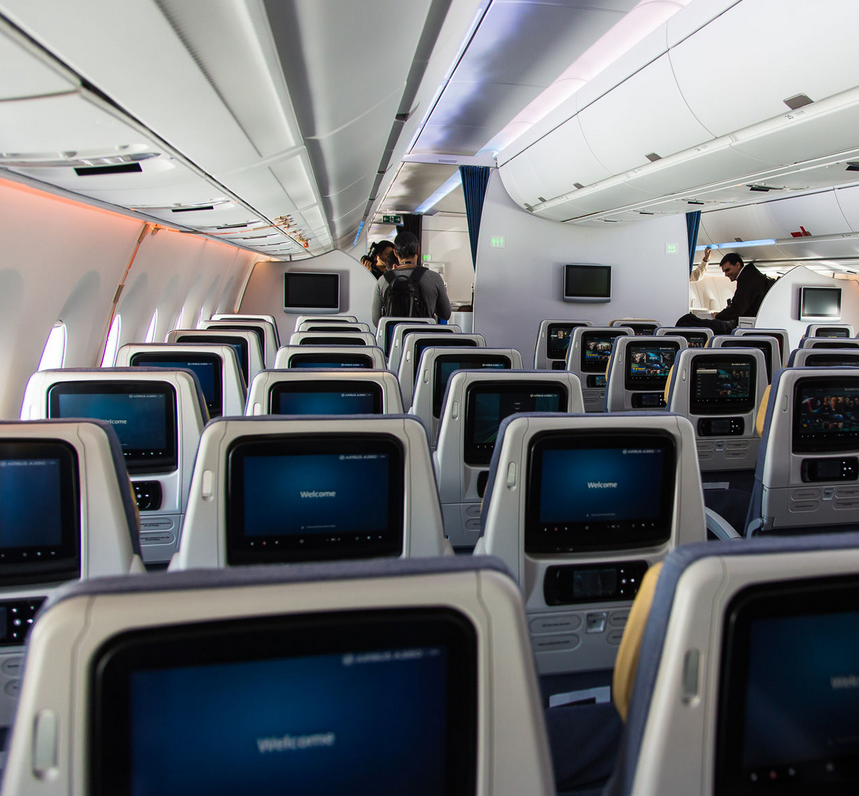 traditionally manufactured parts.
“We are delighted that Stratasys additive manufacturing solutions are being adopted by Airbus for its flagship A350 XWB aircraft. Both companies share a vision of applying innovative technologies to design and manufacturing to create game-changing benefits,” said Dan Yalon, Executive Vice President, Business Development, Marketing & Vertical Solutions for Stratasys. “Our additive manufacturing solutions can produce complex parts on-demand, ensuring on time delivery while streamlining supply chains. Additive manufacturing also greatly improves the buy-to-fly ratio as significantly less material is wasted than with conventional manufacturing methods. Stratasys is looking forward to bringing these and other advantages to its collaboration with Airbus and to being part of Airbus’ Factory of the Future initiative.”
Stratasys used an ULTEM 9085 resin, which is certified to an Airbus material specification, to fabricate each part on an FDM 3D printer, melting the resin and extruding it layer by layer until entire parts are fabricated. This production method not only produces parts which are lighter in weight and incredibly strong, but they also are FST (flame, smoke, and toxicity) compliant. Working alongside Stratasys since 2013, Airbus has managed to save money and reduce manufacturing time to meet their required deadlines.
“We are on the cusp of a step-change in weight reduction and efficiency – producing aircraft parts which weight 30 to 55 percent less, while reducing raw material used by 90 percent,” Peter Sander, head of emerging technologies and concepts at Airbus, said back in March. “This game-changing technology also decreases total energy used in production by up to 90 percent compared to traditional methods.”
As these technologies continues to make tremendous strides, and companies like Airbus continue to look towards such technologies in the production of their aircraft, there is little doubt that the future of manufacturing will see 3D printing playing an ever expanding role. Let’s hear your thoughts on these revelations. Discuss in the Airbus A350 forum thread on 3DPB.com.
Subscribe to Our Email Newsletter
Stay up-to-date on all the latest news from the 3D printing industry and receive information and offers from third party vendors.
Print Services
Upload your 3D Models and get them printed quickly and efficiently.











You May Also Like
Killer 3D Printing Applications: Factory Automation
Across the globe, factories are using 3D printing to improve operations. Iterative improvements to production lines, automation tools, repairs, additions, custom parts for custom lines, housings for new sensors, and...
American Rheinmetall Orders $300K in 3D Printed Titanium Prototypes for U.S. Army Systems From IperionX
As I’ve noted more than once in recent months, 2025 was the year for critical minerals, and the U.S. additive manufacturing (AM) industry made the most of that. IperionX, the...
Roboze Opens U.S. Aerospace & Defense Headquarters in El Segundo
The manufacturing sector is made up of clusters: “geographic concentrations of interconnected companies” that both cooperate and compete with each other. Of course, this is true about any sector in...
EOS Invests $3M In Its Texas Manufacturing & Logistics Facilities to Serve North American Customers
The trajectory of reshoring under President Trump has been largely a mixed bag so far. While tariffs still seem to be doing more harm than good to the U.S. domestic...