Google Art Project Adds 3D Scans to Its Database of Viewable Artifacts & Art

 We are all too well aware of what’s going on in parts of Africa and the Middle East. Terrorists, more ignorant, brutal, and senseless than one can even imagine, have been not only killing off villages, but also killing off a very important part of history. ISIS, as well as other groups sympathizing with them, are destroying the very history which many of us come from, and in the process wiping out valuable artifacts, some thousands of years old.
The devastation of these priceless pieces is heartwrenching to watch, but thanks to 3D scanning and printing, eventually such senseless destruction will not be quite as final. It’s not just terrorism that’s a threat to many of these artifacts. Fire, vandalism, and theft are all issues any museum has to protect against, and as more and more of them realize the potential cost to humanity of such  disasters, and as technologies continue to improve, many museums are turning to 3D scanning as a means of creating digital backups.
In fact we have covered several projects by museums, as well as third party initiatives, to scan and digitally store various artifacts, making them viewable via the web, and in some cased re-fabricated via 3D printing. Today the digitalization of artifacts across the globe gained a major proponent in internet search leader, Google.
Through their Google Art Project initiative, which launched back in February of 2001 in order to make the world’s art easily accessible online, the company is now turning its attention to the world of 3D art and artifacts. Google has been partnering with hundreds of museums across the globe in an effort to catalog art and to map the exhibits inside these museums. Today the Google Art Project has expanded further to add 3D models of select pieces.
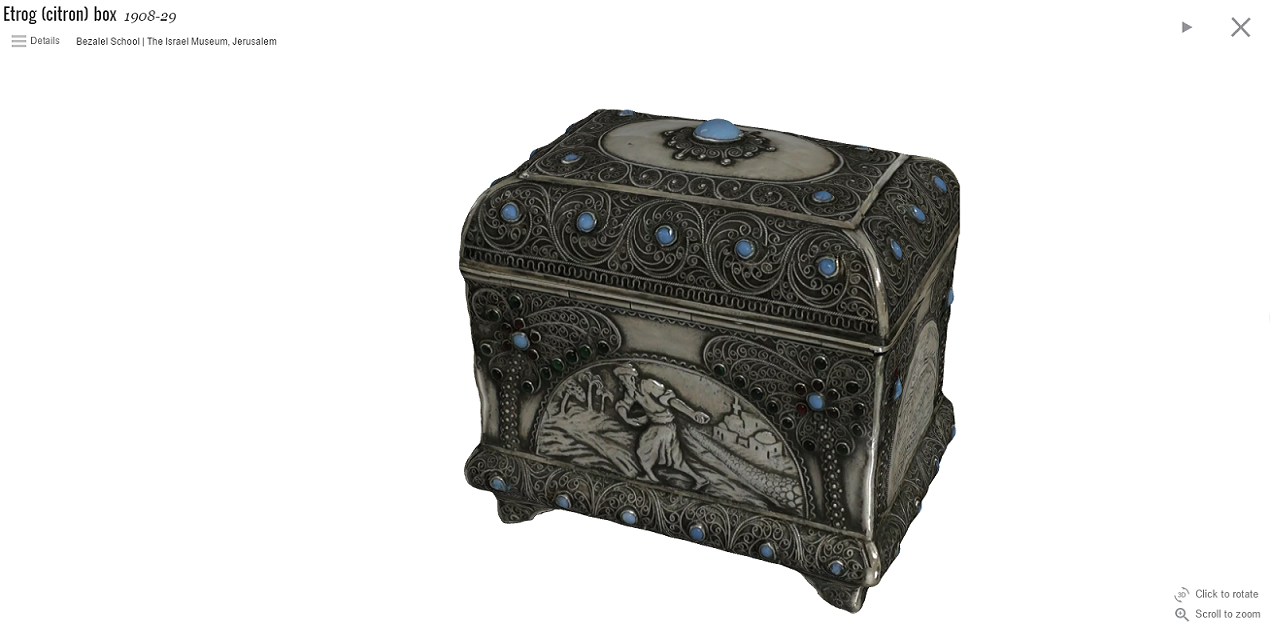
Initially this will include over 200 3D scanned artifacts, which are viewable in a WebGL format, allowing users to zoom in and rotate each piece to get an up close and personal view. Initially they will be working with six pilot partners which include the Israel Museum, the California Academy of Science, the Museo d’Arte Orientale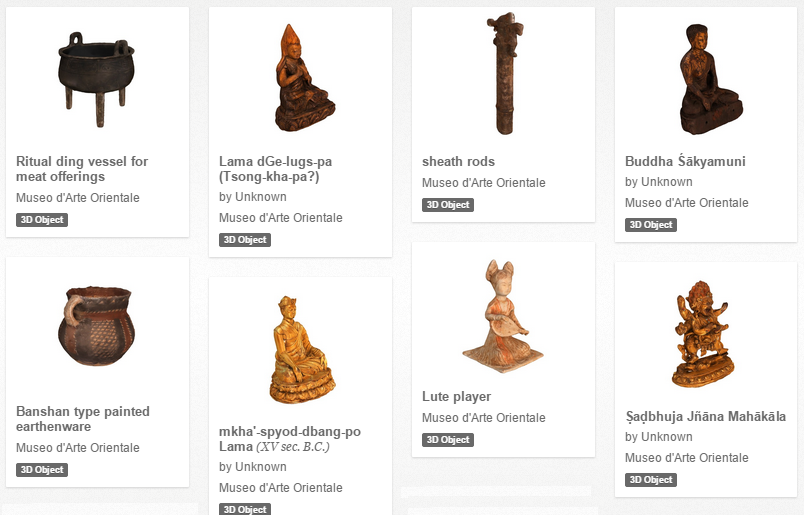 , the Kunsthistorische Museum Vienna, the Los Angeles County Museum of Art, and the Dallas Museum of Art. Currently items include an array of skulls and bones, as well as some ancient artifacts dating back over 9,000 years.
The format in which these 3D scans are viewable is quite impressive. Each model loads remarkably fast compared to other 3D viewers I have used online and their quality is quite impressive as well. Unlike how some standalone museums and third party initiatives like Smithsonian X 3D have done, the Google Art Project has not presented an easy way for one to download these 3D models, however. With that said, this initiative has just launched for Google, and it’s quite likely they may make downloading an option in the future, for all of you 3D printing enthusiasts out there.
It will be interesting to watch over the coming months to see how quickly this repository of 3D artifacts grows, and just what other museums may join in on partnering to have their prized possessions 3D scanned and digitized.
Let us know your thoughts on Google’s recent announcement. Discuss in the Google Art Project’s 3D Scanned Artifact forum thread on 3DPB.com.
Subscribe to Our Email Newsletter
Stay up-to-date on all the latest news from the 3D printing industry and receive information and offers from third party vendors.
Print Services
Upload your 3D Models and get them printed quickly and efficiently.











You May Also Like
ORNL Continues Research Into Making Large Format Metal Parts by Combining AM and HIP
This can’t be stressed enough: the US needs to secure its supply chains for energy and power generation components. And, while the US needs to prioritize that objective across the...
DMG Mori Joins $10M Defense 3D Printing Program
To look at the Biden administration and the Trump administration that succeeded it and find areas of policy overlap is obviously a bit of a challenge. But such areas certainly...
Where the Money Is Going: The New Infrastructure Landscape
This is Part 1 of a two-part PRO series examining where infrastructure investment is flowing and how those trends are reshaping manufacturing, energy, logistics, and additive manufacturing. Part 2, by...
INDOPACOM Advanced Manufacturing Team Saves Thousands Per Week at Joint Exercise in the Philippines
In the summer of 2025, the US Indo-Pacific Command (INDOPACOM) opened a new advanced manufacturing facility at Schofield Barracks, the Hawaiian home of the US Army’s 25th Infantry Division. INDOPACOM...