EyeSat Project Includes Student Engineers 3D Printing Aerospace Parts

CNES (the French National Center for Space Research) was responsible for the first spacecraft to orbit a comet, the Rosetta Project, and now Pascal Martinelli, who supervised the conception and manufacturing of that satellite, has helped a group of French students do their part to make a new aerospace project happen.
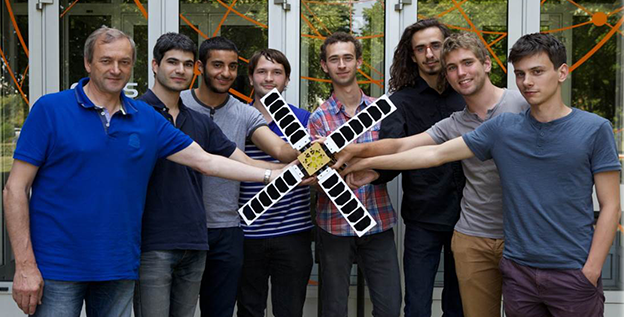 The EyeSat mission is planned to place a satellite to observe the Milky Way, and it’s part of the larger Janus Project. A few times every year, the CNES launches missions which include the best engineering students from France.
“It’s a practical tool to get students at engineering schools and universities more involved in space sciences,” says Alain Gaboriaud, the project leader at CNES.
 In Rosetta, the European Space Agency’s (ESA) “comet chaser” project from back in 2004, the world saw the most detailed images of a comet ever taken. For the last ten years, the orbiter has floated through our solar system, across an asteroid belt and on into deep space. That collaboration with NASA saw it travel more than five times Earth’s distance from the Sun, and now the EyeSat Project is one of those collaborations with students and EAS.
In all, the EyeSat required nearly 400 3D printed parts throughout the 14 iterations of the prototyping process, and the CNES used Sculpteo’s 3D printing services to build those parts.
The project also made use of 3D printed parts for more than just the prototyping stage of the effort. The final version of the satellite included 3D printed components. The technology was used to print four mounting brackets and a sunvisor.
“3D printing is not necessarily the first manufacturing technique that comes to mind when you’re designing a satellite. Engineers are still lacking some experience with it and that’s one of the reasons why it’s not used as much as it should be to produce the final EYESAT satellite,” Martinelli says. “The other reason however is more down to earth. Polyamide even when not 3D printed can absorb 5% of its weight in water, which means water can get inside the material. While in space, any moisture would turn into condensation on the lenses of the camera resulting in degraded images. That’s why we still need to test 3D printed parts for this.”
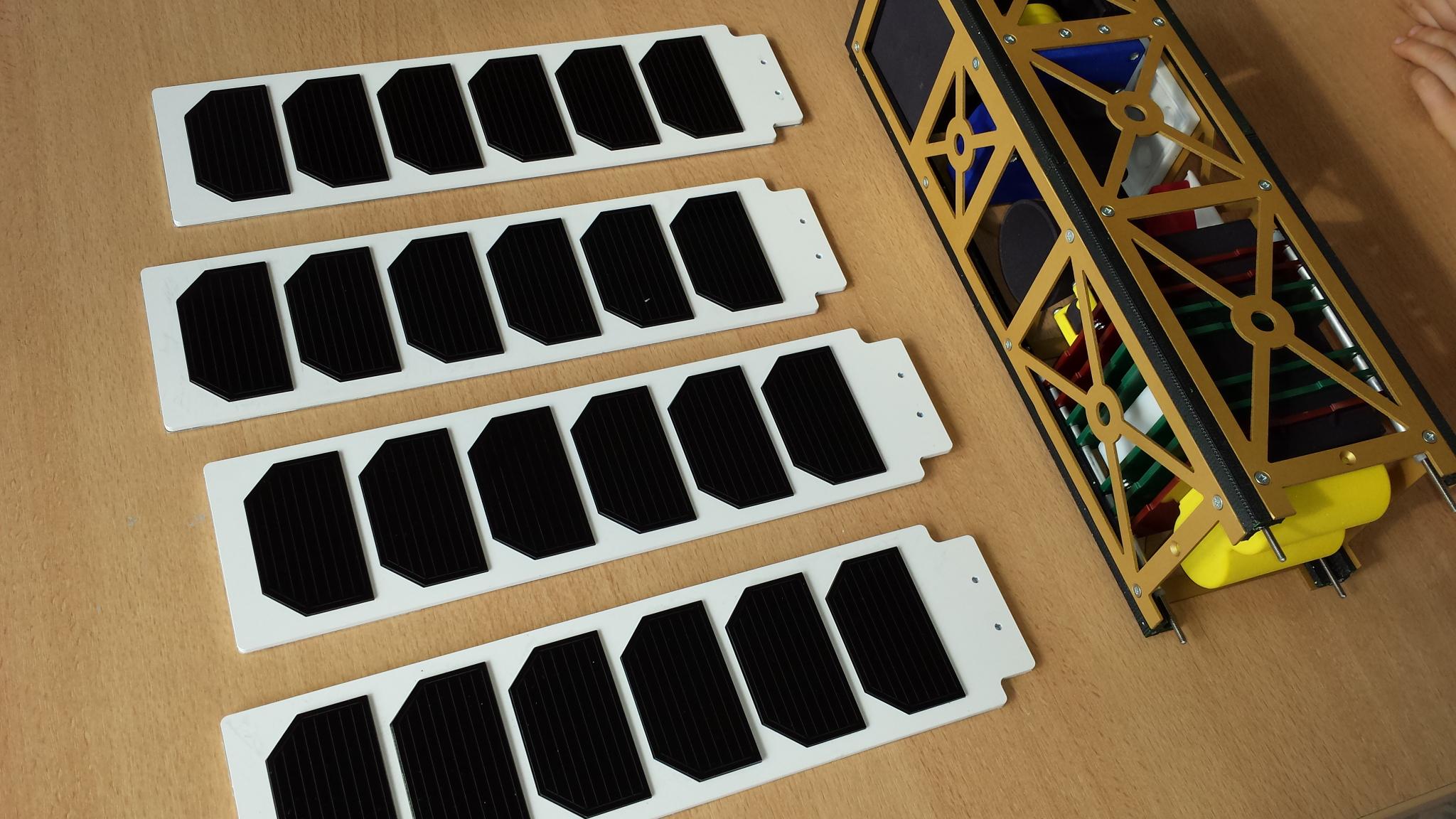 In 2013 alone, the JANUS project featured a dozen individual projects in development – and they all used 3D printing as a key part of the manufacturing process.
“For the manufacturing of models it would have been impossible to plan this series of 12 units for the deadlines granted to this operation,” said Martinelli. “The project are difficult to fund, and even if 3D printing isn’t economically efficient in every case, in this particular case, it was the only way to meet our budget.”
This project, a collaboration between student engineers and CNES, certainly saw a huge boost thanks to 3D printing. Do you know about any other aerospace projects which use 3D printing? Let us know in the EyeSat Project forum thread on 3DPB.com.
Subscribe to Our Email Newsletter
Stay up-to-date on all the latest news from the 3D printing industry and receive information and offers from third party vendors.
Print Services
Upload your 3D Models and get them printed quickly and efficiently.











You May Also Like
Ceramics 3D Printing at Ceramitec 2026
Ceramitec is a key event for the ceramics industry. Held in the lovely city of Munich, it is the leading global event for the ceramics community. With around 13,000 participants...
BMF Turns Up the Speed with microArch S150 Series
Boston Micro Fabrication (BMF) is releasing the microArch S150 Series. This series comprises two compact desktop systems. There’s a speedy microArch S150 Ultra and a more lab- or experiment-oriented microArch...
3D Printing Predictions 2026: Industrial Production & Polymer Additive Manufacturing
Polymer additive manufacturing is seeing less investment, attention, and disruption than metal additive manufacturing currently. Less crucial for defense needs, it has of late had far fewer new entrants. But,...
EPFL Is Growing Metal
Over the years, researchers in additive manufacturing have been working on different hydrogel systems for scaffolds, supports, and parts. Others have worked on different forms of growing 3D prints, while...