Chinese Say Patents On the Way For Laser Metal 3D Printing In Space


The process of exploring space brings with it a rigorous set of limitations and requirements.
Among them is the fact that anything you’ll need on the trip had better be on board when you blast off as it’s a very long trip home if anything goes wrong.
Now the China Aerospace Science and Technology Corporation, or CASTC, says they plan to include a 3D printer capable of producing metal components on future space missions.
CASTC is the enormous, state-owned enterprise group responsible for brands like Shenzhou and Long March, and it was sprung from what’s known as the Fifth Academy of the Ministry of National Defense back in 1956. CASC itself was formally founded during 1999 in Beijing.
With eight large research and development production complexes around the country, the CASTC includes the China Academy of Launch Vehicle Technology (CALT), Academy of Aerospace Solid Propulsion Technology (AASPT), China Academy of Space Technology (CAST), Academy of Aerospace Liquid Propulsion Technology (AALPT), Sichuan Academy of Aerospace Technology (SAAT), Shanghai Academy of Spaceflight Technology (SAST), China Aerospace Times Electronics Corporation (CATET), and China Academy of Aerospace Aerodynamics (CAAA), along with any number of specialized companies which engage in the research, design, manufacture and launch of space systems.
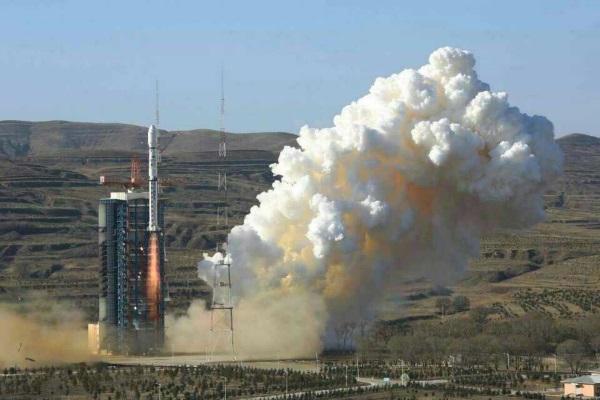 And it’s very, very large.
The CASC employs more than 120 thousand workers total and more than 30 academics from the Chinese Academy of Sciences (CAS) and the Chinese Academy of Engineering (CAE).
While NASA and Made In Space have already implemented an FDM printer on the International Space Station, the Chinese say they plan to use a machine capable of creating metal parts with Selective Laser Melting technology on their spacecraft.
Used primarily for aerospace and automotive parts, SLM machines use long-wave fiber and short-wave carbon dioxide lasers to build parts from performance materials like titanium alloys, stainless steel and nickel.
Liang Feng, a senior engineer with CASTC in Shanghai, says the device can output 8 square centimeters of parts per hour, and adds that patent applications for the new device are already filed. CASTC is the foremost contractor employed by China’s space program and responsible for a large number of its technological innovations.
 Feng says that in test runs, engineers have already 3D printed lens brackets for optical applications, nuclear power test equipment and the sort of impellers used in aircraft research.
The parts chosen for testing were selected as their complex, hollow and often irregular shapes were excellent representations of the new machine’s potential to create typical metallic parts which might malfunction in flight. The SLM devices work by completing a series of powder feeding and laser melting cycles which create layers down to 0.02 mm in thickness to build up a finished part.
“The products…will have to be tested thoroughly due to the strict quality requirements of aerospace products,” Feng says, but he adds that he sees a long future ahead for 3D printing in extraterrestrial applications.
Let us know what you think about how China’s metal printing initiative will change the way aerospace designers work in the Metal 3D Printing From Space forum thread on 3DPB.com
Subscribe to Our Email Newsletter
Stay up-to-date on all the latest news from the 3D printing industry and receive information and offers from third party vendors.
Print Services
Upload your 3D Models and get them printed quickly and efficiently.











You May Also Like
Controlled Powder Production for Advanced Research Applications
Modern physics experiments and high-value industrial applications increasingly depend on custom, high-performance materials. These often require strict constraints such as radiopurity, controlled microstructure, and repeatable powder behavior in metal additive...
Creative Destruction in AM: What the Nobel Prize Winners Got Right
When the Nobel Prize in Economic Sciences was awarded in 2025 for work explaining innovation-driven economic growth, many readers outside economics likely skimmed past it. Inside manufacturing and technology circles,...
Titomic Lands First Order for 3D Printed Semiconductor Capital Equipment Components
One of the markets that should be a reliable source of growth well into the future for the additive manufacturing (AM) industry is semiconductor capital equipment (semicap). When Additive Manufacturing...
Applied Acoustics Uses Additive for Subsea Gear
Subsea equipment has to be rugged, temperature-resistant, and able to cope with the long-term effects of saltwater. Extreme pressure and pressure changes are also problems endemic to this industry. Subsea...