eGarbigune, the Mini 3D Printer Made from Recycled Components


 Not everyone can afford to buy their own desktop 3D printer, but that does’t mean that they can’t have one. With a little bit of skill (or maybe a lot), some old electronic components and a lot of patience, anyone can construct their very own desktop 3D printer at a cost which may actually shock you.
We’ve covered numerous projects in the past where designers were able to upcyle the old components from computers, DVD players and CD-Rom drives to build an FFF 3D printer capable of quite a bit of detail. One of these projects was the eWaste $60 3D printer posted on Instructables many months back. This printer was able to be produced using electronic scraps and cost the designer only around $60 to build.
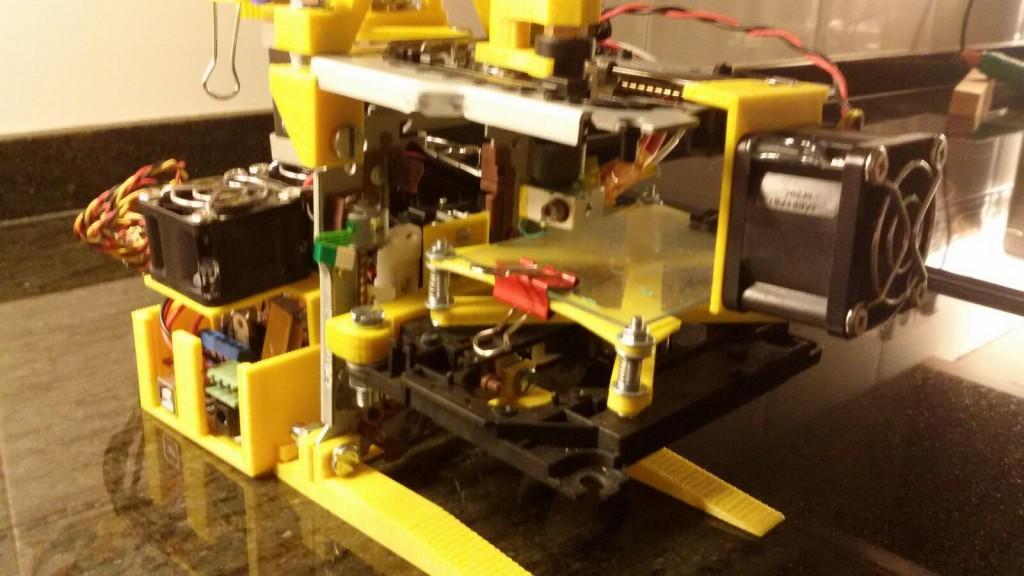
One Spanish designer named Eneko Montero, however, decided to take the eWaste machine and iterate upon it, increasing its efficiency and accuracy even further. While initially Montero intended to only change a few of the design components of the eWaste machine, he eventually changed his course to drastically reimagine the machine and has redesigned nearly everything from scratch. Called the eGarbigune 3D printer, this latest machine can be built for under $80, and in completely open source with a large portion of its body being 3D printable itself.
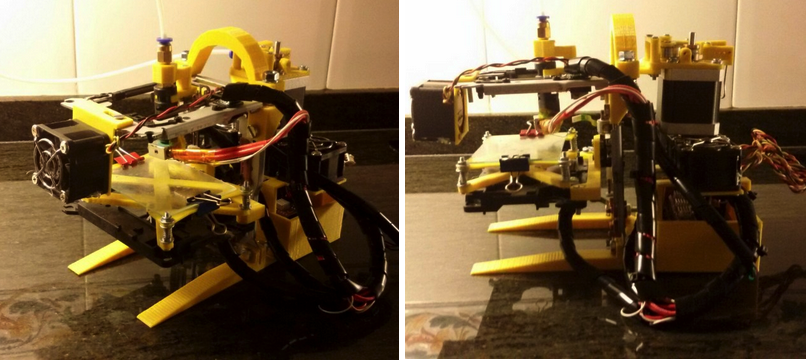
“eGarbigune is a mini home 3D printer made from recycled components, such as CD players and DVD drives that are no longer in use,” explains Montero. “This allows us to reduce costs for the project on a topic that is in fashion because of its enormous potential. The idea is not to buy the materials, but recycling as much as possible. Another important part of the project is that besides using recycled components, will use 3D printed parts, allowing us to design and assemble a structure quickly while adjusting to our needs.”
Below you will find some of the general specifications of the eGarbigune machine once it’s assembled:
- Print Technology: FFF/FDM
- Build Envelope: 40 x 40 x 400 mm
- Print Speed: 20-40mm/s
- Electronics: Arduino MEGA + 1.4 Ramps
- Filament Compatibility/Size: PLA at 1.75mm
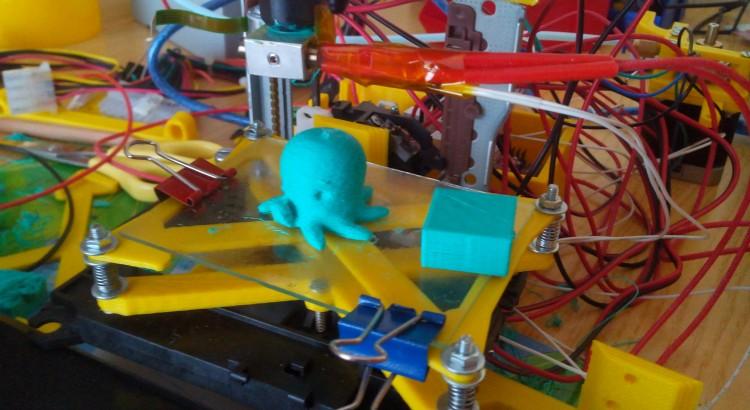
Some of the main attributes which differentiate the eGarbigune machine from the eWaste 3D printer include that this new machine utilizes three CD/DVD drives rather than two, meaning its build envelope is able to be increased. Additionally, no laser cutter or CNC machines are required because the bulk of the parts making up the machine, besides the recycle electronics, can be 3D printed themselves. If you don’t have access to a 3D printer, Montero recommends using a service, perhaps 3DHubs, to outsource the part production.
While this certainly is not an easy printer to build, it’s also not incredibly difficult either. Let us know your thoughts on this latest DIY machine. Discuss in the eGarbigune forum thread on 3DPB.com. Check out the video clip of the machine below:
Subscribe to Our Email Newsletter
Stay up-to-date on all the latest news from the 3D printing industry and receive information and offers from third party vendors.
Print Services
Upload your 3D Models and get them printed quickly and efficiently.













You May Also Like
Oxidation Used to Create Self Lubricating CCA’s
Oxidation affects many substances but can also be beneficial. Aluminum, for example, forms a passive oxide film that helps it resist seawater. NAB is often used in ships and forms...
3D Printing News Briefs, September 26, 2026: Bioceramic Implants, 3D Concrete Printing, & More
In this weekend’s 3D Printing News Briefs, we’ll start with an integration between PanOptimization and AMCM, before moving on to healthcare news from KLS Martin and Lithoz, and then UltiMaker...
Malping Wants to Offer FGF PEEK as a Service
Germany-based Malping, located in Neuhausen auf den Fildern, is moving into more high performance materials for Material Extrusion. The service operates FGF and FDM high-temperature material printers, and offers parts,...
Why Beam Control Could Redefine the Future of EB-PBF
In Part 1, Ulf Lindhe examined how advances in beam control, point melting strategies, and process monitoring are changing the way engineers think about electron beam powder bed fusion (EB-PBF)....