Use Your 3D Printer to Color by Number with This Clever Project


 Kurt Hamel is an engineer, builder, maker, hacker and “mad scientist” from Providence, RI, who uses his skills at 3D printing to create some useful and interesting objects and techniques. From his method of magnetizing 3D printed pieces to a process for building frames for stained glass pieces, Hamel is all about using 3D printing to solve problems and demonstrate fun stuff.
Hamel, a member of the Ocean State Maker Mill, also took down a first place in the MakerBot and GE FirstBuild Icebox Challenge with a project he called the Odor-Eating Hotspot and a neat kitchen organizing micro-BLOCK on Thingiverse.
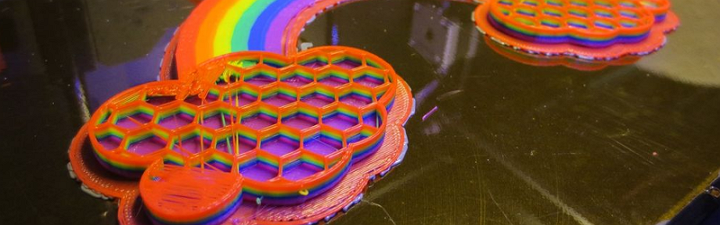
Now he’s taken on the task of updating and modernizing the venerable paint-by-number kit with a method of using his 3D printer to build multicolored prints.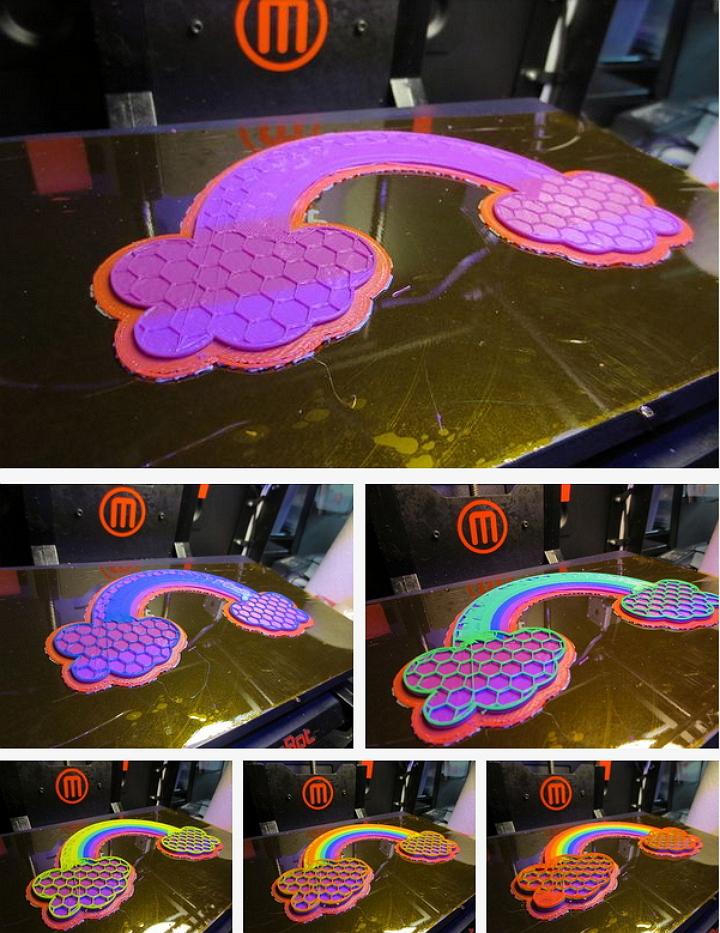
Taking a paint-by-number print layout which can be found via a Google search, he imports the 2D outline into a CAD program, and rather than extruding that 2D layout as a single piece, he extrudes the numbered regions at slightly different heights.
Hamel pauses the print job to change filament for the layers of various depths. Hackaday suggests that it might be possible to edit the sliced G-Code to locate the necessary pauses or that other software might be used to split the G-Code by depth.
“It isn’t a new idea to stop the printer and switch filament,” Hamel says. “The interesting idea here is starting with paint-by-number images and extruding based on the color. You can ‘color by number’ with your single head FDM 3D printer to make colorful projects that will leave people wondering how much you’ve spent on a full color 3D printer.”
He offers some other useful tips as well. Hamel says that unless you happen to be a member of a fab shop packed with spools of filament in various colors, an easy method of coming up with them is to buy a sample pack.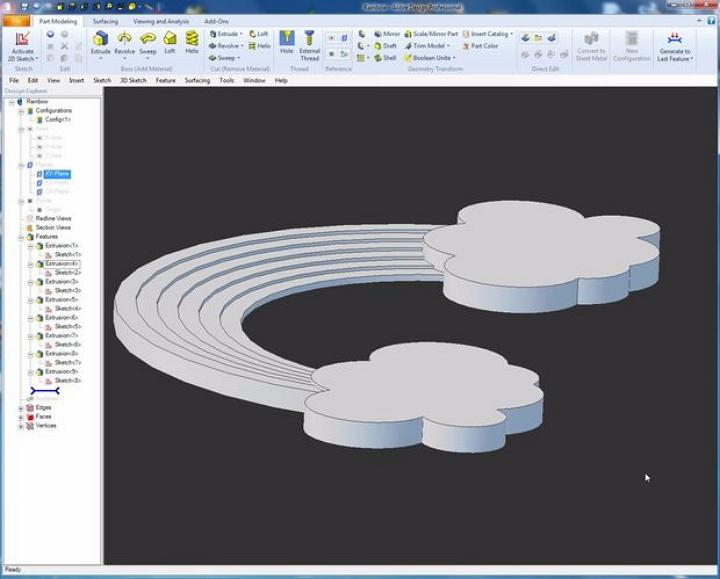
For his project, he says that rather than coloring by number you extrude by number following this pattern. If the design has the colors marked thusly, say Purple = 1, Blue = 2, Green = 3, you’d use this method to arrive at the printing process:
- Multiply Purple’s number (1) by 0.02″ and extrude the purple area that amount (0.20″)
- Multiply Blue’s number (2) by 0.02″ and extrude the blue areas that amount (0.04″)
- Multiply Green’s number (3) by 0.02″ and extrude the green areas that amount (0.06″)
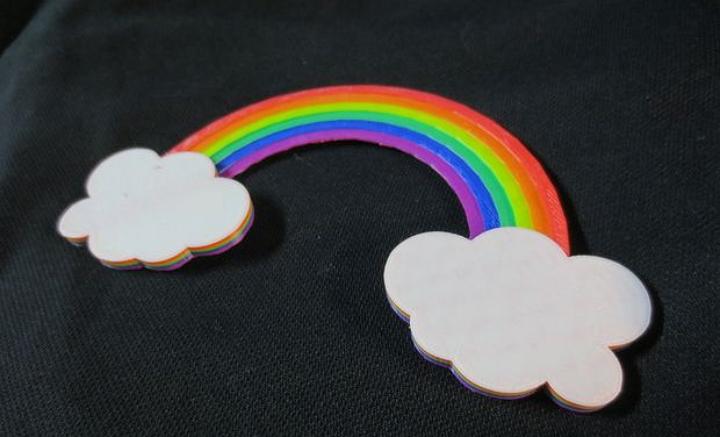 You begin by printing the lowest numbered color first, and once each color tier has finished, you simply pause the printer, change the filament to the proper color in the sequence and restart the printer until the entire piece is complete.
Hamel says his rainbow example took a total of seven tiers of color.
You can find the Paint-by-Number project here on Instructables.
What do you think of Kurt Hamel’s innovative uses of 3D printing to create solutions for the kitchen and home? Let us know in the Color By Numbers With Your 3D Printer forum thread on 3DPB.com.
Subscribe to Our Email Newsletter
Stay up-to-date on all the latest news from the 3D printing industry and receive information and offers from third party vendors.
Print Services
Upload your 3D Models and get them printed quickly and efficiently.













You May Also Like
3D Printing News Briefs, October 10, 2026: Drones, WAAM, Ceramics, & More
We have a packed 3D Printing News Briefs for you this weekend! First, America Makes celebrated the recent National Manufacturing Day with 3D printed drones, and then it’s on to...
3D Printing News Briefs, October 3, 2026: Hypersonics, Hotends, & More
We’re starting off with defense in this weekend’s 3D Printing News Briefs, as Titomic was awarded a $5 million U.S. defense contract, and VulcanForms announced a partnership with Specter Aerospace...
The Part Is Only Half the Story: Why 3D Printing Needs a Digital Thread
A 3D printed part can generate a lot of information. The challenge is keeping track of it. Manufacturers need to know which design was used, what material went into the...
Advanced Manufacturing at IMTS 2026: 3D Printing and AI and Drones, Oh My!
Last week’s International Manufacturing Technology Snow (IMTS) in Chicago welcomed over 90,000 attendees to the jungle that is McCormick Place. With over 1.17 million square feet of exhibit space, and...