WASProject Aims to 3D Print Homes in 3rd World Countries Using Native Soil for Material

3D Printing has done a tremendous amount of good over the past several years. We’ve seen the technology evolve to a point where innovators strive to go beyond using it for traditional manufacturing, or merely as a hobby. There are research firms, companies, and individuals trying to figure out just how they can use this up-and-coming technology to make the world a better place.
One such group, is the WASProject, a company that has been manufacturing 3D printers in Italy for a couple of years now. The acronym stands for “World’s Advanced Saving Project”, and this probably couldn’t be a more suitable name for a company that is aiming extraordinarily high.
Thanks to years of know-how and experience, WASP has been able to develop some very unique 3D printers. This includes the POWERWASP which is a 3D printer / CNC milling machine in one. It also includes the DeltaWASP, which is a delta-style 3D printer that can print in a large variety of materials. While these printers are high quality and priced relatively affordably, this isn’t the amazing part of what WASP is planning to do.
Taking soil directly from the ground in Marrakech.
“All of the 3D printers that we’re producing and selling (PowerWASP and DeltaWASP) are our source for money that we use to research and produce bigger printers,” explained WASP team member Sebastiano to 3DPrint.com. “Our main target is to produce a big Delta Robot, capable of printing huge objects and use this machine to produce housing structures or housing modules, using natural materials such as clay / soil / natural powders, mixed with resin / ect.”
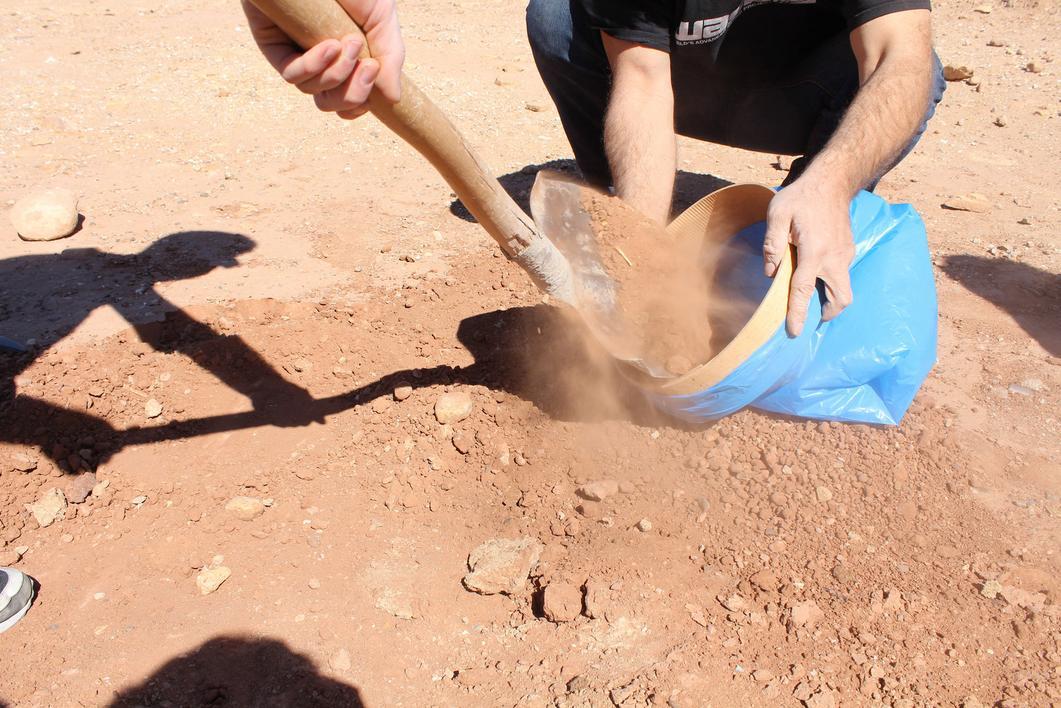
The “Big Delta” is a 3D printer that WASP has been working on for a couple years now, which they debuted at the Rome Maker Faire in 2013. It has the ability to print out objects using soil as the base material. “In Marrakech at the 2013 “biennale”, we took the soil from the [land], mainly sand, and added water and vegetable oil, in order to have a good clay that we used to print out projects [created] by local architects,” explained Sebastiano.
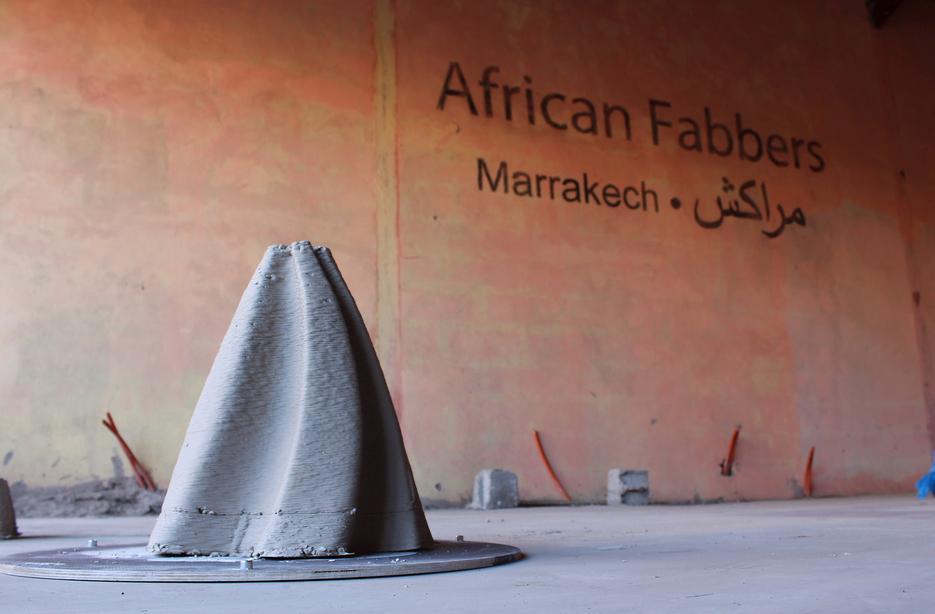
A structure 3D printing using WASP’s BigDelta
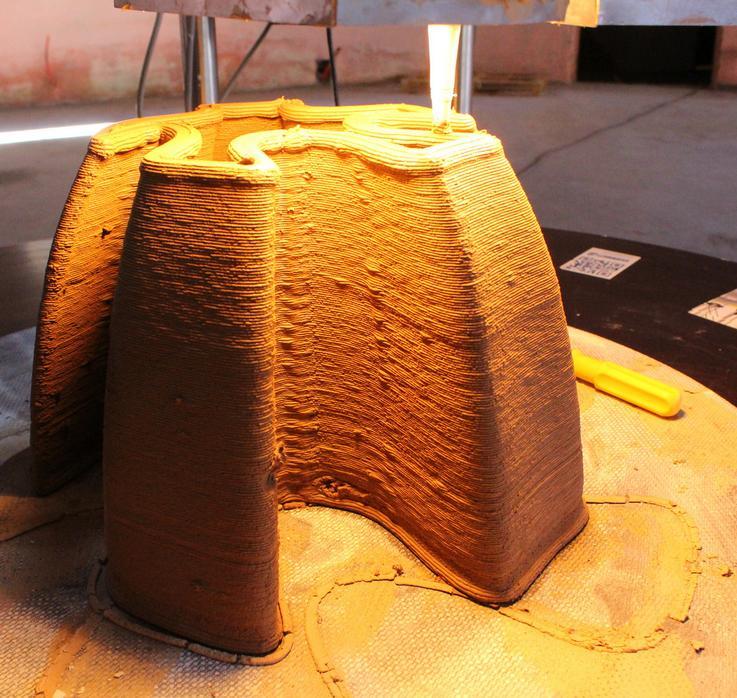 This is really quite amazing when you think about the possible uses of a 3D printer of this magnitude along with its building material compatibility. I asked Sebastiano if they have plans on utilizing this in third world countries, by using native soil to construct homes. He confirmed that they are in fact planning to use this incredible 3D printer to print out houses, as well as other structures, in underdeveloped countries. They plan to do this by taking the soil from the ground in these countries, and then mixing it with oil and water, in order to create a clay building material. That material will then be fed through the printer to print out the structure desired.
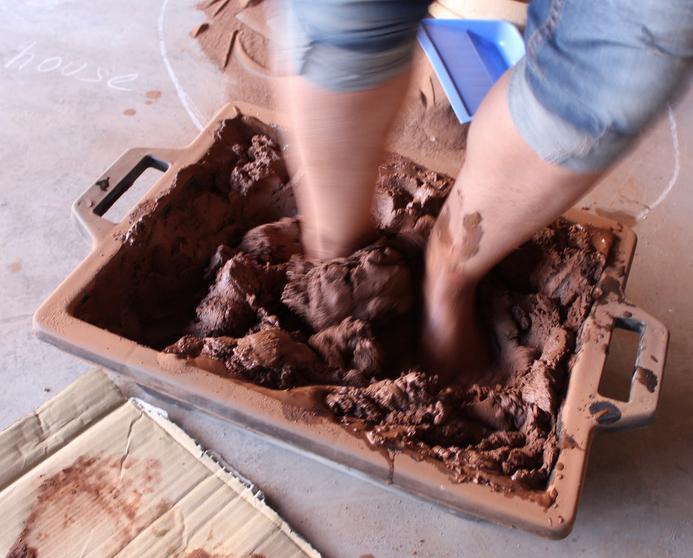
Creating the 3D printing material (clay) from native soil in Marrakech.
No date has been set as to when this will take place, but imagine all of the benefits a 3D printer like this could have, not only for developing countries and the counstruction of homes, but for creating supplies during scientific field work, military missions, and even potentially for the creation of structures on other planets.
What do you think? Will this idea become a reality? Will we one day be 3D printing homes for impoverished nations, using merely a 3D printer combined with soil, oil, and water? It certainly seems possible. Discuss in the 3D printing of homes forum thread on 3DPB.com
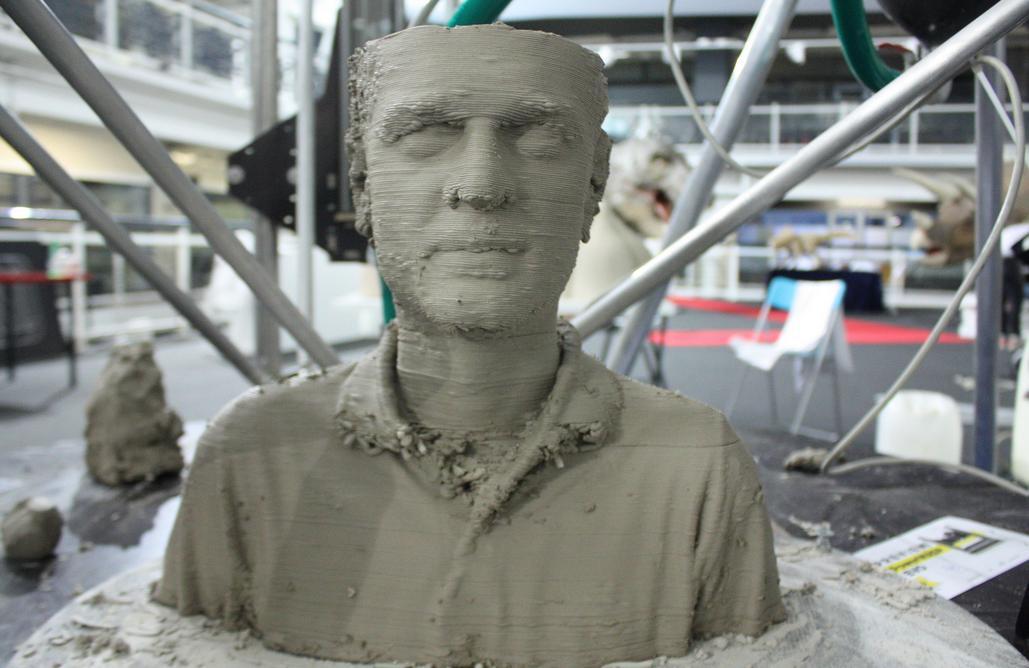
A clay printed statue

Highly Scaled down mini houses – as examples
Subscribe to Our Email Newsletter
Stay up-to-date on all the latest news from the 3D printing industry and receive information and offers from third party vendors.
Print Services
Upload your 3D Models and get them printed quickly and efficiently.













You May Also Like
Creality K3 Opens for Pre-Order at $849, Advancing Multi-Color 3D Printing
Creality has officially opened pre-orders for the Creality K3, its latest flagship K Series 3D printer, starting at $849 in the United States. Recognized as an IFA Innovation Awards 2026...
Beyond the Printer: HP and DyeMansion Tackle the Future of Prosthetics
Making a custom orthotic or prosthetic device involves much more than producing the final part. Patients need to be measured, devices must be designed to fit their bodies, and finished...
3D Printing News Briefs, October 14, 2026: Bolus, Aerospace Tooling, Water Filter, & More
In today’s 3D Printing News Briefs, we’re starting with medical news, as Myrava has received FDA 510(k) clearance for its 3D printed bolus. Moving on to aerospace and metals, AML3D...
Can India’s AM Push Help Make it a Viable Supplement to China?
Diversifying manufacturing supply chains to locales outside of China has nothing to do with actually cultivating “substitutes” to the Chinese economy. The real stakes are these: China is an irreplaceable...