A 3D Printable Universal Language Takes Shape

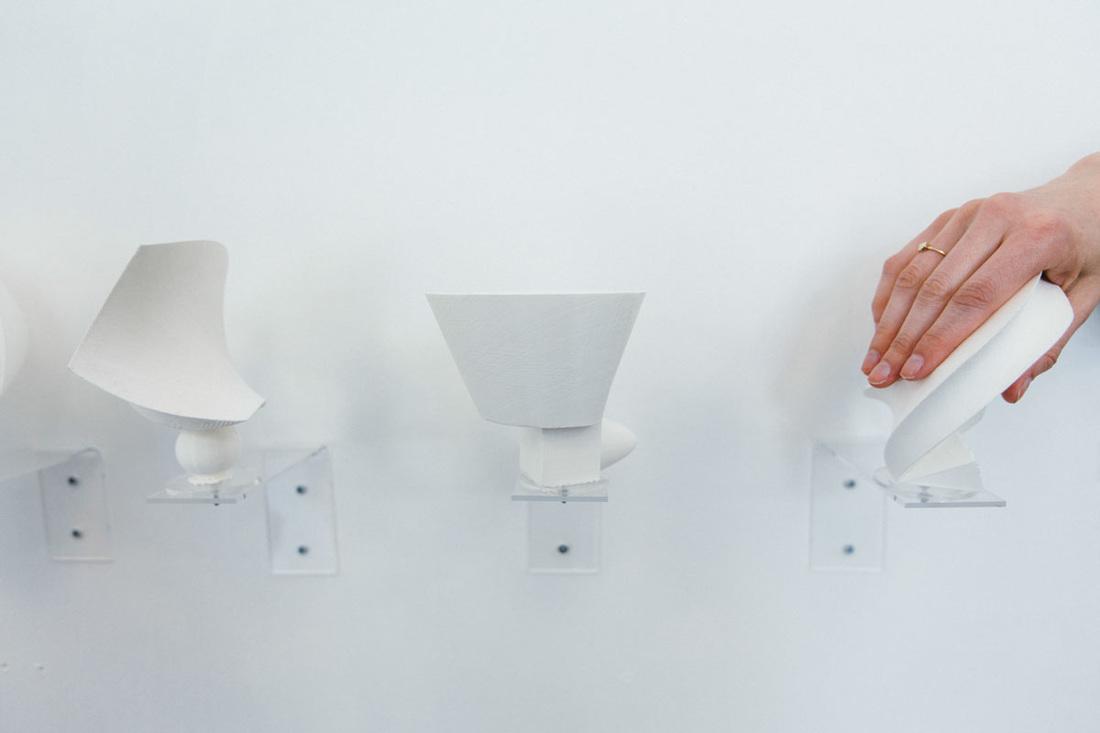
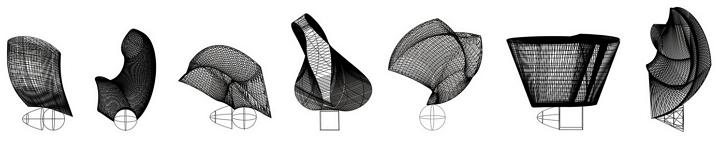 Eden Tartour designed seven 3D printed blocks which she hoped would result in a “universal language” of sorts where those shapes represent words, and each could be shifted around to change their meanings and the meanings of their full combinations.
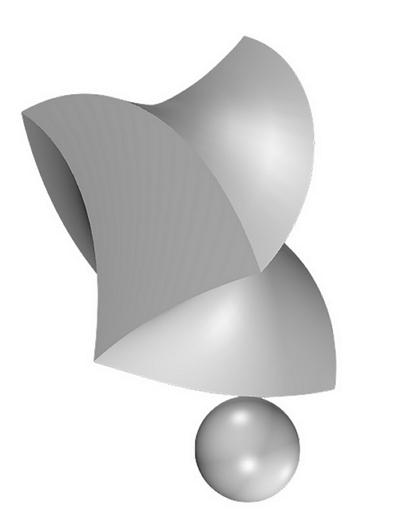 A first-year student at Parsons Paris, Tartour took on the project as a consideration of ways it might be determined “whether a universal visual language is conceivable.”
“Human beings have always wanted to understand and interpret the world they live in. Humanity has this desire to always know and read nature – and more generally – the universe,” Tartour says of the project. “Human beings spent their life trying to understand the meanings of the signs, codes and symbols present in their environment. Even though meanings don’t necessarily come out obviously, they often exist latently waiting to be disclosed, analyzed and read.”
According to Tartour, a share of the work springs from the idea that non-verbal communication can be powerful, and that the core problem of communication “could be partly resolved by inventing a visual language that would speak to anyone, without them having to learn it because the signs would follow the principles of semiotics.”
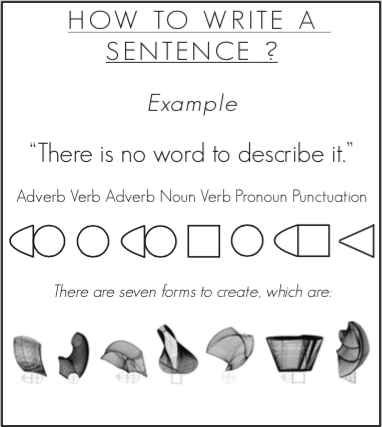 It’s a method which would, rather than dispensing entirely with spoken languages and the cultures they contain, create a new one from a visual sign, code or symbol.
She says her Universal Language project and reading of the work of semiotician Bruno Munari, who compared a symbol-based language to the spoken one, was informed by both 3D printing and semiotics.
“We should try to use the symbols as the words are used in a poem: they’ll have more than one meaning, and the meanings will change according to where they are put,” Munari wrote in his 1966 work on the subject, Design as Art.
So Tartour took the idea and ran with it using a series of 3D printed forms–forms which, like the words in a poem are pleasing, would be pleasing to see and touch as 3D objects.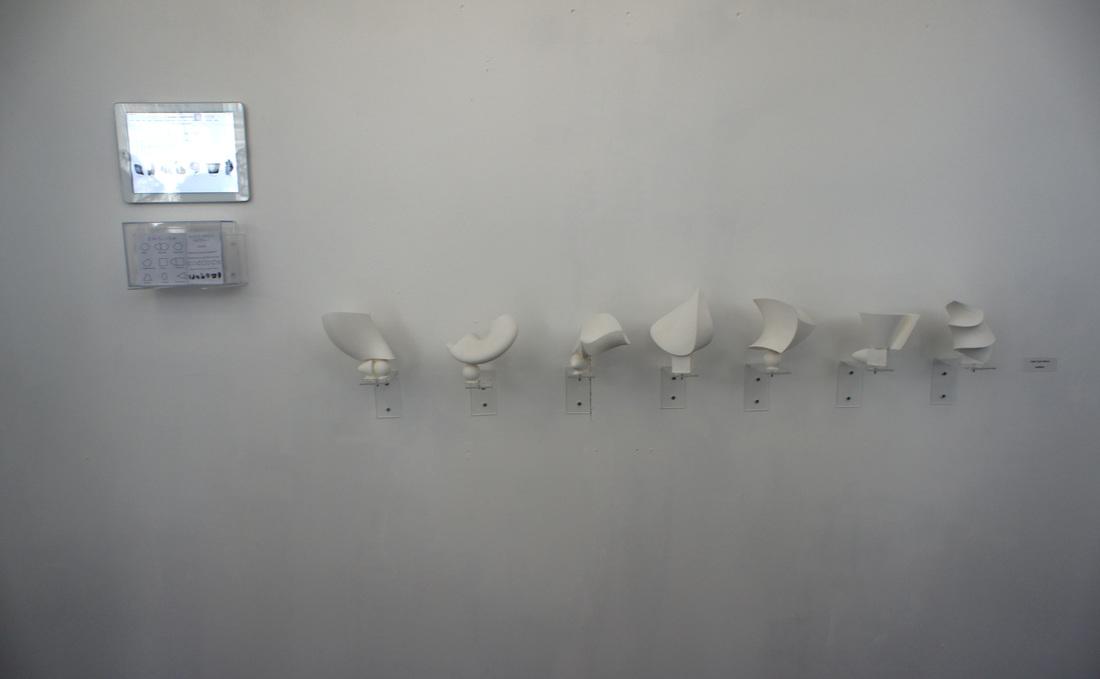
“As soon as the sun is up, poetic words, lines and shapes are combined in my head. Art is freedom. No more restrictions in this world where I feel constrained and stuck,” Tartour says. “I see the world in a naive and innocent way which helps me conceptualizing our everyday life, and I find poetic meaning in it. Combining intuition and the study of communication through codes, signs and logos is the key to my process. Conceptual approaches lead my works to a collision of associations and meanings. I try to influence people’s perception in my artwork by following the principles of semiotics, but I always leave a part for personal interpretation by including abstraction and poesy in the works. Language becomes image.”
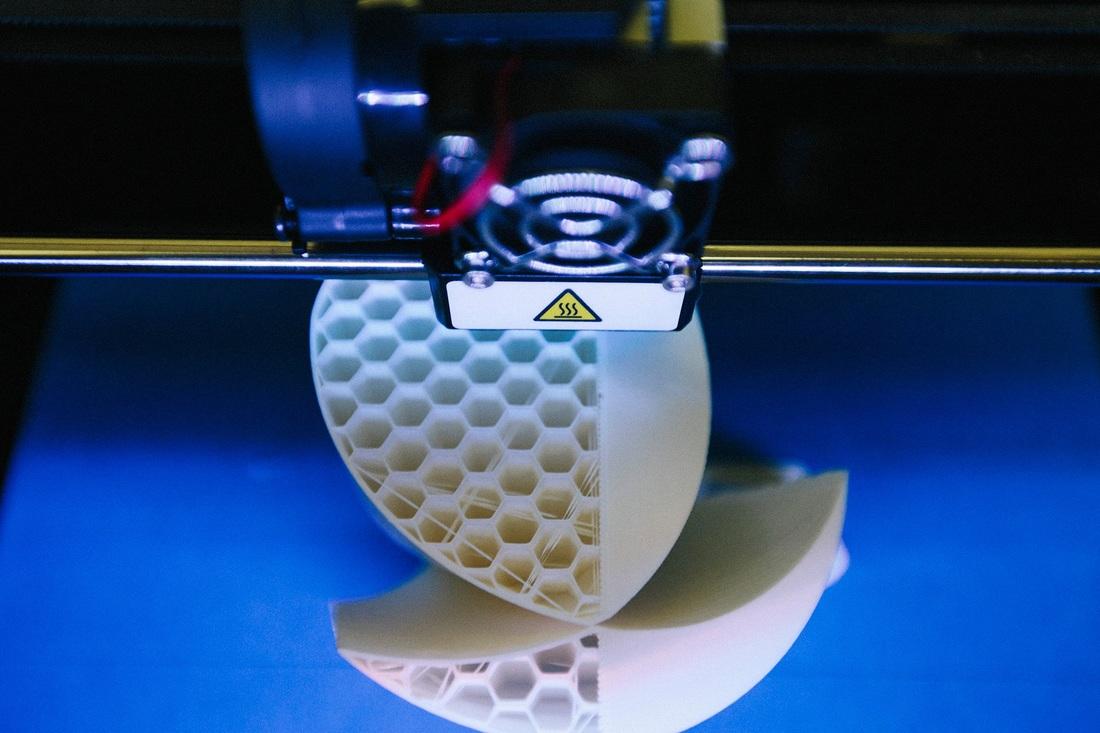 The seven organic 3D printed forms can be combined with half a dozen “type designators” to create a language of touch. Made from ABS and printed on a MakerBot Replicator, Tartour’s forms stand as pieces of art on their own, and she’s even written ‘poems’ with them to hint at the possibilities they contain.
What do you think of art student Eden Tartour’s project? Let us know in the 3D Printed Universal Language forum thread on 3DPB.com.
Subscribe to Our Email Newsletter
Stay up-to-date on all the latest news from the 3D printing industry and receive information and offers from third party vendors.
Print Services
Upload your 3D Models and get them printed quickly and efficiently.













You May Also Like
AM & National Competitive Advantage, Part One: the Real Problem with US Manufacturing
The problem with US manufacturing is the productivity growth rate. Depending on the source, US manufacturing productivity has either been flat or slightly declined since 2010. Before going any further...
Advanced Manufacturing at IMTS 2026: 3D Printing and AI and Drones, Oh My!
Last week’s International Manufacturing Technology Snow (IMTS) in Chicago welcomed over 90,000 attendees to the jungle that is McCormick Place. With over 1.17 million square feet of exhibit space, and...
Let the Games Begin! Xi Throws Down the Advanced Manufacturing Gauntlet
Sangmin Lee went to TCT Asia back in March and reported on the event for 3DPrint.com. He wrote two articles arguing that China’s AM industry looks “ready to scale.” This...
What 3D2GO Says About 3D Printing’s Growth in Southeast Asia
The Philippines offers an interesting case study in how 3D printing can develop in Southeast Asia, and Manila-based 3D2GO helps illustrate it. 3D printing in Southeast Asia doesn’t have to...