Edible 3D Printed Treats Made of Crickets and Dung Beetles Are Here!


Over the last couple of years we have seen countless different objects 3D printed. We have also seen all sorts of materials used to print the objects. From plastics, to titanium, to wood composites, to even sugar and dough. Out of all these, I would have to say that this recent material is probably the most eye opening, and stomach churning.
Crickets and dung beetles are what make up these delectable, highly nutritious treats. The insects have been crushed into a paste, fed into a 3D printer, and extruded into these intricate, well designed treats. Yes, pretty disgusting, but very nutritious if you ask Susana Soares, of London South Bank University, who feels that, “As the population grows, insects will be a solution to some food problems.”
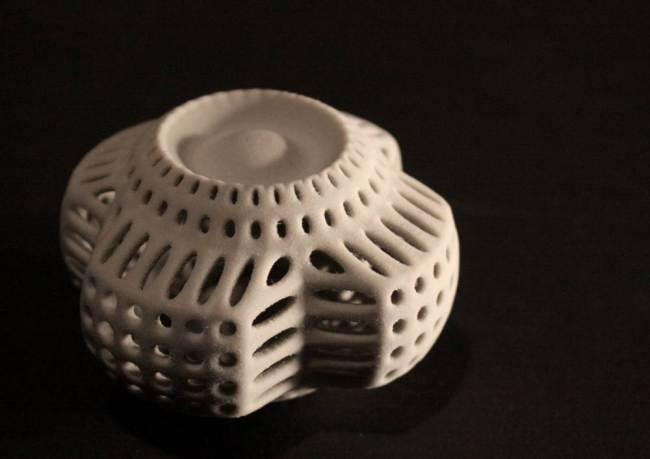
Maybe if you drown them in butter or BBQ sauce, and tell people that they are meat snacks, you’ll get some interested parties. Insects, especially crickets, are extremely high in protein. A 100 gram serving of crushed crickets contain a total of just about 121 calories, while providing 12.9 grams of protein, and 49.5 calories from fat. They are a bit high in carbs though, so if you are looking to cut down on your figure, you may want to consider another insect treat.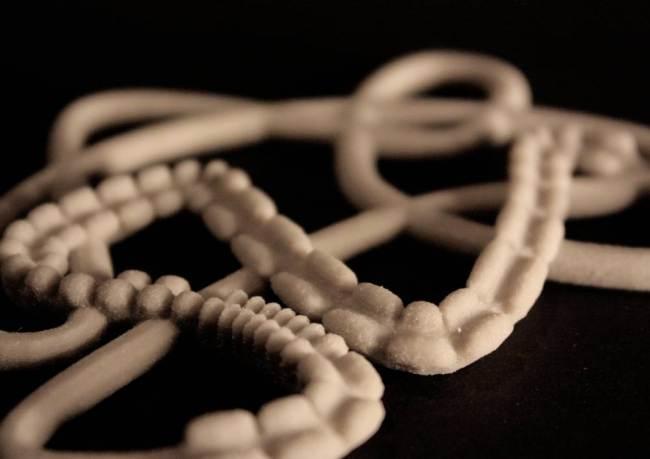
Discuss these highly nutritious, and tasty 3D printed treats here: https://3dprintboard.com/showthread.php?1653-3D-Printed-Food-From-Insect-Paste
Subscribe to Our Email Newsletter
Stay up-to-date on all the latest news from the 3D printing industry and receive information and offers from third party vendors.
Print Services
Upload your 3D Models and get them printed quickly and efficiently.













You May Also Like
3D Printing News Briefs, May 28, 2026: Continuous Fiber Reinforcement, Bioprinted Trachea, & More
In today’s 3D Printing News Briefs, America Makes announced the winners of its JAQS-SQ Project Call. Axtra3D is partnering with Keystone Industries to expand its dental material ecosystem, while BigRep...
3D Printing News Briefs, March 21, 2026: Resin Safety, 3D Printed Bandages, & More
We’re kicking off this weekend’s 3D Printing News Briefs with some America Makes project call news, and then moving on to resin safety myths. We’ll end with a 3D printed...
New Materials and Curing Unit at Formlabs
Formlabs is showcasing new SLA materials and a new curing solution. The new Tough 1000 Resin, with a tensile modulus of 1000, a Tough 1500, and an improved Tough 2000...
3D Printing News Briefs, October 25, 2025: Strategic Investment, Inner Ear Organoids, & More
In this weekend’s 3D Printing News Briefs, we’ll start off with some business news, as Xact Metal announced continued double digit growth in Q2 and Q3 of 2025, and the...