EnvisionTEC Unveils the WaxEra 3D Printer – DLP Printer that Prints in Wax


 The jewelry industry is one which is finally beginning to see the great benefits that 3D printing can provide. While more traditional jewelers still are stuck in their ways, creating jewelry the “old-fashion way”, via conventional lost wax casting techniques, some of the more edgy and modern-day jewelers are beginning to introduce themselves to 3D printing. When it comes to 3D printing and jewelry, most jewelers resort to SLA (stereolithography), as these machines are capable of printing with very high detail and with resins currently available which can be burnt away in a similar fashion to wax. This method, however, is not full-proof. There have been some disadvantages to using these printers, as the resins used do not melt away quite as nicely as wax does.
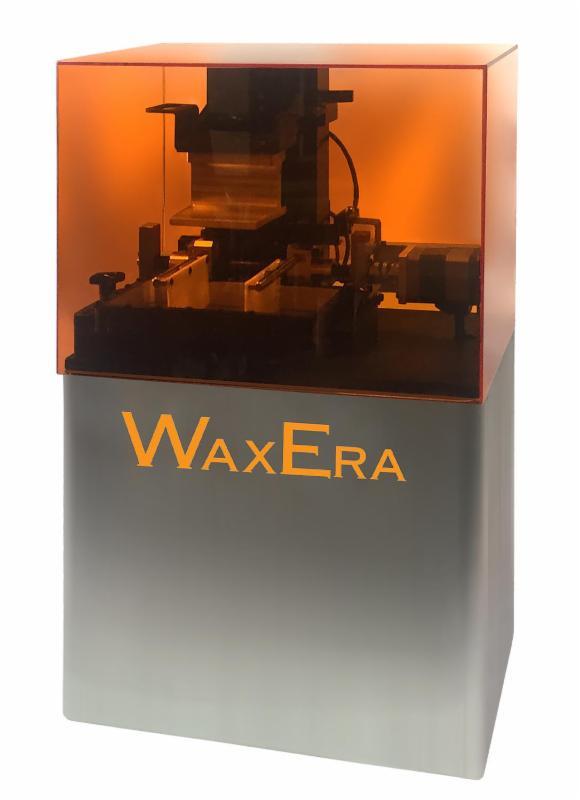
Today though, EnvisionTEC has announced an all new DLP 3D printer called the WaxEra, aimed specifically at those looking to integrate 3D printing into jewelry manufacturing. Unlike other SLA 3D printers which use lasers or direct light projectors to cure a liquid resin, the WaxEra 3D printer uses DLP SLA technology to cure special wax pastes.
“This capability adds the ability to use high density materials not previously possible using DLP 3D printing, including E-Wax Paste, EC3000, and QView,” explained the EnvisionTEC Global Team today.
So what exactly are these different materials?
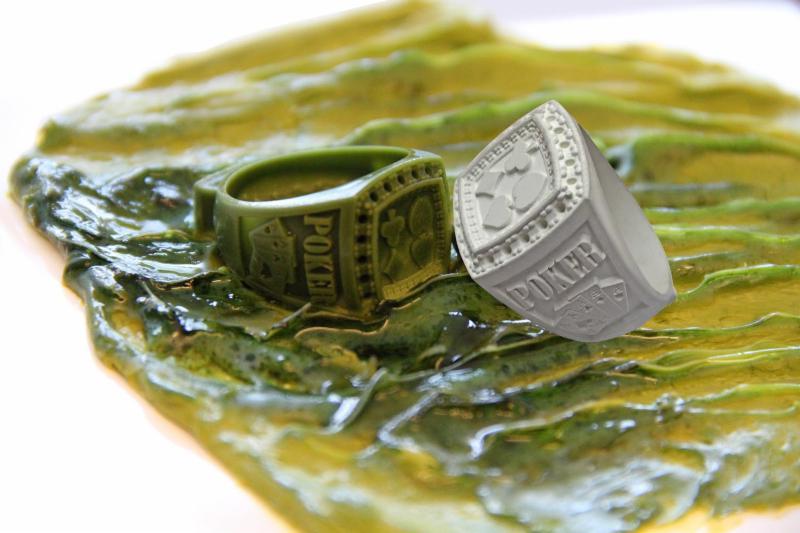
E-Wax is a polymer binder-based wax paste, manufactured in order to cast everything from detailed wedding rings to thick bracelets. It allows for the investment casting of large jewelry pieces regardless of their wall thicknesses. It also eliminates the common concern of porosity which happens due to unwanted ash content seen when other materials are burnt away.
“Casters can also benefit from the ease of casting E-Wax in the same tree as traditional wax patterns in silver, yellow and white gold, as well as platinum without the need for any significant change to standard burnout cycles or the use of sophisticated casting equipment,” says the Global Team.
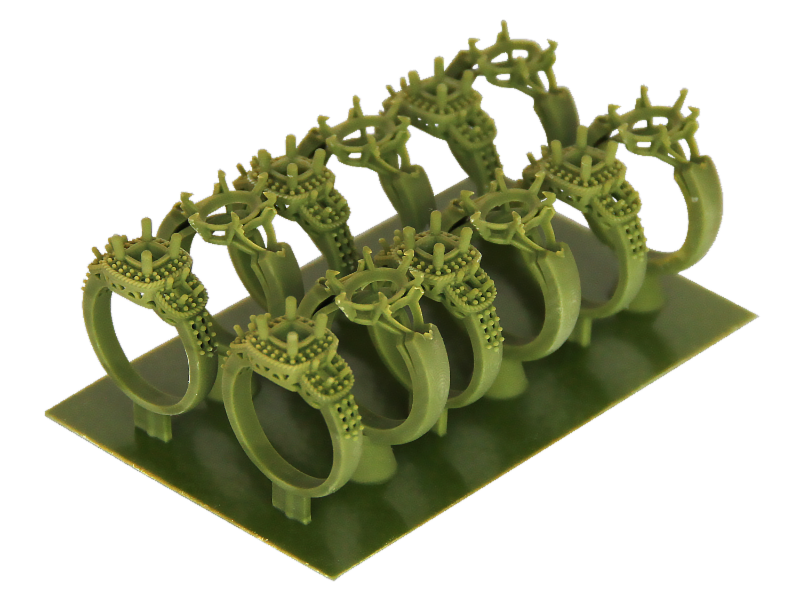
EC3000 rings straight from Perfactory? 4 Mini XL 3D printer
EC3000 is a material that’s made up of three times as much wax as found in any other 3D printable polymer on the market today. It won’t boil when burnt out, so again there is no worry of porosity concerns when casting jewelry. It also has the ability to print in extremely high detail which isn’t seen with any other materials currently available.
QView is a brand new materials being released by EnvisionTEC. It can print at speeds of up to one inch per hour at a 50µm resolution. This will allow jewelers to iterate upon and get their products to market much faster than when using traditional manufacturing methods.
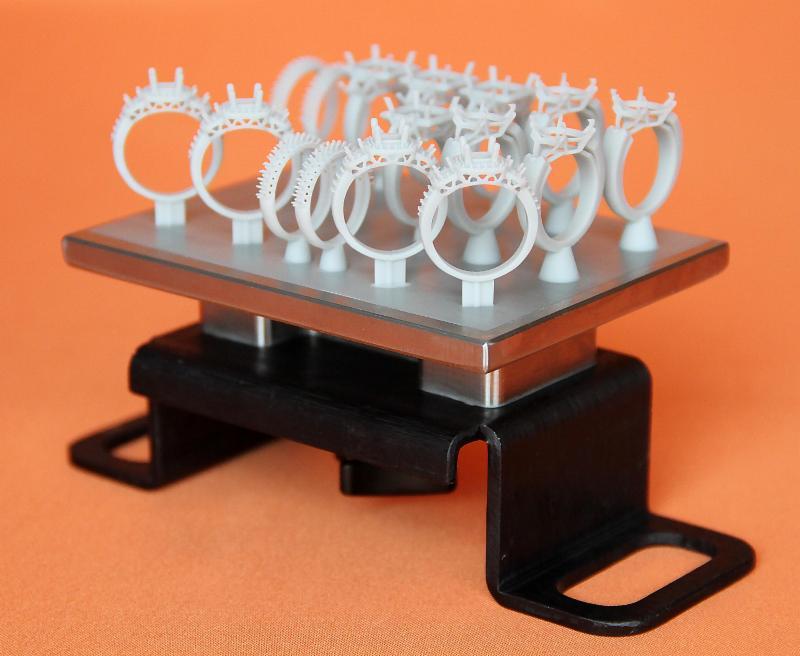
QView rings printed in an hour
For those who are interested in seeing the WaxEra 3D printer and the new QView material first hand, you are in luck. EnvisionTEC will be exhibiting at JCK Las Vegas, which takes place this weekend from May 29th – June 1st at the Mandalay Bay Resort and Casino in Las Vegas.
What do you think of this new 3D printer? Will it revolutionize the jewelry industry? Discuss in the EnvisionTEC WaxEra 3D Printer forum thread on 3DPB.com.
Subscribe to Our Email Newsletter
Stay up-to-date on all the latest news from the 3D printing industry and receive information and offers from third party vendors.
Print Services
Upload your 3D Models and get them printed quickly and efficiently.












You May Also Like
The Drone Economy Needed a Scalable Manufacturing Backbone. ADDMAN Built One
When ADDMAN closed its acquisition of Forecast 3D in January 2026, the headlines focused on fleet size and Southern California footprint. Six months later, those metrics feel almost beside the...
The Drone Industry is Showing Where 3D Printing Delivers Real Value, AM Research Report Finds
The rapid rise of drones is creating one of the biggest opportunities for additive manufacturing (AM). Whether they’re used on battlefields, inspecting bridges or crops, or delivering supplies, drones need...
The Longevity Economy Needs a Factory
Longevity has become one of the biggest stories in healthcare. Every week seems to add a new announcement about an anti-aging therapy, an AI-powered drug discovery platform, or a startup...
The SLS Market: Game of Trucks
This is truly an exciting moment in the SLS market. With HP‘s release of the 1200 and Formlabs‘ release of the X1, we can see the SLS market heating up....