Carnegie Mellon University Stays True to History with ‘Additive Manufacturing for Engineers’ Course

 Carnegie Mellon University began operations as the Carnegie Technical Schools, founded by Andrew Carnegie in 1900 before granting four-year degrees in 1912. Now the venerable university has launched an undergraduate engineering course in additive manufacturing.
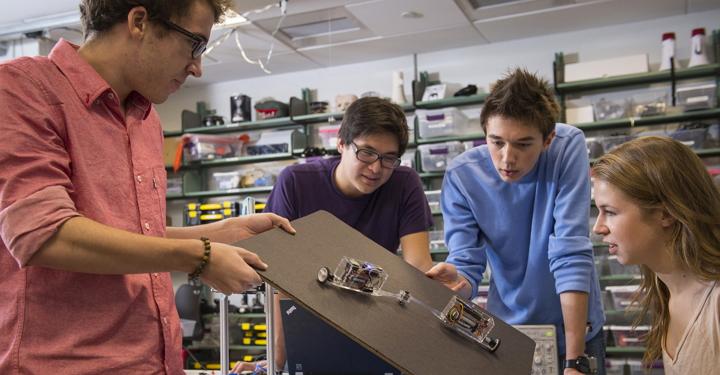
 Called Additive Manufacturing for Engineers, the courses teach students the business, design, and engineering aspects of 3D printing product development through work in teams and learning the additive manufacturing process.
“Students conceptualize, 3D design, 3D print and market their own unique product in a very short amount of time,” says Dr. Jack Beuth, a professor of mechanical engineering at CMU and the creator of the course. “This stimulates entrepreneurial, creative problem solving.”
Carnegie Mellon say they’re just one of three academic institutions to offer 3D metal printing capabilities via laser powder bed or electron beam powder bed processes.
The university also offers the Integrative Design, Arts & Technology – or IdeATe – Network which includes a 3D printing facility called IDeATe@Hunt. They say all enrolled students can take the IDeATe courses. The IDeATe facility has studio classrooms with 3D printers available to all students.
“The additive manufacturing process is perfect for design projects,” Dr. Beuth says.
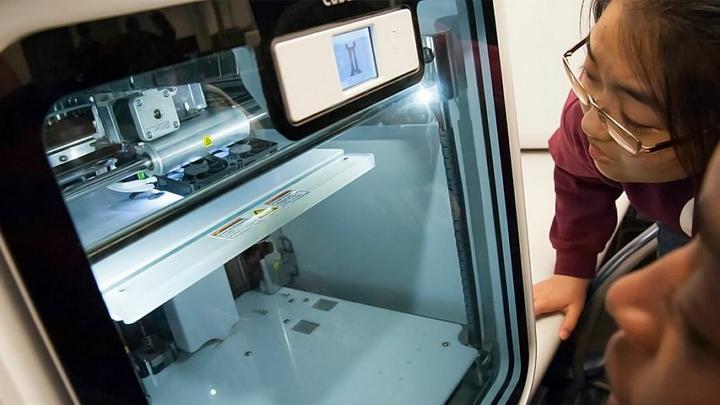
Students can also work directly with smaller-scale polymer 3D printing machines–the CubePro–for their design and prototyping projects as well. But it’s the metal printing options available to students that sets the program apart.
“This is the only course of its kind to expose undergraduate students to the two 3D metal printing processes of greatest interest to industry. Students will gain an understanding of the full range of additive manufacturing processes — from maker machines to metals machines — and the market and uses for them,” says Dr. Beuth.
The program begins with students arriving at an initial idea for a product and then performing market research to support their idea. Dr. Beuth says they then design products before uploading the resulting printable files to Shapeways.
 And there are many options available to students outside the core courses. Physical computing students can find instruction in 3D printing enclosures for circuitry components, or architecture students might 3D print scale models.
“IDeATe@Hunt creates a work environment where students are exposed to a variety of common enthusiasts from a wide array of varying backgrounds,” says the technical director of IdeATe, P. Zach Ali. “It is our hope that this community begins to learn from each other’s work.”
In addition, IDeATe offers courses in Human-Machine Virtuosity, Physical Computing, Physical Computing Studio, Digital Tooling, and Rapid Prototyping Technologies.
What do you think about the Carnegie Mellon additive manufacturing course offerings. Do you think these courses will inspire students to learn more about 3D printing and metal additive manufacturing techniques? Let us know in the Carnegie Mellon forum thread on 3DPB.com.
Subscribe to Our Email Newsletter
Stay up-to-date on all the latest news from the 3D printing industry and receive information and offers from third party vendors.
Print Services
Upload your 3D Models and get them printed quickly and efficiently.













You May Also Like
Why the AM Industry Should Pay Attention to Schneider Electric’s $22.6B PTC Acquisition
By late 2024, there was already enough signaling of the additive manufacturing (AM) industry opportunity in the data center infrastructure market for AM Research to write a report on the...
How Does Nike’s 3D Printing Approach Fit Into Its Restructuring Plan?
Shares of Nike stock hit all-time highs in late 2021 but have cratered in the years following, with the company losing nearly 80 percent of its market cap since peaking....
3D Printing News Briefs, October 1, 2026: Defense, Enclosures, & More
In today’s 3D Printing News Briefs, we’re starting with defense news, first from Massivit and then from AML3D. Then we’ll move on to U.S. manufacturing of a new large-format LPBF...
South Korea’s Lincsolution Lands Hanwha Defense Deal as Hanwha Invests Billions in US
I recently wrote about how the South Korean additive manufacturing (AM) firm Lincsolution is building an aerospace and defense hub, part of the company’s construction of “the largest AM facility in...