European Countries to Begin 3D Printing Human Bones


 The idea of 3D printing has taken a while to catch on in the realm of manufacturing, where it has proven to provide for large cost reductions throughout the manufacturing sector. At the desktop level, 3D printing has provided a method for ordinary people to create working prototypes of their ideas, which eventually will lead to much more innovation in just about every part of life imaginable. 3D bioprinting is the next phase in the progression, as we have already begun to see the construction of the initial building blocks for a future where humans will one day be able to have an entirely new organ 3D printed for themselves. This month, a Netherlands based company called Xilloc has taken a huge step forward in the field of bioprinting, by reaching an agreement with a Japanese company known as Next 21, to bring 3D printable bone into hospitals in Europe.
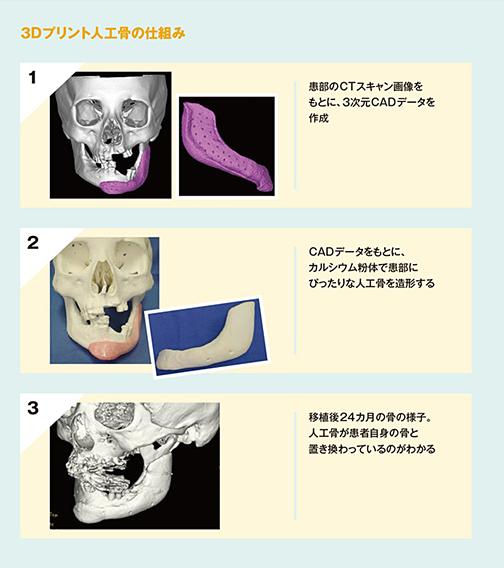 Part of the Next 21 “Bone Factory,” is a process that they have developed to 3D print bone graphs. This technology aims to replace current methods of bone grafting which include the transplantation of bone from other parts of one’s own body, transplantation of bone from other individuals, and even sintering of hydroxyapatite and calcium phosphate bone substitutes. All of these current technologies are slow processes which don’t build up entire bones, but instead just create a small portion of bone that can be implanted into the body and then slowly grow by itself.
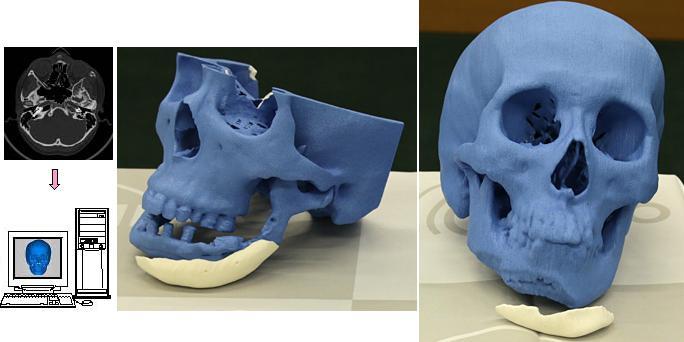
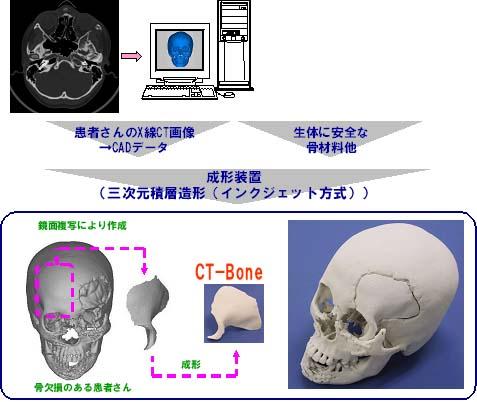
Next 21’s technology is referred to as CT-Bone, where CT scans are taken of one’s body to determine the exact size and shape of the bone that’s required. Then, using an inkjet 3D printing process, the actual bone is 3D printed in the exact shape necessary, including areas suitable for the inclusion of bone conduction and blood vessels.
The technology, developed with help from University of Tokyo researchers, has been licensed by Next 21 to Xilloc, as of April 30th. Xilloc, will begin manufacturing and selling CT Bone in various European countries, allowing doctors to begin implementing the technology in patients of their own. Unlike previous methods of bone grafting, which use heat, CT-bone does not. This allows for much faster fusion to a patient’s own bone, and because the entire bone structure is printed, healing times are increased significantly.
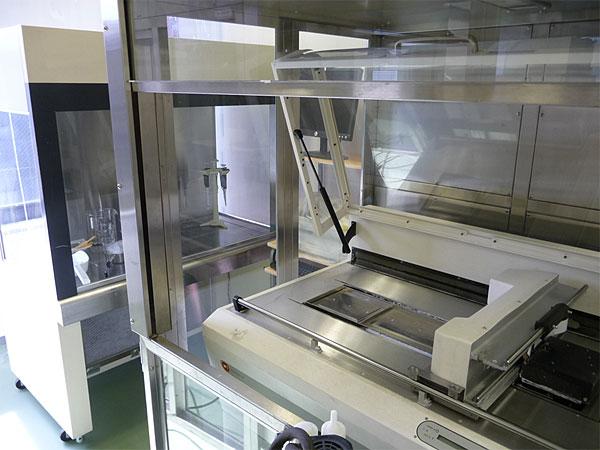
The proprietary 3D printers have the ability to print with an accuracy down to 0.1mm, meaning a perfect fit on a patient-to-patient level. It should be interesting to see how quickly this technology is integrated into operating rooms across Europe, and if the United States will be the next to implement it. The results so far, have been shown to not only increase healing time, but also help patients avoid infections and bodily rejections seen in previous bone grafting techniques. This is yet another tremendous innovation within the medical field, thanks to 3D printing technology.
What do you think about this agreement between Xilloc and Next 21? Will this technology quickly spread to other locations around the world? Discuss in the CT-Bone forum thread on 3DPB.com.
Subscribe to Our Email Newsletter
Stay up-to-date on all the latest news from the 3D printing industry and receive information and offers from third party vendors.
Print Services
Upload your 3D Models and get them printed quickly and efficiently.












You May Also Like
Phase3D Puts Its ISM Hardware in the Hands of AM’s Future Workforce with DEHub Partnership
The US additive manufacturing (AM) industry faces a turning point in terms of its approach to R&D. As has been the case for aggregate R&D in the US economy at...
3D Printing News Briefs, August 1st, 2026: Project Calls, Contact Lenses, Chairs, & More
We’re starting with the winners of two America Makes project calls in this first 3D Printing News Briefs of August! Then we’ll move on to AM quality control for aerospace,...
NASA Funds Phase3D Research Project to Advance In-Situ Monitoring for Metal AM
Garbage in, garbage out: that cliche is currently associated most often with AI, but it really refers to the universal principle whereby a final outcome is only as useful as...
Phase3D’s In-Situ Monitoring Lands $2.9M in Oversubscribed Round
The use of metal additive manufacturing (AM) for production at scale appears to be steadily increasing, as evidenced by recent announcements like EOS’s sale of 30 M4 ONYX systems to...