The Unbendable Fortificase – UK Inventor 3D Prints Reinforcements for the Bendable iPhone 6

Last September, the iPhone 6 was released with great fanfare. It had a great deal going for it over its predecessor, the iPhone 5, including the option of a larger display with a 4.7-inch or 5.5-inch model, a speedier processor, improved cameras, and improved Wi-Fi and LTE connectivity. Many users discovered, however, that because of its sleek and slender new look, the iPhone 6 was vulnerable: People stowed the device in their pockets only to discover upon removing it that the phone had bent. Thus ensued the episode in Apple iPhone history known as “bendgate,” although Apple claims that it has only received a small number of complaints.
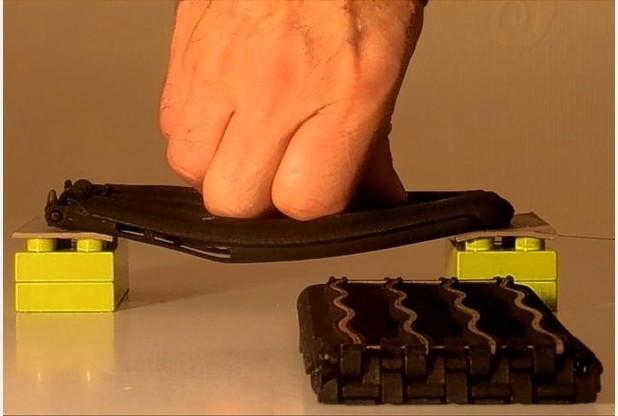
Diaz performs a bend test without the Fortificase.
Whatever the case, that design flaw inspired one creative maker in a small city in the UK to come up with a 3D printed solution. Fred Diaz of Sleaford, England designed what he calls the “Fortificase,” a carrying case or shell designed to protect the iPhone 6 from damage and its users from the frustration and expense of replacing the otherwise high-quality electronic device.
“The initial idea,” explained Diaz, “came from the reports of ‘bendgate’ about the iPhone 6, but I did further research and found out that other mobile devices are also becoming vulnerable because of their larger size and thinner profiles.”
Diaz first produced a case from plastic but found that it didn’t provide the level of protection against bending that he’d hoped for, so he began thinking about how he could incorporate meta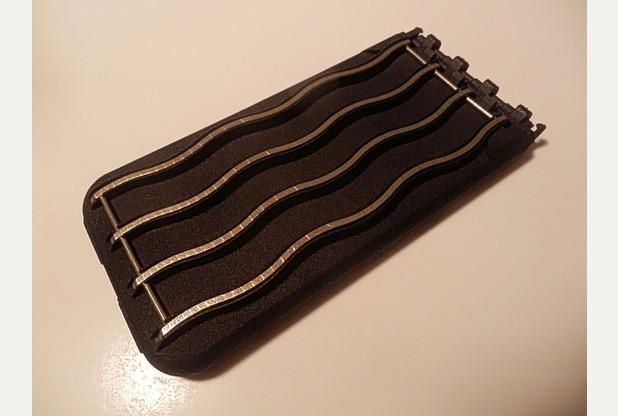 l, which would provide greater rigidity. The problem with metal, as similar attempts by other designers of cases for handheld devices found, was that it added extra weight when the appeal of the new iPhone lay in part in its thinner, lighter profile. Some metals were problematic in other ways.
“…Manufacturers don’t like to have metal, carbon fibre or magnets in close proximity of their devices as they can interfere with their radio signals and sensors,” said Diaz.
Diaz decided to compromise. He designed an iPhone 6 case with a plastic body and a steel reinforcing element that’s not only successful at protecting the device, but it’s also quite stylish. The case folds around the device with a cover that works like a flap. The metal grill protects the phone when it is stowed and when its owner flips open the protective flap, the metal is no longer in contact with the phone.
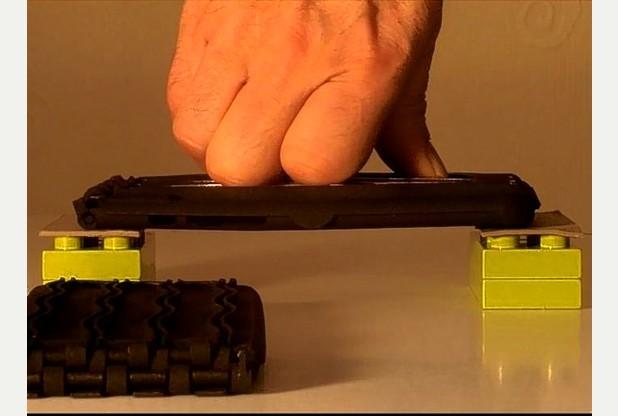
The Fortificase in action!
Diaz is looking into selling his iPhone case on Amazon and is considering selling them in stores in Sleaford. While he believes he can keep up with demand by 3D printing the cases as orders come in, Diaz would like to raise money to finance mass production of the cases using the injection molding process, a more affordable conventional manufacturing method. He is now 3D printing Fortificase but to do so in much larger quantity and to offer protective shells for other electronic devices is too expensive.
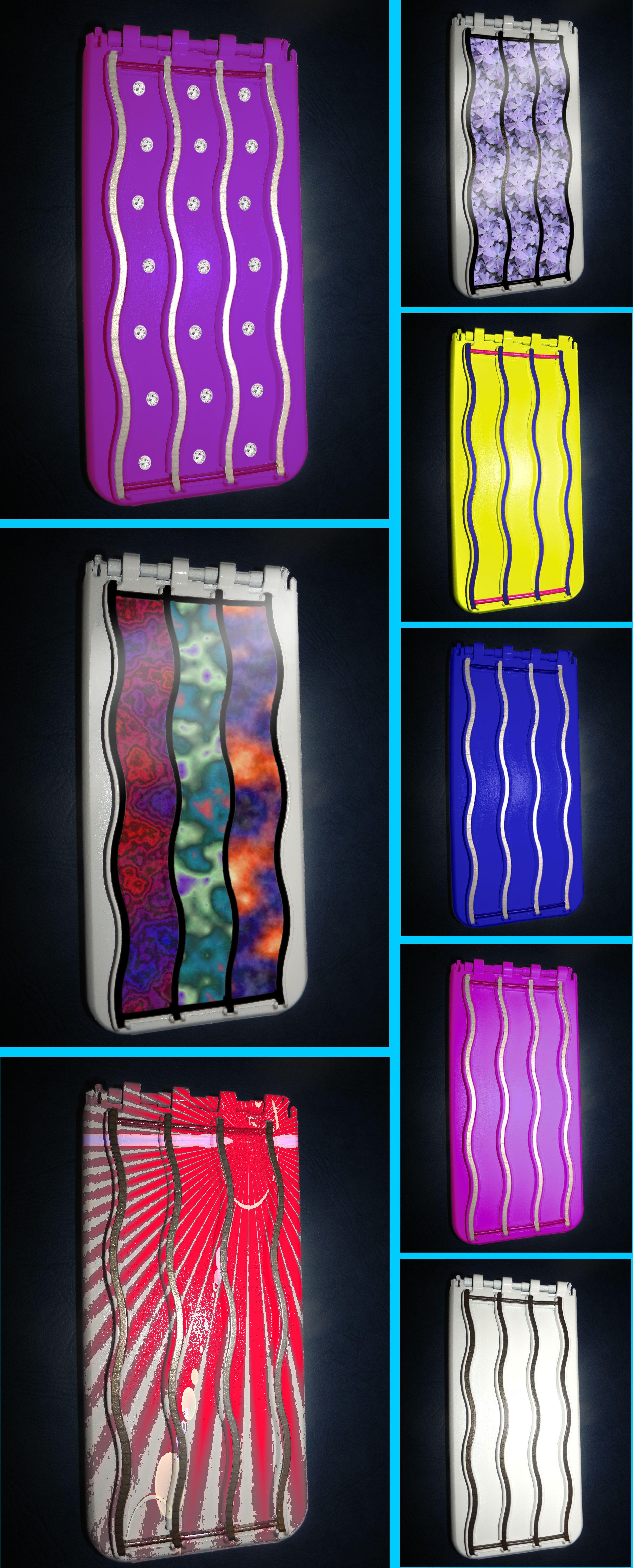
In order to raise money, Diaz turned to crowdfunding. While he cancelled his Kickstarter campaign, the Fortificase still has a few days left on Indiegogo to try to reach the target of £12,000 by April 12th. Diaz noted that he was interested in creating more stylish looks to the case, and has offered a look into possible colors and “bling” that might become available with a successful product launch.
What do you think? Let us know in the Fortificase forum thread on 3DPB.com. Check out Diaz’s project video below, as well as a look at design options.
https://youtu.be/D5U_QmmkoKo
Subscribe to Our Email Newsletter
Stay up-to-date on all the latest news from the 3D printing industry and receive information and offers from third party vendors.
Print Services
Upload your 3D Models and get them printed quickly and efficiently.













You May Also Like
3DPOD 316: Beehive’s Gordie Follin on 3D Printed Engines and More
Gordie Folin had deep experience in engineering at Pratt & Whitney, GE, and GE Aviation before becoming the Chief Product Officer at Beehive Industries. Among his achievements, he served as the...
3DPOD 315: Dirk Simon, from BASF to Farsoon to FKM, and now Square New Business
Dirk Simon had already spent years in the chemicals industry before joining and pioneering BASF‘s 3D printing effort. We get to hear how that firm looked at 3D printing and...
Printing Money Episode 42: Q2 2026 Public Markets 3D Printing Earnings Analysis with Troy Jensen, Cantor
Welcome to Printing Money Episode 42. Troy Jensen (Managing Director, Cantor) returns, joining Danny Piper (Managing Partner, NewCap) to review Q2 2026 publicly traded 3DP/AM company earnings reports. Troy’s quarterly...
3DPOD 314: Debinding, Sintering, and Metal Binder Jetting with Stefan Joens, Elnik Systems and DSH Technologies
Stefan Joens of Elnik Systems sells ovens. Their debind and sintering equipment powers a lot of high-volume binder jet and MIM production. We learn about Elnik and its origins. But...