
Engineer 3D Prints Elsa’s Ice Castle From the Movie ‘Frozen’ in 44 Different Pieces

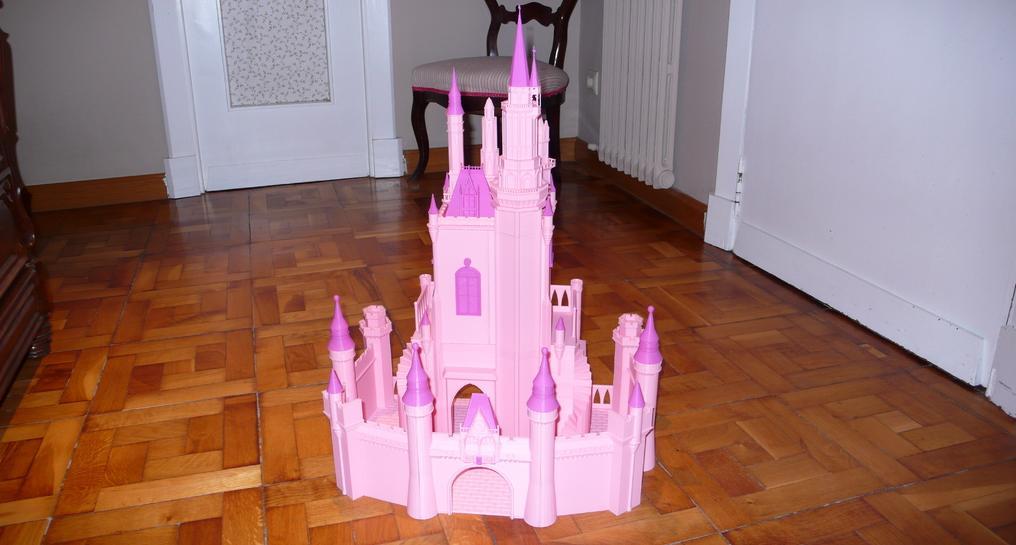 More and more, engineers all around the world are beginning to see the benefits that 3D printing can provide. They are starting to use the technology for creating architectural models, prototyping designs, and even creating end products. Whether it is utilized for designing new products, engineering a 21st century bridge, or creating one-of-a-kind wearables, 3D printing is finally starting to really catch on.
For one industrial engineer, named Mariano Gros Bañeres, 3D printing was used mostly as a hobby. He had constructed his own P3steel (prusa3 style printer with a chasis built in steel) 3D printer, and has used it in creating many interesting things, such as an electric transformer pole that his company built in rural areas in Spain. However, his greatest challenge as far as 3D printing goes may have come when he was tasked with making a princess castle for a colleague’s daughter.
“One of my office colleagues saw the things I printed and asked me if it was possible to print toys for her daughter,” Bañeres tells 3DPrint.com. “She was looking for an Elsa Castle for their daughter’s dolls.”
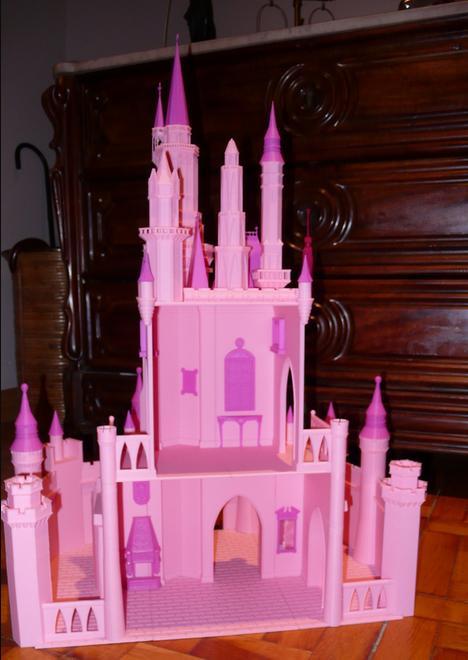 So immediately Bañeres started to search around on Thingiverse, trying his best to find a design that would work for this little girl. Unfortunately though, he couldn’t find a design for this Castle, which is depicted in the film Frozen, so he decided to show the girl’s father how he designs things in Sketchup. Amazingly the father caught on quite well and started sending design files to Bañeres for him to check on and modify.
“I reviewed all of the pieces, and I made modifications in order to reduce material usage, test to see if any pieces would have print problems and prepare all the STL files for printing,” Bañeres tells us. “Also I started to test different glues to verify their strengths.”
Once the two had all of their design files ready, it was off to 3D printing all 44 pieces which would make up this incredibly large and detailed castle. Of the 44 pieces, there were nine pieces which each took up the majority of the 3D printer’s entire build area. These took an astounding 10-14 hours each to print. In all, the 44 pieces took more than 120 hours to completely fabricate.
After all the pieces were printed out in fuchsia and pink colored filament, Bañeres glued them together using PVC pipe glue. It worked great and the pieces bonded together perfectly. When Bañeres’ colleague gave the castle to his young daughter, she was delighted, and could not believe her eyes that it had been created using a 3D printer.
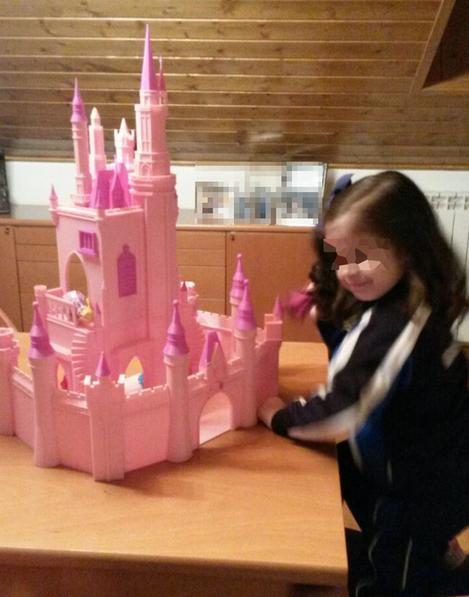 Typically when you think of industrial engineers using 3D printers, you don’t picture them using the technology to create pink toy doll houses for little girls, but without a doubt, Bañeres’ experience certainly helped this little girl’s father create the perfect castle for his young daughter.
What do you think about this 3D printed Elsa castle? Discuss in the 3D Printed castle forum thread on 3DPB.com.
Subscribe to Our Email Newsletter
Stay up-to-date on all the latest news from the 3D printing industry and receive information and offers from third party vendors.
Print Services
Upload your 3D Models and get them printed quickly and efficiently.













You May Also Like
HG Laser & The Overlooked Sources of China’s Advanced Manufacturing Strength
Chinese state-owned enterprise (SOE) HGTech (Huagong Tech) just reported that it achieved record revenue in H1 2026, amounting to just over $1 billion. The company credited the results to success...
3D Printing Financials: $28M in China, U.S. Deals and a Metal AM Comeback
Money continues to go into additive manufacturing (AM). From a $30 million raise for a Chinese metal 3D printing company to new funding for naval AM and a European company...
AMAsia Pulse: AM Investment Picks Up Across Asia-Pacific
The first half of September brought fresh investment and expansion activity across Asia-Pacific’s additive manufacturing sector. China’s Xinjinghe secured funding for an aerospace AM hub, South Korea’s Lincsolution outlined plans...
3D Printing Market Hits $4.48B After Six Straight Quarters of Growth
The additive manufacturing market continued to grow in the second quarter of 2026, adding another quarter to what is becoming a much more consistent expansion for the industry. Worldwide revenue...























































