Using 3D Printing to Make Monster Mascots

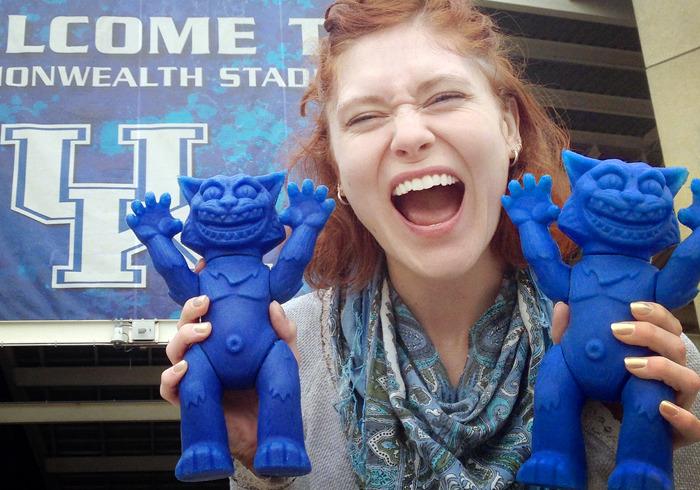 Natalie Mathis and Quincy Robinson started their Kickstarter campaign this week to seek funding for their entrepreneurial innovation: 3D printing plus local flavor. One of the aspects of 3D printing that has been heralded far and wide is the fact that it democratizes creation. With its ability to customize at the drop of a hat (or nearly so) it only makes sense to bring the objects it is producing back to the local people too. It’s somewhat like a micro-brewery approach to printed products: not just Made in America but Made in (insert region or town here).
It was the Made in America that first attracted the two designers who were part of the 2014 class of First Batch, a Cincinnati-based manufacturing accelerator. Mathis described their beginning approach:
“Originally, we hoped to produce our mascots in the U.S.A. We priced a facility in New York, but found the cost to be prohibitive. It was First Batch that connected our company with manufacturers who worked with us until we discovered how to make our figures entirely in the Cincinnati area. It’s great for local business.”
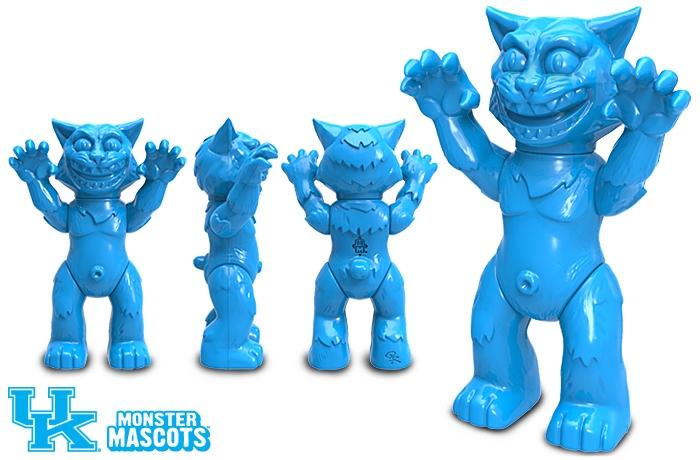
While these two may be new on the business scene, they bring a lot of solid experience to the design and creation of these types of products. Robinson has worked for over a decade creating and sculpting for the toy industry. He turned that eye to their first mascot portrait: the University of Kentucky Wildcat.
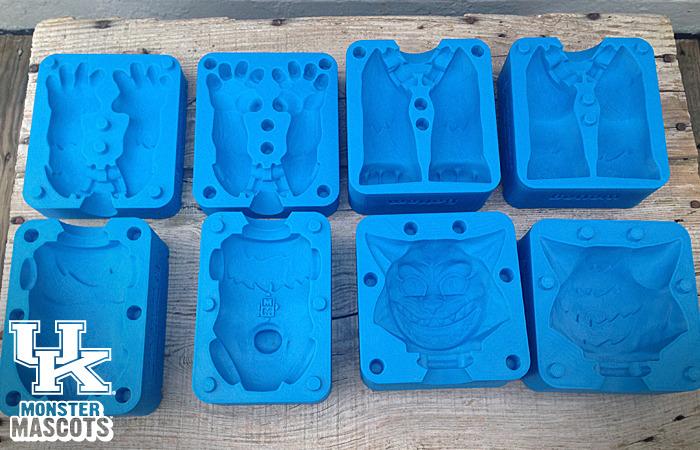
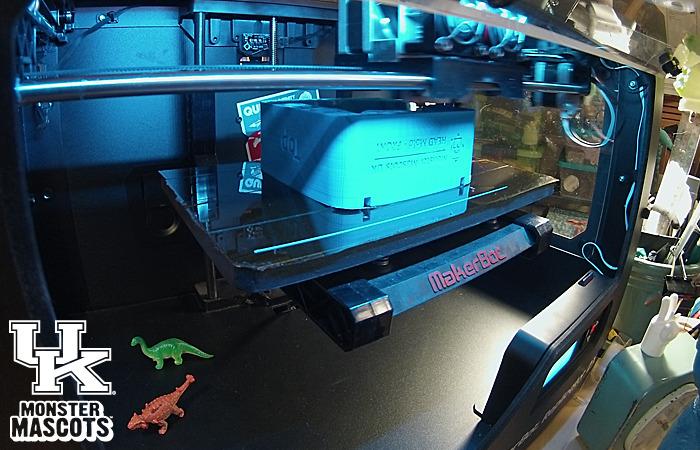 The first step was to create a digital model for the negative of each section of the mascot. Those were then printed on desktop 3D printers. In turn, those blocks were taken to an aluminum sand casting facility, another local connection in the production cycle, and a metal mold was produced. The role that 3D printing played in the mold production allowed Monster Mascots to save thousands of dollars of upfront costs and meant that the production of limited runs and small batches of in demand items would be a commercially viable approach.
This doesn’t mean that this creation sprung to life over night. Mathis and Robinson calculated that it took approximately 120 hours to reach the final version of their mascot and a further 80 hours to grow the mold blocks in their 3D printer. Finally, they had to work for several months in order to secure the necessary legal releases from UK in order to be an officially licensed product. Now, they are turning to Kickstarter to help them get their business, Monster Mascots, up and running.
 The team is looking to raise $25,000 by March 3 in order to bring their production up to speed. While they currently only have $389 pledged at the time of writing, the campaign is only a few days old and as fans gear up for March Madness, it’s hard to imagine they’ll be able to resist these super-sized creatures.
Let us know what you think about this local approach to creation over in the Monster Mascots Made Locally forum thread at 3DPB.com.
Subscribe to Our Email Newsletter
Stay up-to-date on all the latest news from the 3D printing industry and receive information and offers from third party vendors.
Print Services
Upload your 3D Models and get them printed quickly and efficiently.











You May Also Like
Cybersecurity: A Necessity in a Maturing Additive Manufacturing Industry
Additive Manufacturing is no longer an experimental technology operating on the margins of industrial production. Over the past decade, it has become an integral part of how OEMs design, produce,...
How Metal Additive Manufacturing Is Reshaping the Future of Aerospace and Defense Engineering
Additive manufacturing (AM) is steadily changing the way we think about producing metal parts for aircraft. Whilst aerospace and defense companies have been using metal AM for over twenty years,...
The AM Adoption Problem No One Models
Through its short history, Additive Manufacturing has been presented to the investment community as a classic high growth technology story. Manufacturing is a multi-trillion-dollar market. Even a small percentage looks...
The Business of Customized Sports Equipment: How 3D Printing Is Changing Athletic Gear
For years, 3D printing in sports has been linked mostly with prototypes, concept shoes, and one-off experiments for elite athletes. Helmets, cleats, and footwear midsoles often took over the headlines,...