Rocket Lab Buys Iridium in $8 Billion Deal, Creating a New SpaceX Rival

Rocket Lab is buying Iridium for $8 billion in a cash-and-stock deal worth $54 per share. Shareholders will receive $27 in cash plus additional Rocket Lab common stock. The company now sees itself as a “vertically integrated space company that designs, builds, launches, and operates its own constellations, delivering critical communications capability to millions of users worldwide.” In essence, therefore, Rocket Lab is now a SpaceX alternative. Given Elon Musk‘s increasingly visible political profile, Rocket Lab may be seen by many firms and individuals as a more responsible and safer partner. Iridium currently has 2.55 million active subscribers for L-band spectrum and LEO-based data and voice direct-to-device services. The hope here is to use Rocket Lab’s launch capabilities to extend the Iridium network, its constellation, and its capabilities to a level that rivals SpaceX.
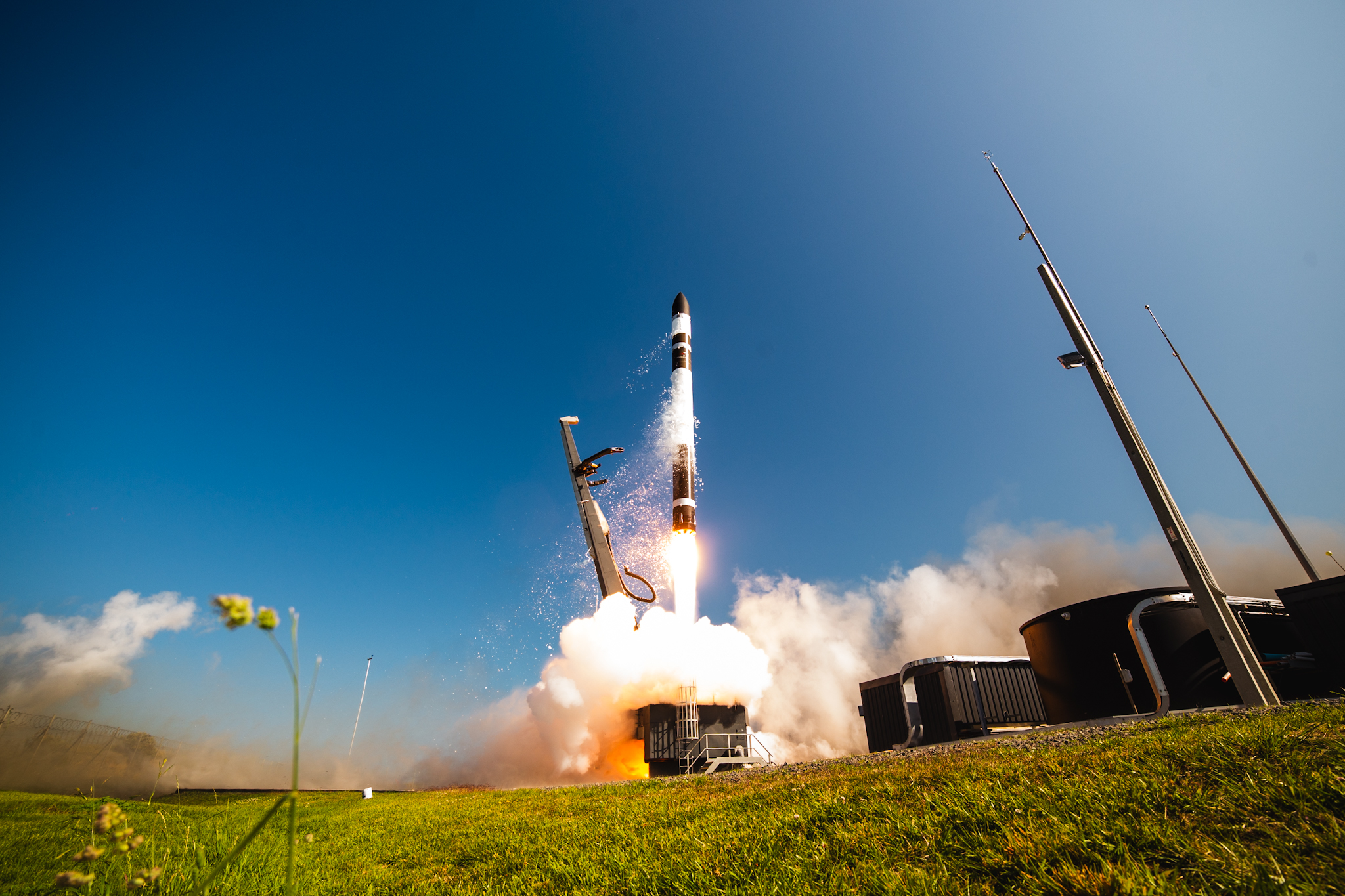
Rocket Lab launches “IoT 4 You & Me” Mission. Image courtesy of Rocket Lab.
Sir Peter Beck, founder and CEO of Rocket Lab, said,
“This is a defining moment for the space industry and the start of a new era of strategic, accelerated growth for Rocket Lab and Iridium- Iridium has built the gold standard in secure, safety critical global satellite connectivity. It is relied upon by maritime fleets, the aviation industry, governments, and heavy industrial organizations who operate in the most remote off-the-grid locations. By marrying Iridium’s deep heritage, trusted infrastructure, and highly sought-after spectrum with Rocket Lab’s extensive and proven launch and manufacturing capabilities, we have the capability to unlock entirely new markets. We will go far beyond maintaining a legacy; we are going to build upon it to pioneer next-generation space applications and deliver sought-after capabilities to existing and new customers.”
Iridium CEO Matt Desch added,
“As the worlds of space and terrestrial communications continue to converge, more critical services will depend on space-based capabilitie. Success will come from those who can bring new innovations to space quickly and sustain them over time as efficiently as possible. We’re excited about being able to accelerate the next generation of IoT, aviation, maritime, PNT, and national security capabilities, and pursue new innovative applications as part of Rocket Lab – a fully integrated, end-to-end space company. That’s an incredible opportunity for our customers, partners, employees, and stockholders.”
The company wants to be an end-to-end space firm with captive launch capabilities and its own path to end users, constellation, spectrum and network. This should materially add to Rocket Lab’s revenue and profile. The company previously was an interesting potential partner for governments, and now it will be an essential one. Just days ago, SpaceX also bought around $20 billion in spectrum, meaning it is likely to enter the US mobile market directly. Potentially, Rocket Lab can now do this, either as a partner to existing networks or as a rival to them. Verizon, AT&T, and T-Mobile have revenues of $138 billion, $125 billion, and $88 billion, respectively, so the prize there is indeed a rich one.
The company also thinks that there is a defense play in warfighter communications. In PNT (Positioning, Navigation, and Timing) and other military services, which could include targeting and navigation capabilities for drones, for example, as well as direct warfighter push-to-talk and other services. Iridium did $871.7M in revenue in 2025. The company hopes to close the deal in 2027. So far, both boards have agreed. Rocket Lab has gotten a $3.6 billion 364-day senior secured bridge term loan facility from Deutsche Bank and Wells Fargo to help finance the deal.

“IOT 4 You and Me” payload integration. Image courtesy of Rocket Lab.
This deal is interesting since it opens up a direct SpaceX competitor. Will the deal go through? We’re not sure, since there are many considerations for countries to weigh. Also, Elon Musk was the largest direct source of funds for Donald Trump’s campaign, giving him $291 million in the last election. He could yet secure approval in the US for this complex deal, or, at the very least, slow it down considerably.
It would be good for the military and commercial businesses to have more alternatives to SpaceX. More competition on the worldwide internet will prevent a monopoly from forming there. It may take years for competitors to build up capacity and global coverage, so a monopoly of space-based internet services for only a few years may deter competition indefinitely. For companies and governments wanting to deploy backup networking solutions, sensor networks, and global communications networks, just having SpaceX is, of course, a terrible thing. It would give them only one choice and open them up to being effectively extorted on pricing. A livelier, more spirited Iridium offering would give many people a viable alternative, lower prices, and lead to better service.
Direct-to-device internet could be a winner-take-all global market for control over internet access. I don’t think anyone, save one person, wants this to be dominated by one firm. And two or more global players would make it much more likely that people would use and rely on satellite internet services worldwide. So if this goes through and gets approval, it should bring some much-needed competition. Across the pond, this may lead to jockeying for space among the largely European offerings of Viasat, SES, and Eutelsat. Will one or two of these merge? Will Echostar find a suitor as well?
Europe as a whole will also have to decide whether it wants to mollycoddle a viable European alternative, initiate more space startups in Europe, or build a defense communications alternative to achieve a sovereign alternative. Eutelsat and OneWeb have focused on government and corporate clients but have proved invaluable in Ukraine. IRIS is kind of a European clown car for the internet, including Thales, Airbus, SES, and Eutelsat, and would cost $10 billion. Just looking at the sovereign warfighter communications that it could provide and the targeting this could be necessary. But, if it were just a government network, then both Rocket Lab and SpaceX would seem to be better businesses. SwissTo12 again looks to be a brilliant play because, by using that firm’s 3D printed infrastructure and Hummingbird satellites, more government-specific networks and potentially a fully fledged competitor could emerge. Interesting times indeed in the space launch and constellation business.
Subscribe to Our Email Newsletter
Stay up-to-date on all the latest news from the 3D printing industry and receive information and offers from third party vendors.
Print Services
Upload your 3D Models and get them printed quickly and efficiently.













You May Also Like
UniFormation S10 Heads to Kickstarter with an Integrated Resin Printing and Post-Processing System
UniFormation will launch its S10 desktop resin 3D printer on Kickstarter on October 22, 2026, with pledges starting at $999. The S10 integrates printing, washing, and drying, allowing a print...
Creality Goes Pro with Sermoon P1S 3D Scanner
From making millions of value-engineered Prusa clones, Creality really has aggressively pivoted to more complex machines. The company has made strides forward in software, and the Ender’s of yore is...
Stratasys Showcases 3D Printed Automotive Applications & New Printer at IMTS 2026
Just ahead of last week’s International Manufacturing Technology Show (IMTS) in Chicago, Stratasys launched the F870, a new large-format, production-grade FDM 3D printing platform designed to drive industrial manufacturing at...
Creality Launches SPARKX i8 on Indiegogo, Bringing Fastest, No-Purge-Waste Printing
Creality announces the launch of the multi-color 3D printer SPARKX i8 on Indiegogo, at an early-bird price of $309 (MSRP $399) starting from Sept. 21. Designed for ultimate user experience,...