Tectonic 3D Takes Over Solvay 3D Printing Materials Portfolio


High-performance 3D printing materials company Tectonic 3D has bought the 3D printing materials portfolio of Solvay. The Syensqo portfolio, including PEEK AM Filament MS NT1, PEEK CF10 LS1, PPSU, NT1 HC, and CF10 HC materials, will now be offered by Tectonic. This marks another exit of a big materials company from additive manufacturing.
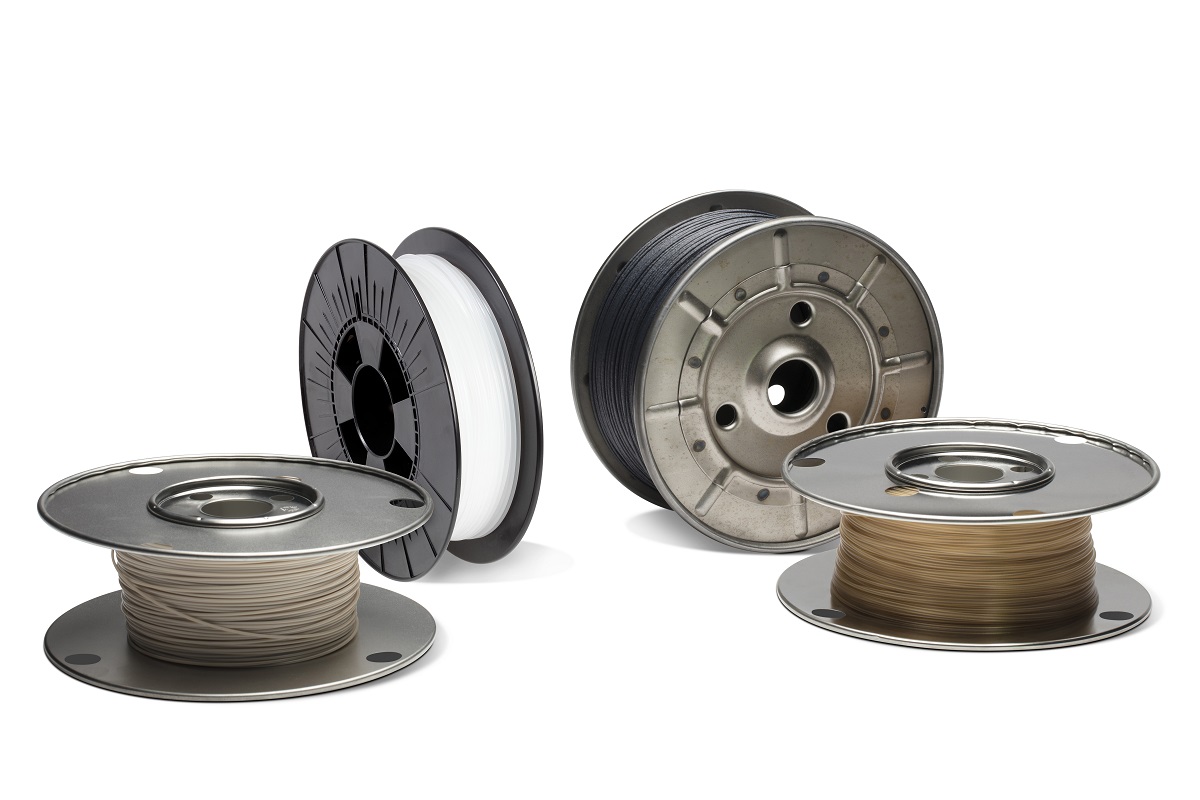
Solvay AM-ready filament. Image courtesy of Solvay.
Tectonic 3D CEO Kenneth Kempinski said,
“We are extremely excited to take this next step, This portfolio represents a benchmark in high – performance additive manufacturing materials. Bringing these products into Tectonic 3D allows us to accelerate innovation, deepen our application expertise, and deliver even greater value to customers operating in the most demanding environments.”
Meanwhile, Syensqo’s Brian Alexander pointed out that,
“We are confident that this filament portfolio is in very good hands with Tectonic 3D. Their technical depth, focus on advanced materials, and strong commitment to additive manufacturing make them the ideal partner to continue developing and supporting these products on a global scale.”
Moreover, the company indicated it will “ensure full continuity in production, supply, and technical support, while investing in further development of these materials to unlock new applications and performance capabilities.” This is good news for Solvay customers and for people who had qualified parts made from these materials. Solvay entered the market when 3D printing fever was at its frothiest. But the company did offer a direct portfolio of materials optimized for production. The company, therefore, had much more market intelligence and knowledge than other players who sold indirectly. Solvay specializes in PEEK and other very high-performance materials, going for the top of the market. The company listened to customers, read the direction the market was heading, and developed a strong portfolio for industrial and aerospace applications. The company also had some medical-specific grades that seem not to have been included in the transfer.
I guess that at Solvay, just like at Dow, DSM, BASF, Covestro, and others, there was just too much of a bridge between the imagined riches and actual performance of these companies. Yes, 3D writing grew, but it never reached volumes that were truly exciting to these materials firms. Yes, the materials were sold at high margins, but there was never any significant impact on the bottom line of the large, multi-billion-dollar revenue firm that owned the unit. And of course, by keeping materials costs high, these firms did not build or grow the market but rather helped keep it small. Yes, printer toner and ink are expensive, but paper is cheap, so the cost per page is still manageable while being a gold mine for inkjet companies. But in 3D printing, the material is both the ink and the paper, so high costs prevent things from being made. All of these huge materials firms had different plans, strategies, and dreams. In the end, none of them really wanted to lower prices or make functional materials available at low cost to grow the market. That was a mistake.
Now, Henkel is still involved in making resins and building its market. SABIC still has an Ultem-focused portfolio that is a mainstay for many firms. Naturworks still does well in PLA, although it’s under siege from Chinese producers. Specialists and early participants, Arkema and Evonik, are still involved with strong portfolios in their respective areas. These firms continue to bring innovation and R&D experience that help our entire industry move forward. Generally, we can now see that many Chinese raw materials firms provide feedstock for 3D printing materials. Other global firms still provide materials but are not interested in our market.
This leaves space and opportunities for companies like Tectonic 3D. Chock full of very experienced 3D printing professionals, Tectonic develops high-performance materials for large-format, high-temperature, and desktop material extrusion. The company offers some of the highest-temperature, continuous-service materials for 3D printing. They also have materials optimized for rail components, lightweight drone assemblies, and more. I liked the application-focused materials when Clariant pioneered them, and loved the deep application expertise that DSM had. Tectonic is combining those two approaches into a hybrid, with a deep focus on defense and high-tech industrial applications. That focus, coupled with making more possible on desktop 3D printers as they move into more manufacturing, is paying off for them. Let’s hope more materials firms are as innovative and nimble as they are.
Subscribe to Our Email Newsletter
Stay up-to-date on all the latest news from the 3D printing industry and receive information and offers from third party vendors.
Print Services
Upload your 3D Models and get them printed quickly and efficiently.













You May Also Like
3D Printing Financials: Velo3D Revenue Climbs 52%, 2026 Forecast Raised
Velo3D (Nasdaq: VELO) reported a sharp increase in second-quarter revenue and raised its full-year outlook as the metal additive manufacturing (AM) company expands production to meet demand from aerospace and...
Chinese 3D Printer OEM Targeting Market for Tiny Metal Parts Closes Pre-Series A Round
Earlier in the year, a consortium that includes China’s BLT announced a major breakthrough in using a high-precision, liquid metal UV 3D printing process to upgrade the hinge for Chinese...
3D Printing Financials: 3D Systems, Prodways, and Align Build on Positive Momentum
The latest earnings from 3D Systems (NYSE: DDD), Prodways (EPA: ALPWG), and Align Technology (Nasdaq: ALGN) show that the 3D printing market continues to move forward. Some businesses are growing...
3D Printing Financials: Xometry, Protolabs, and Lincoln Electric Post Strong Quarters
The latest earnings reports from Xometry (Nasdaq: XMTR), Protolabs (NYSE: PRLB), and Lincoln Electric (Nasdaq: LECO) suggest manufacturers are still spending. All three companies reported solid results, although each tells...