3D Printing at the 2026 Milano Cortina Winter Olympics


For the summer Olympics, we are well aware of the extensive 3D printing that goes on in service of track cyclists, road cyclists, and runners. In athletics, custom 3D printed shoes have already been offered to athletes for many years. Custom bike accessories or components, like stems, frames, and handlebars by companies like Metron, help set up bicycles specifically for one cyclist as well. These optimized, customized, and lightweight 3D printed parts have led to hundreds of medals awarded over the decades.
Winter Olympics 3D Printing
With the Winter Olympics, 3D printing success has been more guarded. We know that for a number of years, bobsleigh teams have used 3D printed components. Last year, Sarah Saunders wrote an article showcasing many of the ways that 3D printing was being used at the Olympics. Bobsleds were 3D printed, especially steering components but also entire composite bodies. BMW and other firms helped optimize the shape and performance of 3D printed bobsleighs, as well as the spikes on the bobsleigh shoes. The Chinese team 3D printed a helmet for its riders, and the US Luge team worked with Stratasys in a similar vein.
On the ice, skating blades and gloves have been made. Easier bindings have been crafted for skiing and snowboarding olympic athletes also.
2026 Milan Cortina Olympics
The US team is also making bobsled components for this year’s Olympics with CRP. We would expect significant carbon fiber work to be undertaken on the bobsleighs, and similar events such as the luge. Metal weight-saving components will also be used, as would balance components to improve control and performance.
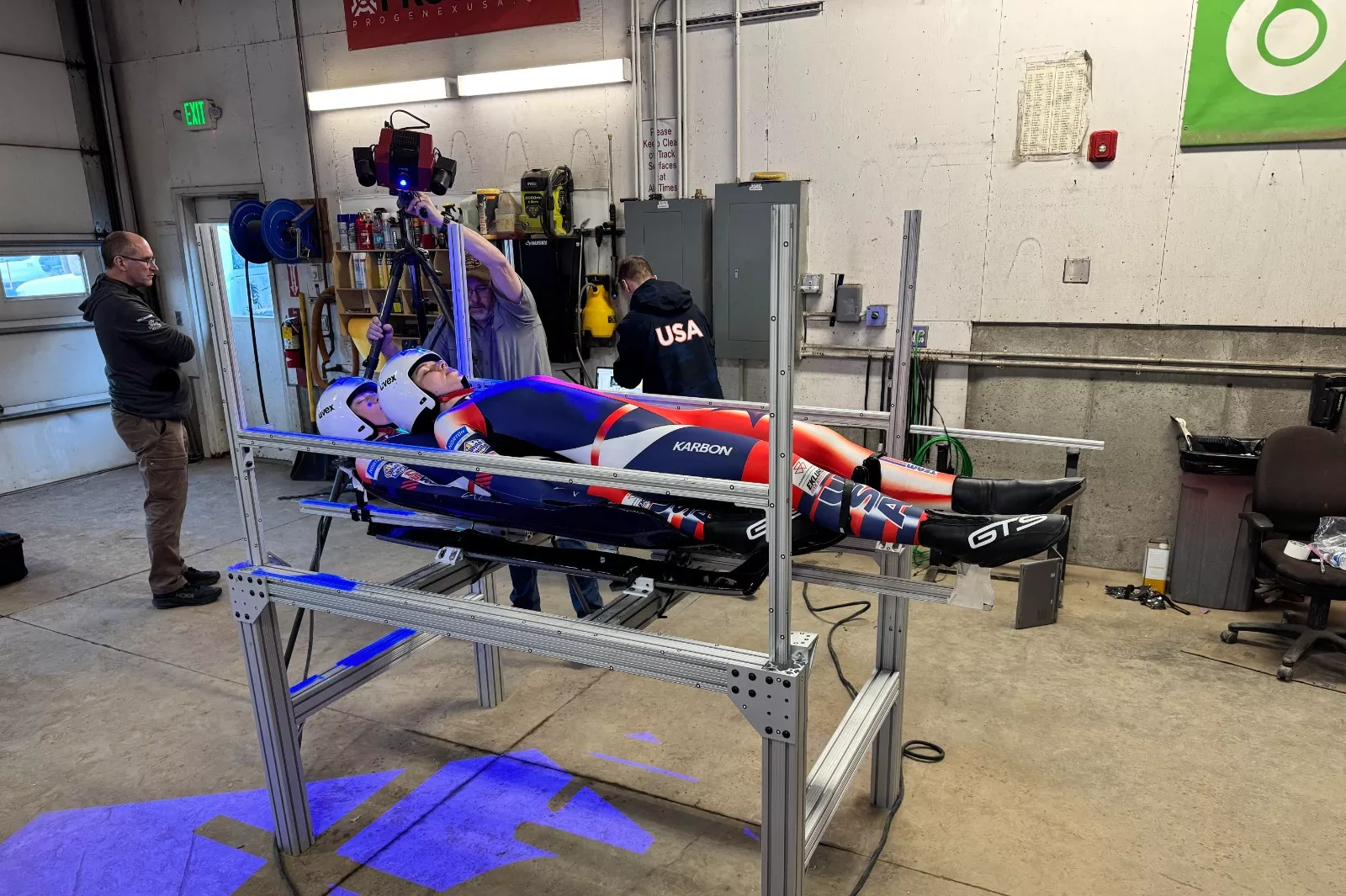
This year, NASCAR is getting in on the game. The sports giant is making life-sized 3D printed copies of athletes to make better wind tunnel tests, and using CFD work to optimize their gear and performance. Luge and other athletes were scanned in the right position for their sports. Honda and Totalsim helped out as well, analyzing the models, and Stratasys printers will be used to make models of equipment for wind tunnel testing.
On a related note, the BBC created a stop motion video for its Olympics advert series, featuring 700 individually 3D printed athletes, as well as live combustion techniques.
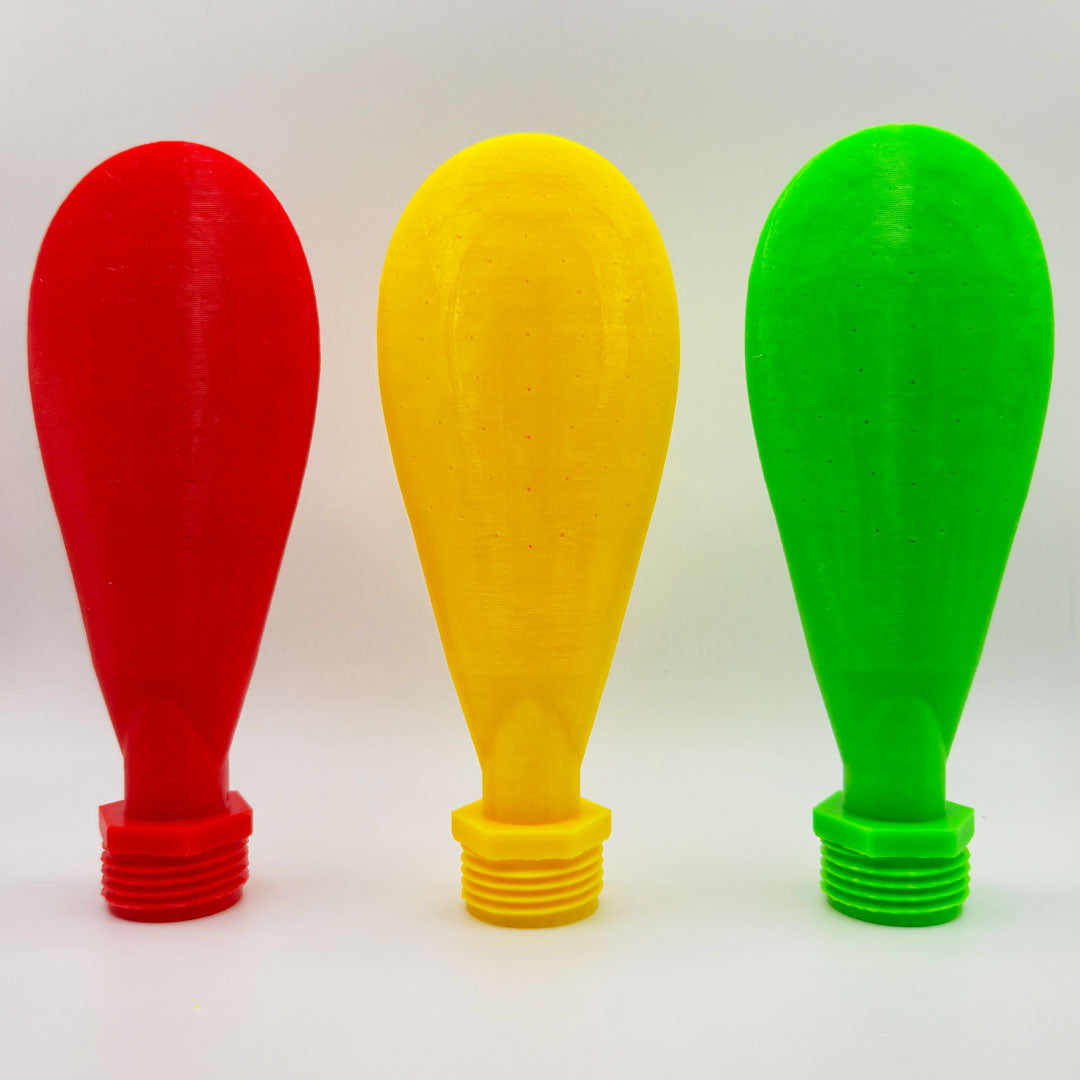
A more surprising move is the use of Pebbleheads. Using copper ice makers, curling officials add ice droplets to smooth ice surfaces. This is to add more difficulty, but also to make the indoor ice resemble the natural ice conditions of yesteryear. A Canadian firm has developed Pebbleheads: 3D printed ice droplet spreaders made with an ABS blend, which are lighter than the copper units they replace. Finished with Diamant, a gas and watertight sealant, they have been engineered to specifically work in spreading droplets in the right pattern. The company has reported selling 21 sets of its Pebbleheads to the Olympics.
Now of course, if I get the best and the brightest from BMW to engineer an expensive bobsled, it could work and marketing could power the effort. But, this is a fantastic case where a functional and cost-effective product, made on desktop machines, is making it to the Olympics. Weighing in at 35 grams, these heads will be lighter than their predecessors, and more uniformly deliver droplets to the ice. At $600 Canadian dollars for a full set, it’s also an amazing business. I think this is a wonderful example of a type of product that more people should launch. Niche, effective, and profitable. The inventor has a 3D printing shop and has worked on making curling movies for 13 years. His inside knowledge, connections, and contact with professionals let him develop the perfect tool.
This is really a great story. Desktop 3D printing is very accessible. In creating specific parts to fit a specific purpose, CAD coupled with 3D printing can innovate austerely and quickly. We know that winning cyclist Tadej Pogačar has 3D printed parts on his bikes. As well as the power meters and other components made in metal by cycling firms, he has small desktop 3D printed components as well. These components have been made specifically for him, to alter controls for him, to change some balance annoying him, some specific purpose for him alone. Many more athletes, especially in sports such as speed skating, should look at small iterative improvements to make them go faster, higher, and further.
Subscribe to Our Email Newsletter
Stay up-to-date on all the latest news from the 3D printing industry and receive information and offers from third party vendors.
Print Services
Upload your 3D Models and get them printed quickly and efficiently.












You May Also Like
The Drone Economy Needed a Scalable Manufacturing Backbone. ADDMAN Built One
When ADDMAN closed its acquisition of Forecast 3D in January 2026, the headlines focused on fleet size and Southern California footprint. Six months later, those metrics feel almost beside the...
The Drone Industry is Showing Where 3D Printing Delivers Real Value, AM Research Report Finds
The rapid rise of drones is creating one of the biggest opportunities for additive manufacturing (AM). Whether they’re used on battlefields, inspecting bridges or crops, or delivering supplies, drones need...
The Longevity Economy Needs a Factory
Longevity has become one of the biggest stories in healthcare. Every week seems to add a new announcement about an anti-aging therapy, an AI-powered drug discovery platform, or a startup...
The SLS Market: Game of Trucks
This is truly an exciting moment in the SLS market. With HP‘s release of the 1200 and Formlabs‘ release of the X1, we can see the SLS market heating up....