ARPA-H PRINT Program is Accelerating the U.S. Landscape for Bioprinted Organs

Joris Peels recently wrote about UT Southwestern Medical Center’s (UTSW’s) award of a $25 million grant from the Advanced Research Projects Agency for Health (ARPA-H), for a project seeking to enable 3D printed livers made using patients’ own stem cells. Part of the U.S. Department of Health and Humans Services (HHS), ARPA-H was established by Congress in early 2022, modeled as a “DARPA for medical research”.
UTSW’s funding came from ARPA-H’s Personalized Regenerative Immunocompetent Nanotechnology Tissue (PRINT) program, first announced in early 2024, with the awardees announced on January 12. In addition to UTSW’s project, ARPA-H also awarded PRINT funding to four other academic institutions across the U.S.: Carnegie Mellon, Wake Forest, Harvard’s Wyss Institute, and the University of California San Diego (UCSD).
Notably, all of the projects focus on bioprinted livers aside from the project at the Wake Forest Institute for Regenerative Medicine (WFIRM), which centers around kidneys. WFIRM, meanwhile, has demonstrated its own success with liver bioprinting, as well, including an experiment that began in 2024, in which WFIRM sent liver tissues and bioprinting equipment to the International Space Station (ISS). WFIRM followed up on that initial project with another ISS experiment that began last August.
As Vanesa Listek wrote in her Daring AM article on the original WFIRM ISS experiment, “The liver is a particularly challenging organ to replicate due to its large size, complex structure, and extensive vascular network,” which is one of the reasons that research organizations are prioritizing the liver, amongst all the possible pathways for bioprinting R&D. Additionally, the latest technological advances in modeling livers have led to improvements in addressing precisely those challenges, suggesting that now is the time when doubling down on increased funding efforts could make a meaningful impact.
Above all, the prioritization that ARPA-H is giving to both bioprinted livers and bioprinted kidneys comes down to the fact that these are simply in the scarcest supply for patients needing donor organs. The researchers pushing bioprinting forward view it as an especially promising option largely owing to the possibilities for personalized medicine.
At UCSD, for instance, the research team led by Professor Shaochen Chen will work with Allele Biotechnology, a San Diego company “with expertise in personalized stem cell generation technologies”, towards the goal of printing a life-size, transplantable liver. The WFIRM kidney project will use patient-specific stem cells to develop “vascularized kidney tissue that augments renal function in patients suffering from kidney disease”.
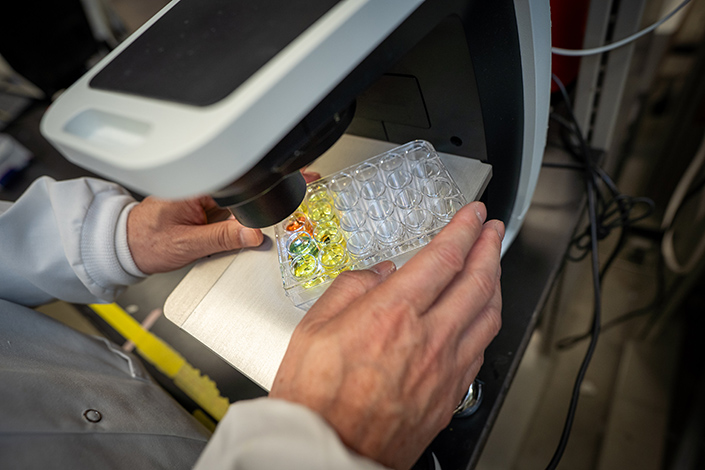
Bioprinted tissue samples created from Professor Chen’s lab.
While the time-horizons for bioprinting research are, naturally, quite long, and the ARPA-H PRINT funding timeline spans five years, the awardees are just as concerned with commercialization as they are with pure R&D. Professor Chen has previously founded a startup, now called CELLINK, part of Sweden’s BICO Group, and an explicit goal of the WFIRM project is to make their kidney printing process affordable, in addition to technologically feasible.
In a press release about Wake Forest’s ARPA-H PRINT award to develop affordable bioprinted kidney tissue, Dr. James Yoo, co-principal investigator and Chief Operations Program Officer at WFIRM, said, “Our project will integrate a variety of processes and technologies, including cell manufacturing, bioprinters and bioinks, and bioreactors, into an end-to-end workflow that produces clinical-grade, functional kidney tissue comprised of all major renal cell types.”
In a press release about UCSD’s project aiming to develop a patient-specific, bioprinted liver, Gabriel Schnickel, professor of surgery at UC San Diego School of Medicine and co-investigator on the project, said, “For decades, the transplant community has dreamed of a future where the fate of thousands of patients each year is no longer determined by the scarcity of donor organs.This work has the potential to fundamentally change countless lives by moving that vision from aspiration to reality.”
This isn’t a context where one would typically think of 3D printing’s ability to enable “mass customization”, but that’s an additive manufacturing (AM) advantage that the medical sector has already been successfully leveraging for many years, across a variety of use-cases, so it’s ultimately quite fitting. That the researchers involved are discussing the commercialization of the relevant technologies is obviously exciting to the extent that such commercialization would indeed improve so many lives, but it’s also exciting because if they’re talking about it, they must believe that the reality isn’t so far away.
Of course, “not so far away” in the medical sector still implies a rather lengthy process, and the general consensus seems to be that if bioprinted organs do someday make it to clinical trials, it won’t happen until at least 2035. That’s a long enough time from the present to seem like the sort of target that will always just keep getting pushed back. On the other hand, I think that concerted efforts like what ARPA-H is doing, which is sustaining a genuine community of researchers interested in, supportive of, and knowledgeable about the topic, are the type of action that motivates everyone involved to work towards a definite finish line.
Regardless, as I’ve noted with similarly moonshot goals like nuclear fusion, any data that results from the R&D makes the effort worthwhile, whether or not the scientific community reaches the exact end-goal it has set out to achieve from the beginning. Especially when it comes to medical research, all information gained along the way is a win.
If the U.S. does manage to somehow succeed at reshoring, I think the greatest likelihood is that it will primarily manifest in industries like this one, where the U.S.’s capacity for scale can actually meet the task at-hand, and where the American history of biotech breakthroughs provides the landscape with a disproportionately advantageous starting point. It would be extremely difficult for the U.S. to ever regain its status as a major consumer electronics powerhouse, but if bioprinted organs ever become commercially scalable, it’s easy to envision the U.S. being a leader in the market.
Featured image: Shaochen Chen, professor in the Aiiso Yufeng Li Family Department of Chemical and Nano Engineering at UC San Diego, stands between an early laboratory prototype of a bioprinter developed in his research lab (right) and the commercial bioprinter later built by his startup (left). This photo demonstrates the evolution of Chen’s 3D bioprinting technology from a proof-of-concept instrument to a commercial system that will be used as part of the new ARPA-H-funded project.
Images courtesy of UCSD
Subscribe to Our Email Newsletter
Stay up-to-date on all the latest news from the 3D printing industry and receive information and offers from third party vendors.
Print Services
Upload your 3D Models and get them printed quickly and efficiently.











You May Also Like
How Metal Additive Manufacturing Is Reshaping the Future of Aerospace and Defense Engineering
Additive manufacturing (AM) is steadily changing the way we think about producing metal parts for aircraft. Whilst aerospace and defense companies have been using metal AM for over twenty years,...
The AM Adoption Problem No One Models
Through its short history, Additive Manufacturing has been presented to the investment community as a classic high growth technology story. Manufacturing is a multi-trillion-dollar market. Even a small percentage looks...
The Business of Customized Sports Equipment: How 3D Printing Is Changing Athletic Gear
For years, 3D printing in sports has been linked mostly with prototypes, concept shoes, and one-off experiments for elite athletes. Helmets, cleats, and footwear midsoles often took over the headlines,...
The Maritime Industrial Base is on Full Display at Additive Manufacturing Strategies 2026
2025 is the year that the AM ramp-up by the U.S. Maritime Industrial Base Program (MIB) became common knowledge throughout the industry. But everyone who attended AMS 2024 was already...