Lincoln Electric’s Big Metal Bet: Using WAAM 3D Printing to Replace Castings

When heavy industry runs into a parts problem, the bottleneck usually isn’t machining; it’s often castings and forgings. Those processes, essential for making large, heavy-duty metal components, can take months and even years to complete, especially when foundries and forge shops are backed up. That’s where Lincoln Electric’s large-format metal 3D printing makes the biggest impact.
Most people know Lincoln Electric as one of the world’s leading welding companies. But in recent years, the Cleveland-based manufacturer has expanded its reach into additive manufacturing (AM). To support that work, Lincoln acquired Baker Industries, a Michigan-based machining and fabrication company, in 2019.
“Baker was acquired to close the loop on Lincoln’s vertical integration as an additive provider,” Sean Schaefer, marketing manager at Baker Industries, told 3DPrint.com. “They were printing all these big parts, but needed somebody to do all the post-processing. There are very few machine shops in the U.S. that can handle parts of the size they’re printing.”
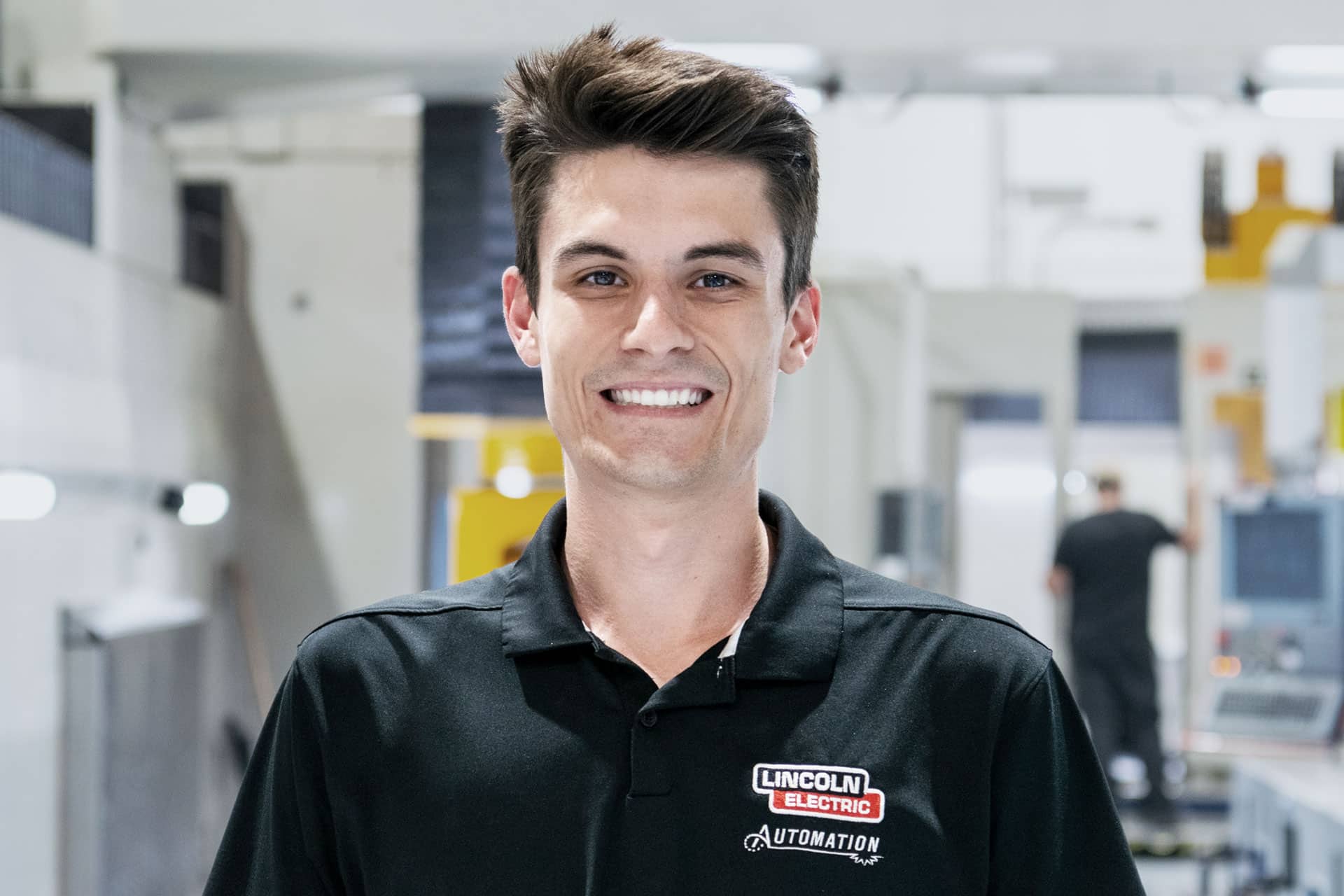
Sean Schaefer. Image courtesy of Baker Industries/Lincoln Electric.
Today, that loop runs between Baker in Macomb, Michigan, and Lincoln Electric’s main additive hub in Cleveland, Ohio. The workflow covers printing, machining, fabrication, and final inspection. When necessary, Lincoln Electric also outsources operations such as heat treatment and testing to trusted suppliers. It’s a complete, end-to-end metal AM pipeline.
Printing at Casting Scale
Lincoln Electric Additive Solutions builds metal components that would traditionally be cast or forged with wire-arc AM (WAAM), on systems it designs and makes itself (everything but the robot arm).
“We do everything in-house except for the robot arm, basically — software, wire feedstock, controls, power sources, and all our own material development,” Schaefer said.
The company can print “roughly an eight-foot cube in a single print,” which in AM terms is huge, far beyond most powder-bed or laser systems. And it regularly goes larger by splitting parts and then joining them post-print, explains Schaefer.
The WAAM cells are big; the latest generation Schaefer mentioned can manipulate components up 20,000lbs, and the fleet keeps growing. Lincoln Electric now runs 26 large-format robotic WAAM systems under 24/7 operations according to Schaefer.
It’s a setup built for industrial-scale work. And with that kind of capacity, material capability becomes just as important. Lincoln’s WAAM systems can print in a wide range of structural and corrosion-resistant alloys:
“Mild steel, high-strength low-alloy steel, 410 NiMo and 17-4 precipitation hardened stainless, two different nickel alloys (617 and 625), iron-nickel 36, and 70/30 copper-nickel,” Schaefer went on.
Interestingly, missing from the lineup are aluminum and titanium.
“The business case just isn’t there,” he explained. “Aluminum and Titanium may offer opportunity in the future, but are not target areas for the business right now.”
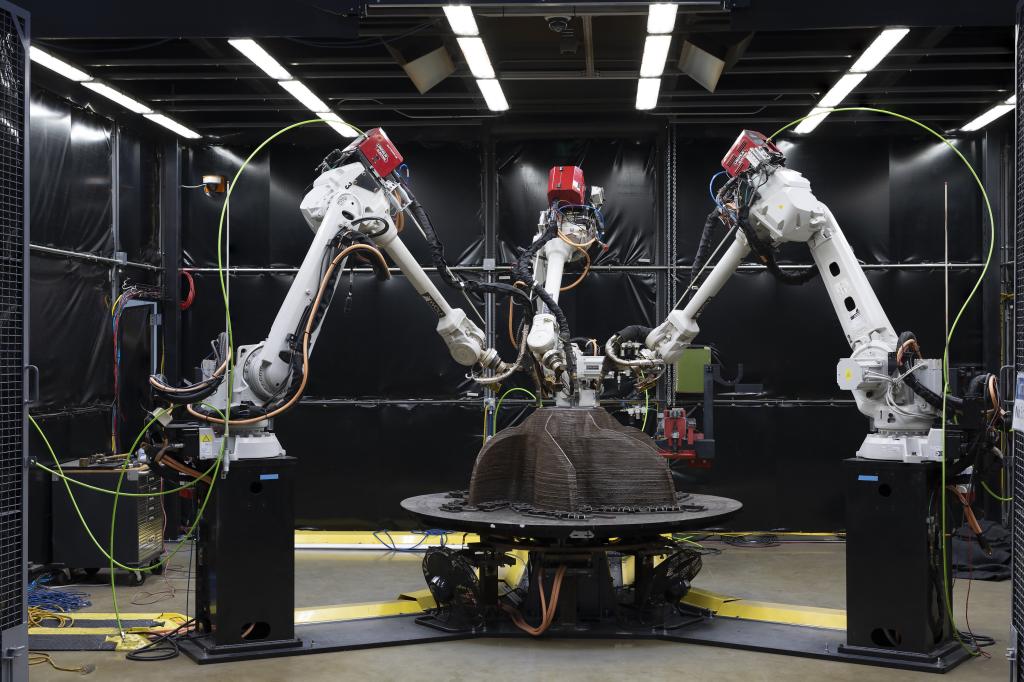
A 3D printed mold for a hydropower impeller is printed at ORNL using Lincoln Electric machines. Image courtesy of Carlos Jones/ORNL, U.S. Dept. of Energy.
Building Everything In-House: Wire, Software, and Quality Control
Lincoln Electric’s long history in welding consumables is a strategic advantage.
“Lincoln is one of the world’s largest manufacturers of welding consumables. We have full control over wire production and are known as a premier supplier of high-quality welding wire. On the digital side, the company uses its own slicing and path-planning software which incorporates Lincoln Electric’s vast welding knowledge, called Sculpt Print OS,” Schaefer said. “There’s in-process monitoring that will allow the engineers to intervene if they catch something during the process. And every part that comes off the printer is 3D laser scanned and compared with the actual CAD.”
Lincoln Electric is fully certified for aerospace and defense work, holding ISO 9001 and AS9100 certifications, as well as all the required government contracting approvals, including ITAR and a CAGE code.
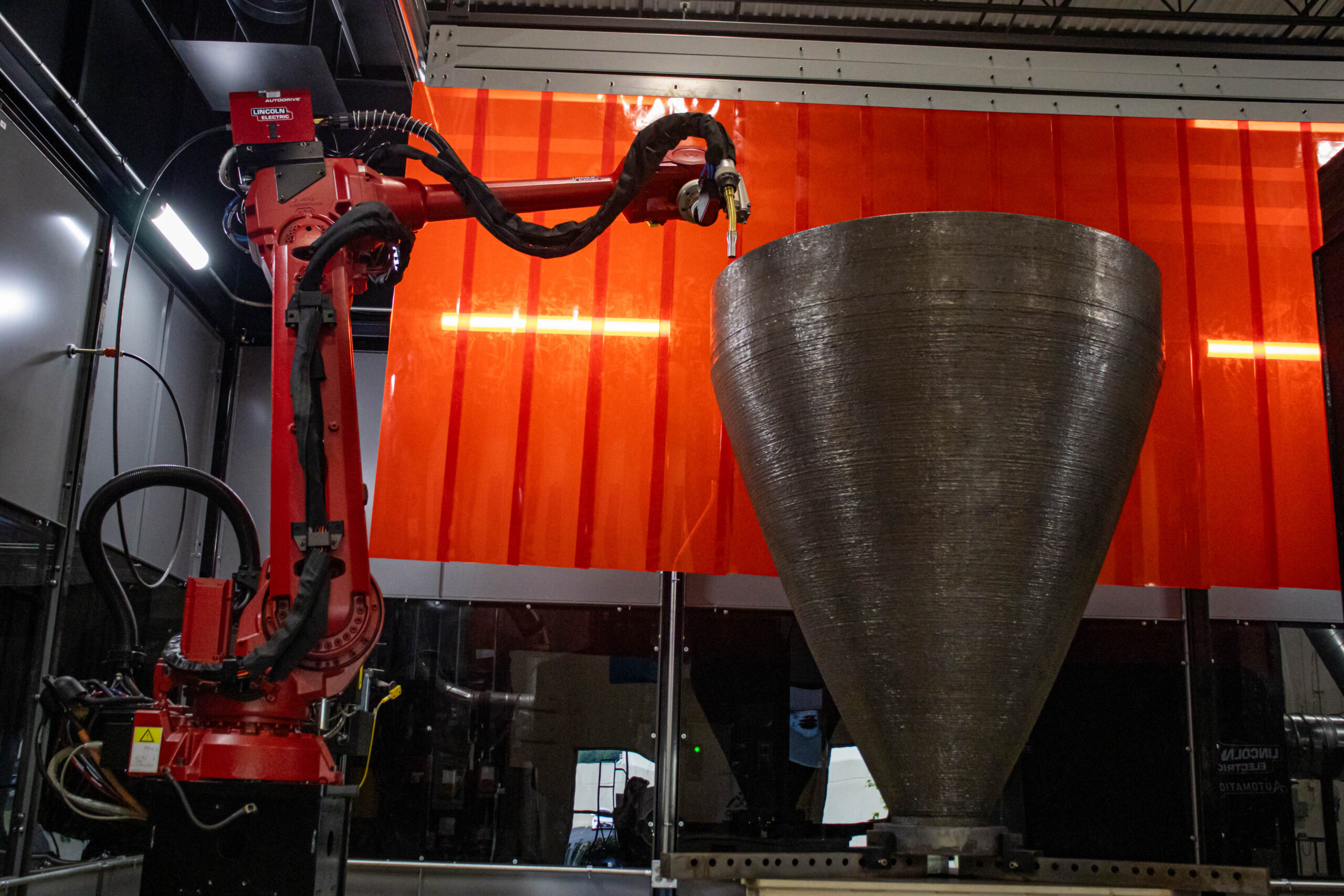
WAAM uses a welding arc and metal wire feedstock to build parts layer by layer using robotic arms. Image courtesy of Lincoln Electric.
While WAAM remains the workhorse process, the company is developing another metal AM process: “We’ve also got a laser wire additive that is somewhat in late stages of development that should be coming online at the end of the year,” Schaefer stated. “It uses a laser, which is a little bit more precise and less heat on the surrounding material. Early targets will look familiar, a lot of castings and forgings replacements, plus finer detailed parts where the laser’s tighter melt pool helps.”
Lincoln is also working to boost printing speed. In partnership with Oak Ridge National Laboratory, the company developed a new multi-robot system called Medusa. The setup uses three coordinated robots and Lincoln’s high-deposition welding technology to print up to 100 pounds of metal per hour. The system isn’t ready for production yet, but Schaefer said the team has reached its performance target and is now focused on turning it into a commercial product.
A Growing Role for Large-Format Metal AM
Large-format additive manufacturing like Lincoln Electric’s WAAM is designed for a specific type of industrial problem: large metal parts that traditionally require casting or forging. By combining materials development, software, printing systems, machining, and inspection in one workflow, the company has built a vertically integrated approach to producing these components.
In Part II of this series, we look at where this approach matters most: industries facing long casting lead times, including a high-stakes repair at the Soo Locks in Michigan, where metal additive manufacturing helped avoid a potentially billion-dollar disruption to Great Lakes shipping.
Subscribe to Our Email Newsletter
Stay up-to-date on all the latest news from the 3D printing industry and receive information and offers from third party vendors.
Print Services
Upload your 3D Models and get them printed quickly and efficiently.