Carlsmed to Go Public in $101 Million Bid to Scale 3D Printed Spine Implants


Carlsmed is preparing to go public. The med-tech company, based in Carlsbad, California, plans to offer 6.7 million shares at a price range of $14 to $16 per share, which could raise $101 million. Carlsmed will trade on the Nasdaq under the ticker symbol “CARL.”
Founded in 2018, Carlsmed has grown in the competitive med-tech space. Over the 12 months ending March 31, 2025, the company booked $32 million in revenue, pointing to a momentum in personalized spine surgery. To build on that progress, Carlsmed is now preparing to go public. BofA Securities, Goldman Sachs, and Piper Sandler are leading the initial public offering (IPO), with Truist and BTIG as co-underwriters. This move comes as Carlsmed looks to accelerate its growth and bring its personalized spinal surgery solutions to more patients across the country.
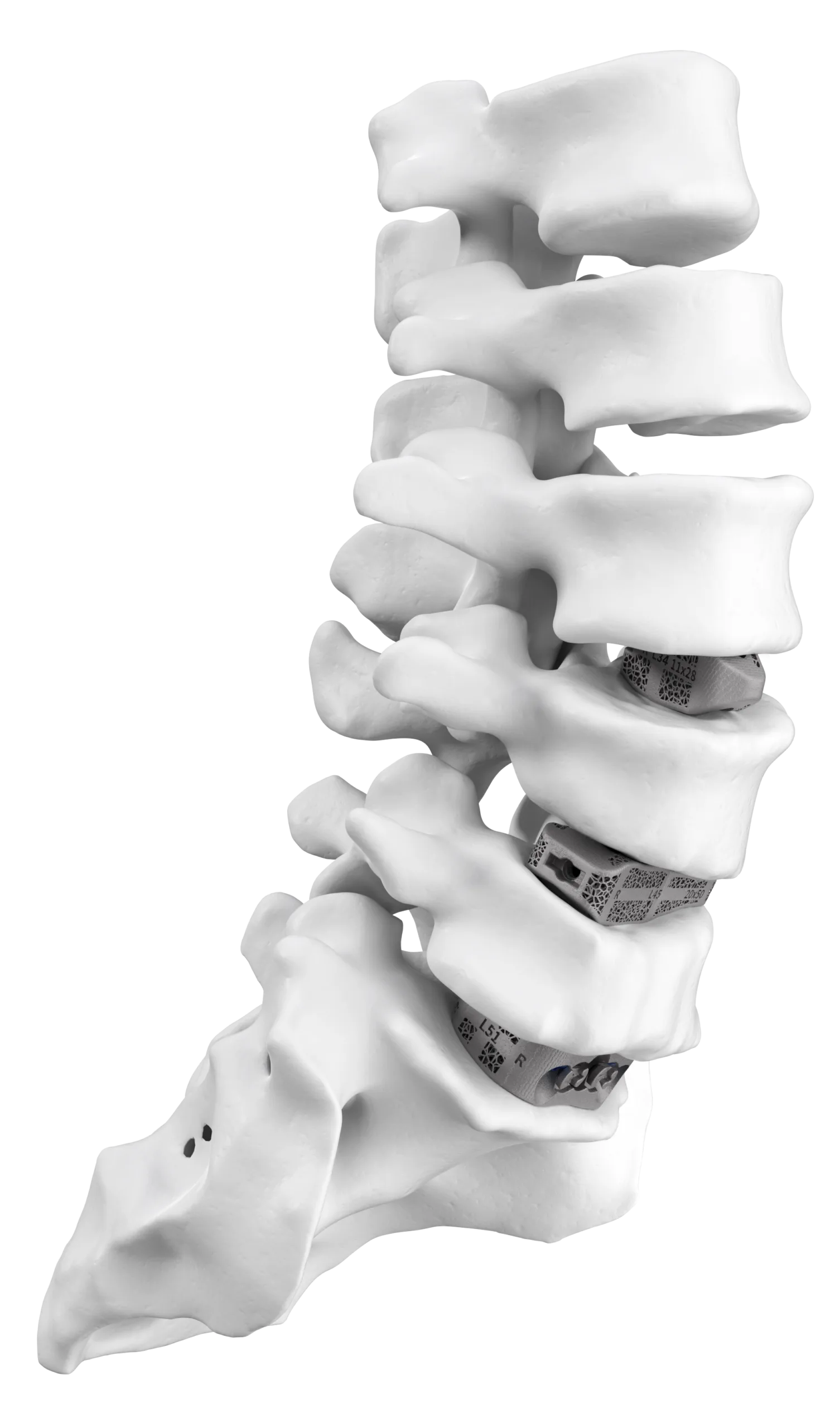
3D printed titanium implants for spinal fusion. Image courtesy of Carlsmed.
Carlsmed has developed a technology called aprevo, which combines artificial intelligence (AI) and 3D printing to create custom titanium implants for spinal fusion surgeries. Instead of using generic, off-the-shelf implants, many surgeons are turning to Carlsmed for personalized implants designed specifically for each patient.
The process starts with a CT scan of the patient’s spine, which is uploaded to Carlsmed’s planning platform. Its software analyzes the data and designs a unique implant based on the patient’s anatomy. The design is reviewed and approved by the surgeon, then 3D printed in titanium, sterilized, and shipped, ready for use in surgery. The whole process takes less than 10 days.
The results have been promising, with over 500 patients receiving these implants. Most achieved strong bone-to-implant contact, known as graft contact, which is essential for successful spinal fusion. What’s more, the revision rate has been under 2%, meaning very few patients required a second surgery.
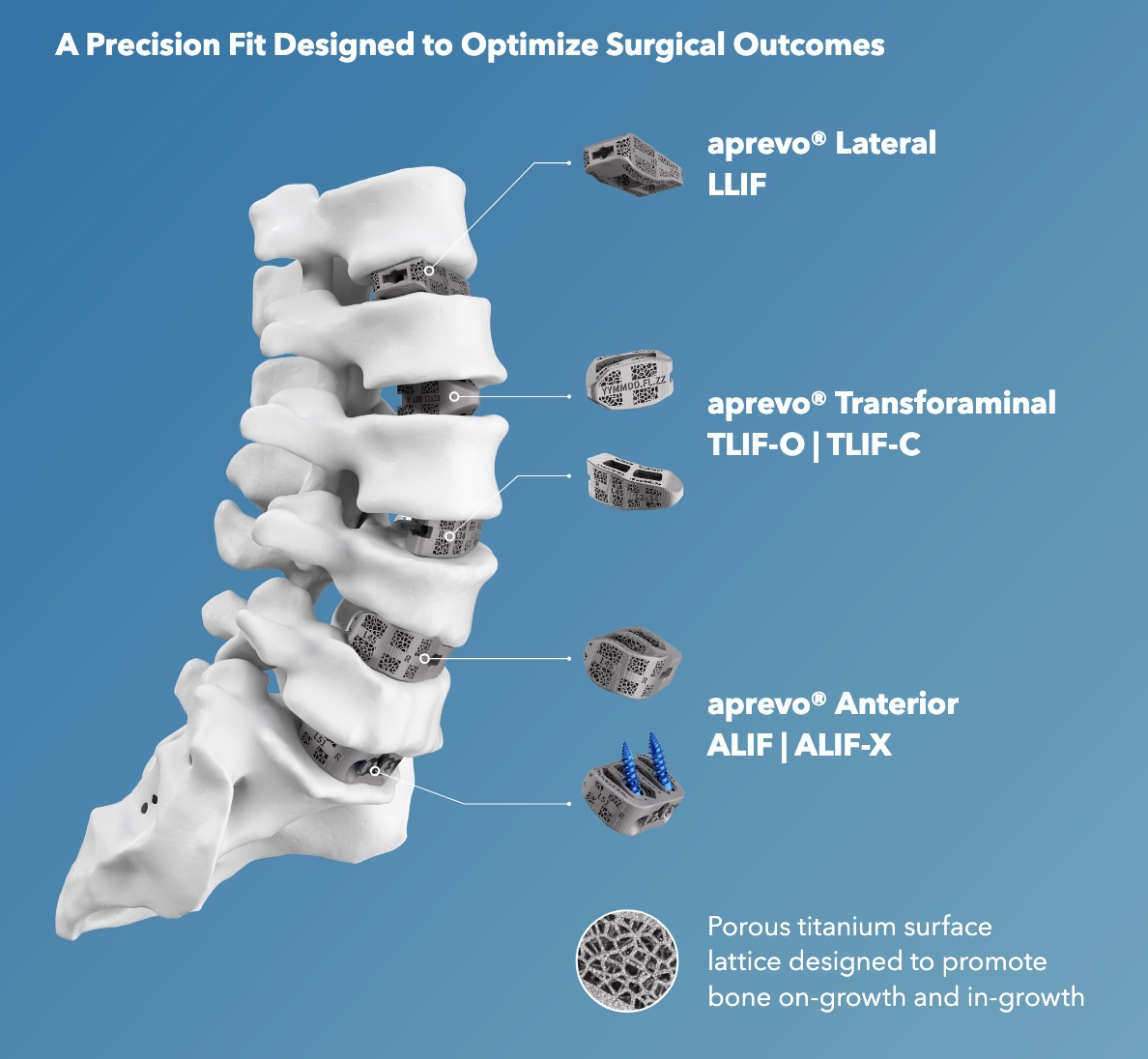
3D printed titanium implants for spinal fusion. Image courtesy of Carlsmed.
Recognized by the U.S. Food and Drug Administration (FDA) as a promising innovation, aprevo has been cleared for use in both lumbar and cervical spine procedures. It was also granted Breakthrough Device designation, a status reserved for technologies that may offer important advantages over existing treatments for serious or debilitating conditions. Between 2015 (when the program began) and 2024, the FDA had granted over 1,000 Breakthrough Device designations across all medical specialties.
This designation shows that aprevo could make a real difference for patients. It also gives Carlsmed a faster and smoother path to market, with priority review and extra support from the FDA. Since only a small number of devices get this status each year, it’s a strong vote of confidence in the technology.
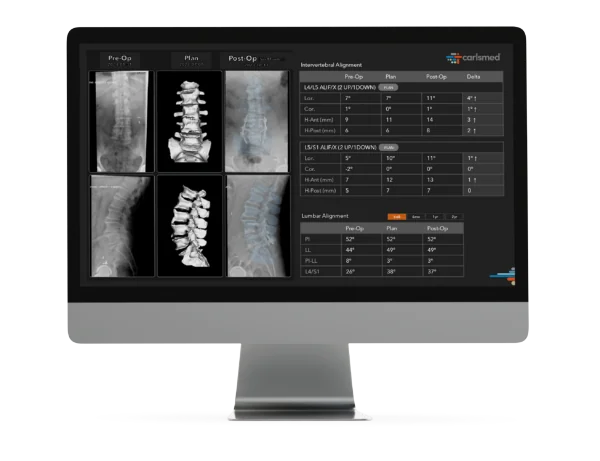
A CT scan of the patient’s spine is uploaded to Carlsmed’s planning platform. Image courtesy of Carlsmed.
In March 2024, Carlsmed raised $52.5 million in a Series C funding round, bringing its total private funding to roughly $110 million. The funds were used to expand its digital production line, allowing the company to quickly produce and ship custom implants at scale. Now, with its IPO, Carlsmed hopes to expand further, continuing to roll out cervical implants and collect more clinical data through its COMPASS registry.
According to Renaissance Capital, “insiders intend to purchase $31 million worth of shares in the offering, that’s 31% of the deal. At the midpoint of the proposed range, Carlsmed would command a fully diluted market value of $430 million.”
Carlsmed is a strong example of how 3D printing, AI, and personalized medicine are coming together in real-world medical applications. From scan to surgery, they use advanced technology to improve patient outcomes and make spine surgery more effective.
Subscribe to Our Email Newsletter
Stay up-to-date on all the latest news from the 3D printing industry and receive information and offers from third party vendors.
Print Services
Upload your 3D Models and get them printed quickly and efficiently.













You May Also Like
Kalogon Wants to Patent Its Variable Density Wheelchair Cushion
Kalogon has brought the Verro to market. This is a 3D printed wheelchair cushion, made with vat polymerization technology. Using a variable density lattice, it hopes to give wheelchair users...
Pogačar & Fairlight Cycles Show Us Low Cost 3D Printed Components for Bikes
There has been a lot going on in 3D printing for bicycles over the years. The most successful implementation so far is in bicycle seats. Carbon 3D printed seats are...
3DPOD 295: From Product to Design at Carbon, with Kristi Eveland Smith
Kristi Eveland Smith started as a competitive soccer player before moving into consulting, operations, and 3D printing. She’s now Vice President, Design to Production at Carbon 3D and has been...
AMS 2026 in Photos: Snow, Songs, and Serious Conversations
AMS 2026 may have been altered by flight delays and snow-covered streets, but once you made it, the energy felt anything but frozen. This year’s Additive Manufacturing Strategies, which wrapped...