Zellerfeld and Sean Wotherspoon Drop 3D Printed Sneaker and Mule

In a year already filled with headline-making partnerships, 3D printing startup Zellerfeld has now teamed up with one of the biggest names in sneaker culture: Sean Wotherspoon. Known for his creative designs that merge retro style with bold ideas, Wotherspoon is stepping into the world of fully 3D printed shoes with a new collection called Sean Double U, a sneaker and a mule, both printed entirely in one piece.
Wotherspoon, who first rose to fame with his winning Nike Air Max 97/1 design in 2017, has since become one of the most influential voices in the footwear and streetwear industries. The design, which won Nike’s fan-voted “Vote Forward” competition, blended his retro vision with interesting materials like corduroy and quickly became a favorite when it dropped on Air Max Day 2018.
The designer’s work can be found in brands like Adidas, Gap, and even Porsche, and he’s often praised for bringing a sustainable approach to the sneaker world. With this latest collaboration, he’s adding another layer to his sustainability journey: shoes made without glue, stitching, or excess waste, which can be recycled entirely.
“Sean Double U is about the different sides we all have,” Wotherspoon explains. “The sneaker is for motion. The mule is for slowing down.”
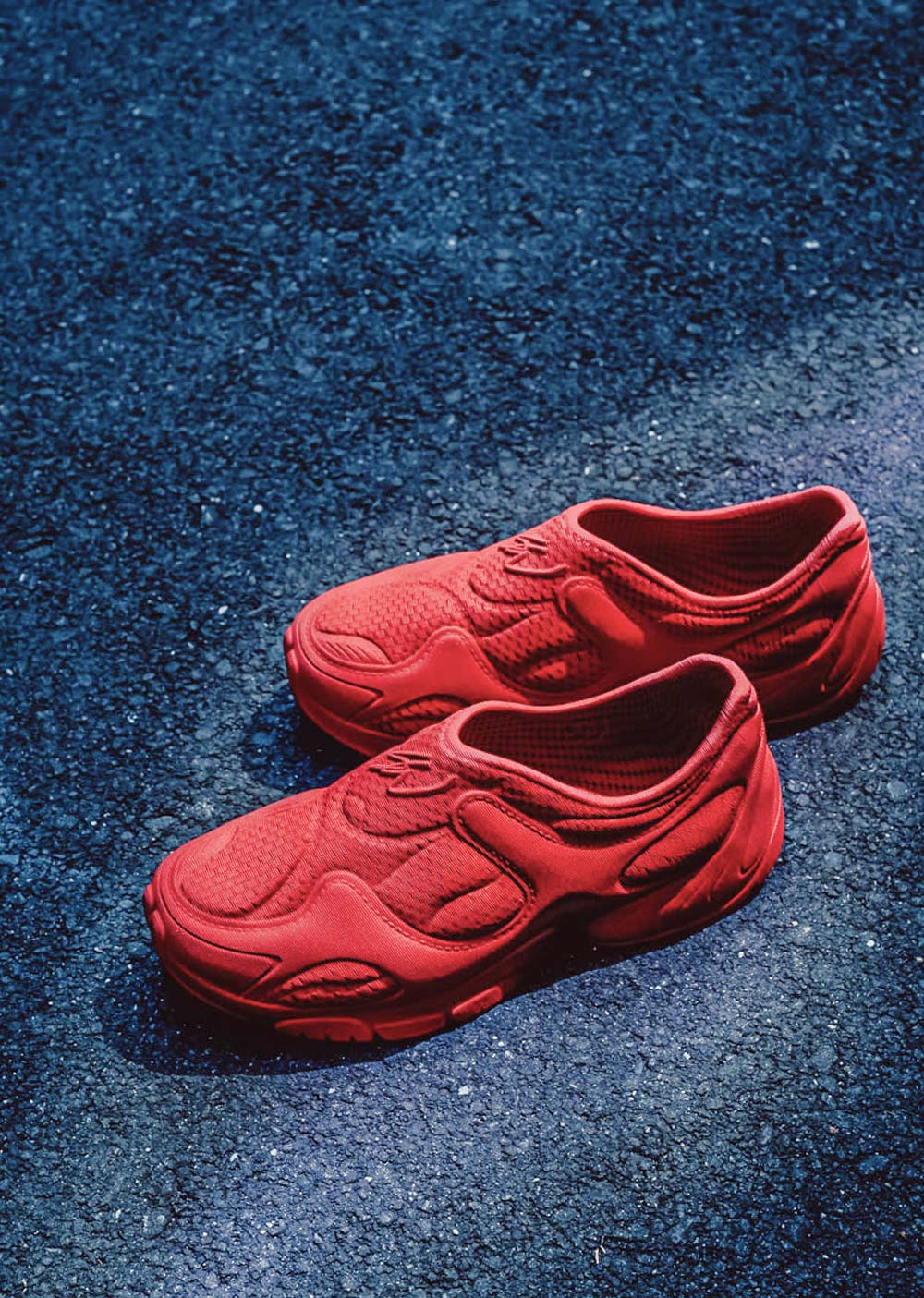
Sean Wotherspoon’s Sean Double U sneakers in red.
Each model is created using Zellerfeld’s proprietary 3D printing process, which eliminates the need for traditional manufacturing tools and materials. That means no factories, no supply chain bottlenecks, and no sweatshops. Instead, the shoes are produced on demand, tailored to each buyer’s foot using a smartphone scan. The result is footwear that’s fully recyclable, washable, breathable, and made with a soft foam lattice that looks futuristic but feels comfortable right away, says Wotherspoon.
The collection, which includes a sneaker priced at $189 and a mule at $149, is available exclusively on Zellerfeld’s website. Both styles are created with comfort and everyday wear in mind, but they also stand out for their sculptural designs, which wouldn’t be possible without 3D printing.
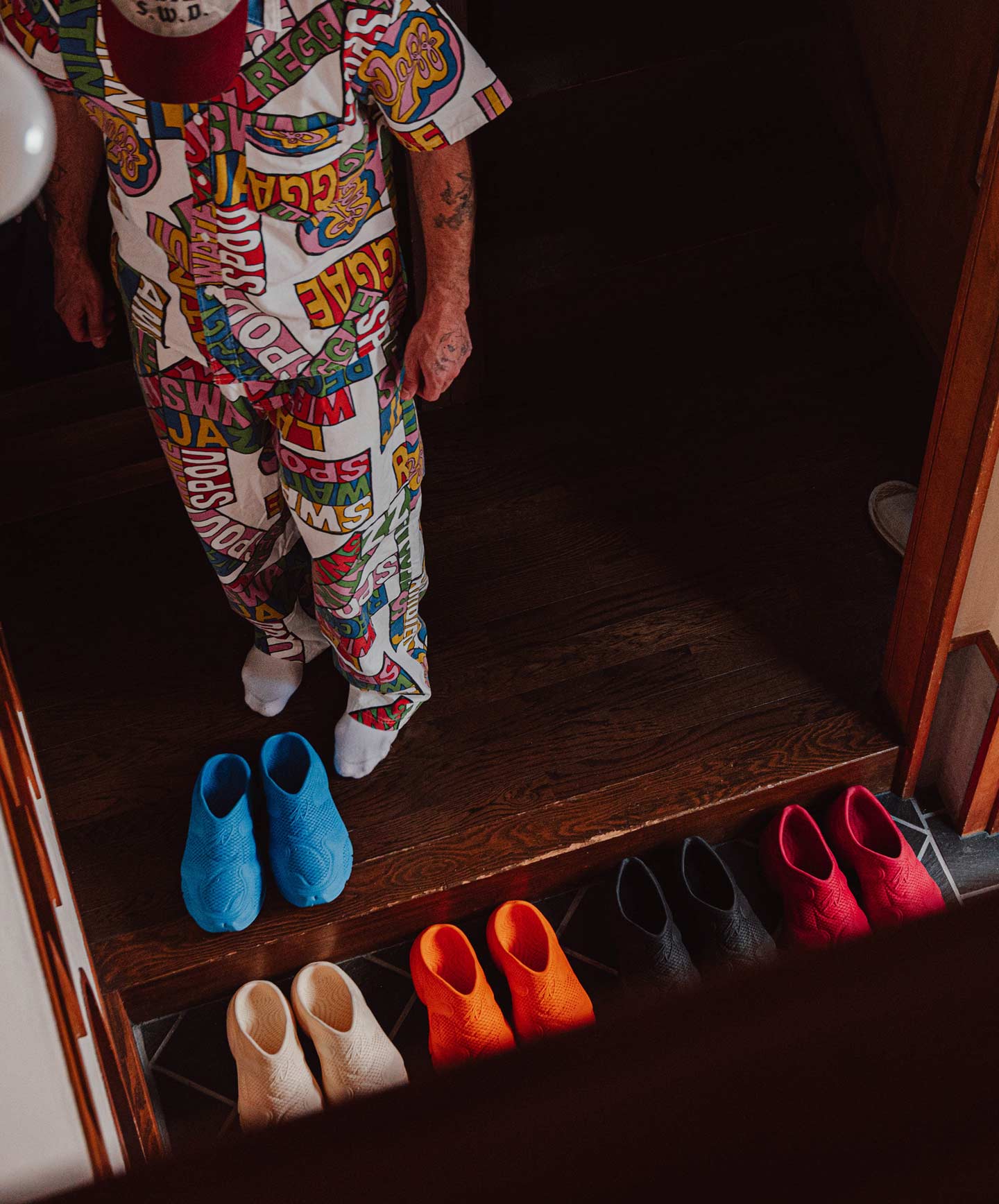
Sean Wotherspoon with his sneakers.
This isn’t Zellerfeld’s first high-profile collaboration of 2025. In just the first quarter of the year, the company has worked with a growing number of partners, including Nike, which announced that a printed shoe developed with Zellerfeld is expected to launch this summer. There have also been experimental drops with fashion collectives like White Lotus and brands like KOZOS and RTFKT, each using Zellerfeld’s on-demand platform to release small-batch, custom-fit footwear.
The reason so many designers are turning to Zellerfeld has everything to do with the technology behind the shoes. Traditional sneaker production is rigid, slow, and tied to fixed schedules and long supply chains. But Zellerfeld does things completely differently, since changes can be made in the morning and tested the same day. There are no molds or minimum orders. For designers like Wotherspoon, who are used to dealing with massive timelines and layers of approvals, that’s a game-changer.
“You don’t just send off a sketch and wait months,” Wotherspoon said of the collaboration. “We were printing samples almost in real time. It’s a different way of thinking about design—and about what shoes can be.”
Zellerfeld’s footwear is made using a material called zellerFOAM®, a type of flexible thermoplastic that forms a lattice structure. This not only gives the shoes a unique look, but it also means they’re breathable, supportive, and surprisingly durable. And because each pair is made from a single material, they can be fully recycled into new shoes when returned, making the company’s circular economy proposal more than just a PR promise.
The Sean Double U project also marks a big shift in how shoes are designed and produced. Wotherspoon, who has spent years experimenting with alternative materials and more responsible manufacturing, sees this as a logical next step.
“I’ve always been drawn to projects that push boundaries,” he says. “And what Zellerfeld is doing—rethinking every part of the process—is just that.”
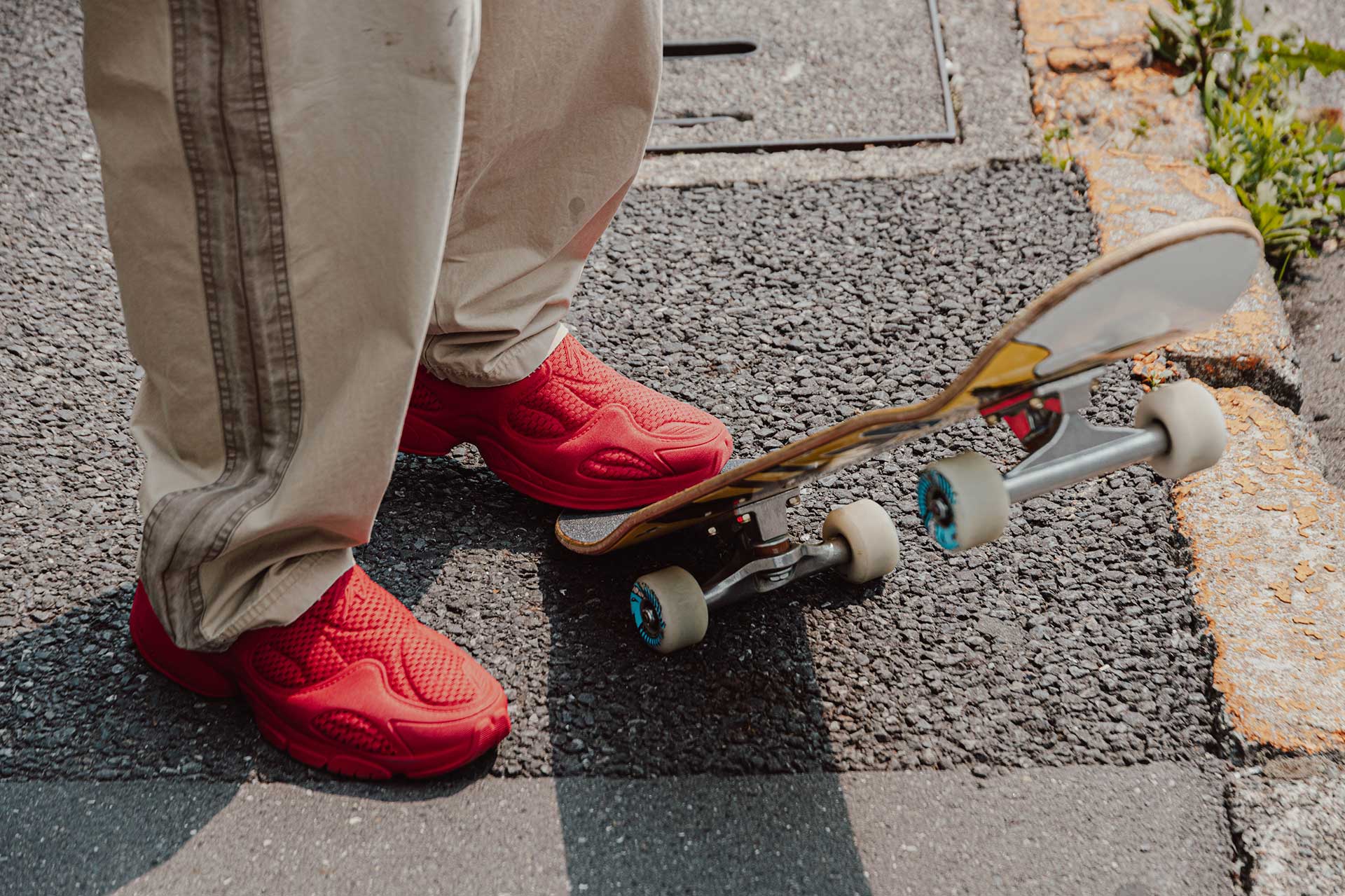
Sean Wotherspoon’s Sean Double U sneakers in red.
In an industry known for mass production, limited innovation, and plenty of waste, where millions of unsold shoes often end up in outlet stores or landfills, Zellerfeld is offering a totally different vision, one that is getting real traction with designers, brands, and consumers as well. Whether it’s Sean Wotherspoon’s sculpted slip-ons or Nike’s upcoming launch, the future of footwear has a lot to do with how it’s made.
Images courtesy of Zellerfeld.
Subscribe to Our Email Newsletter
Stay up-to-date on all the latest news from the 3D printing industry and receive information and offers from third party vendors.
Print Services
Upload your 3D Models and get them printed quickly and efficiently.













You May Also Like
3D Printing News Briefs, August 22, 2026: Polymers for CubeSats, Animal Mobility Devices, & More
We’re starting with defense news in this weekend’s 3D Printing News Briefs, before moving on to polymers for CubeSats and 3D printed prosthetics. We’ll end with a story about engineering...
Pusan National University & ORNL Develop Elastomeric Liquid Crystal Actuators
Researchers from Korea’s Pusan National University and Oak Ridge National Laboratory (ORNL) have developed 3D printed elastomeric actuators. In a paper published in Nature, the team used elastomeric liquid crystal...
Scientists Use BMF to 3D Print Seal Whiskers That Track Prey Long After It’s Gone
Seals use their whiskers to hunt. Not Navy Seals, although they may in some way also, but this article is about lowercase seals. Not Seal the musician either; as far...
Harvard’s Jennifer Lewis Lab Is 3D Printing Artificial Muscles That Twist and Bend on Demand
Researchers at Harvard John A. Paulson School of Engineering and Applied Sciences (SEAS) have developed a new way to 3D print materials that can move on their own, bending, twisting,...