Advanced 3D Printed Medtech Solutions Transform Healthcare Treatments and Improve Patient Outcomes


The integration of advanced 3D printing technology with medtech is revolutionizing healthcare by addressing critical challenges and redefining patient outcomes. This innovation-driven approach delivers solutions that improve the quality of care while fostering equity in access to cutting-edge treatments.
Transforming Radiation Therapy for Head and Neck Cancer
One remarkable advancement in additive manufacturing is the development of patient-specific 3D-printed oral stents for head and neck cancer radiation therapy. Over 75% of cases are treated with some form of radiation–a highly effective yet difficult type of treatment that requires the right balance between killing the tumor while preserving the health of other organs-at-risk (OARs) and healthy tissue.
A significant percentage of patients struggle with severe and debilitating side-effects during and after treatment. These are not only hard to manage, but can also delay critical therapy and be costly to address. For example, up to 80% of head and neck cancer patients suffer from oral mucositis, a radiation side effect that causes painful inflammation and ulcerations in the mouth with supportive treatment, frequently necessitating intensive supportive care, costing as much as $40,000 per case.
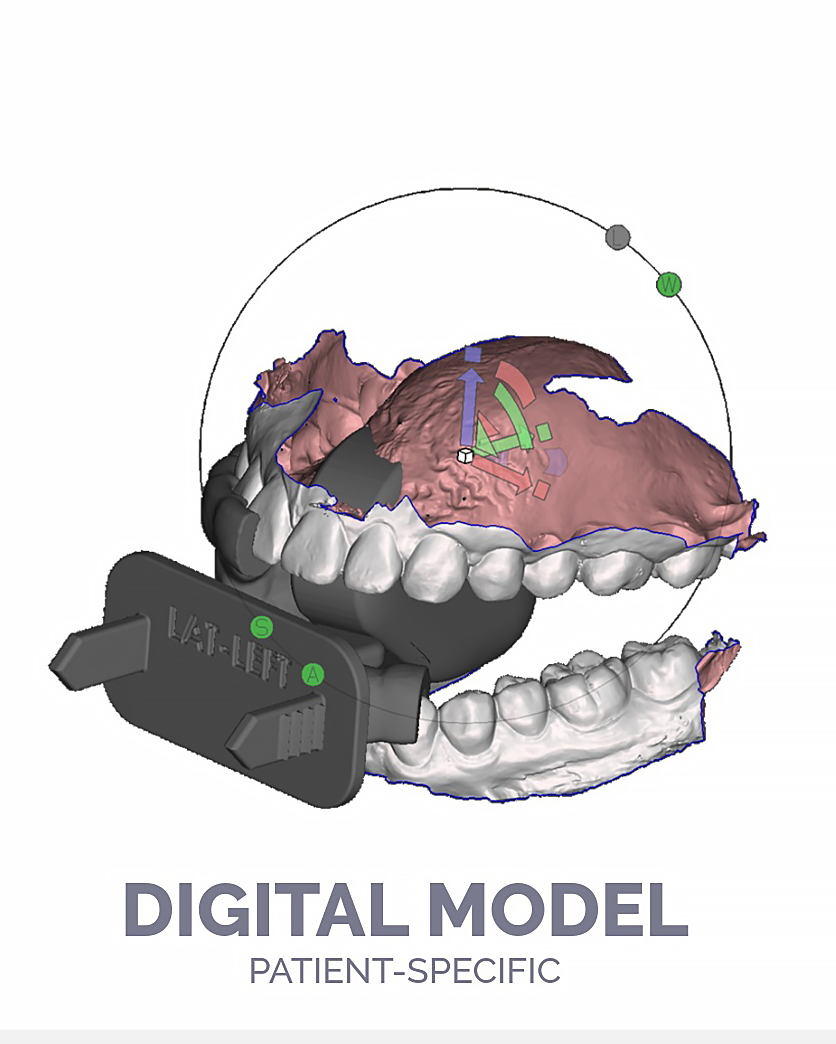
To improve both the outcome and patient quality-of-life during the treatment of head and neck cancers that require radiation therapy, oral stent customization is key. Generic, one-size-fits-all solutions have long been inadequate. Poor fit, discomfort, and insufficient protection can lead to setup errors, improper tissue displacement, and unnecessary radiation exposure. They are prone to set-up errors, uncomfortable for the patient, and expose areas in the mouth and throat to unnecessary radiation by not providing optimal displacement and immobilization.
A patient-specific 3D printed solution delivers a prescribed and ideal comfortable fit that safeguards organs-at-risk and surrounding healthy tissue. The solution can also provide physicians the ability to define custom deviation features such as elevating, depressing or lateralizing the tongue based on tumor location and size.
Enhanced Workflow and Proven Impact
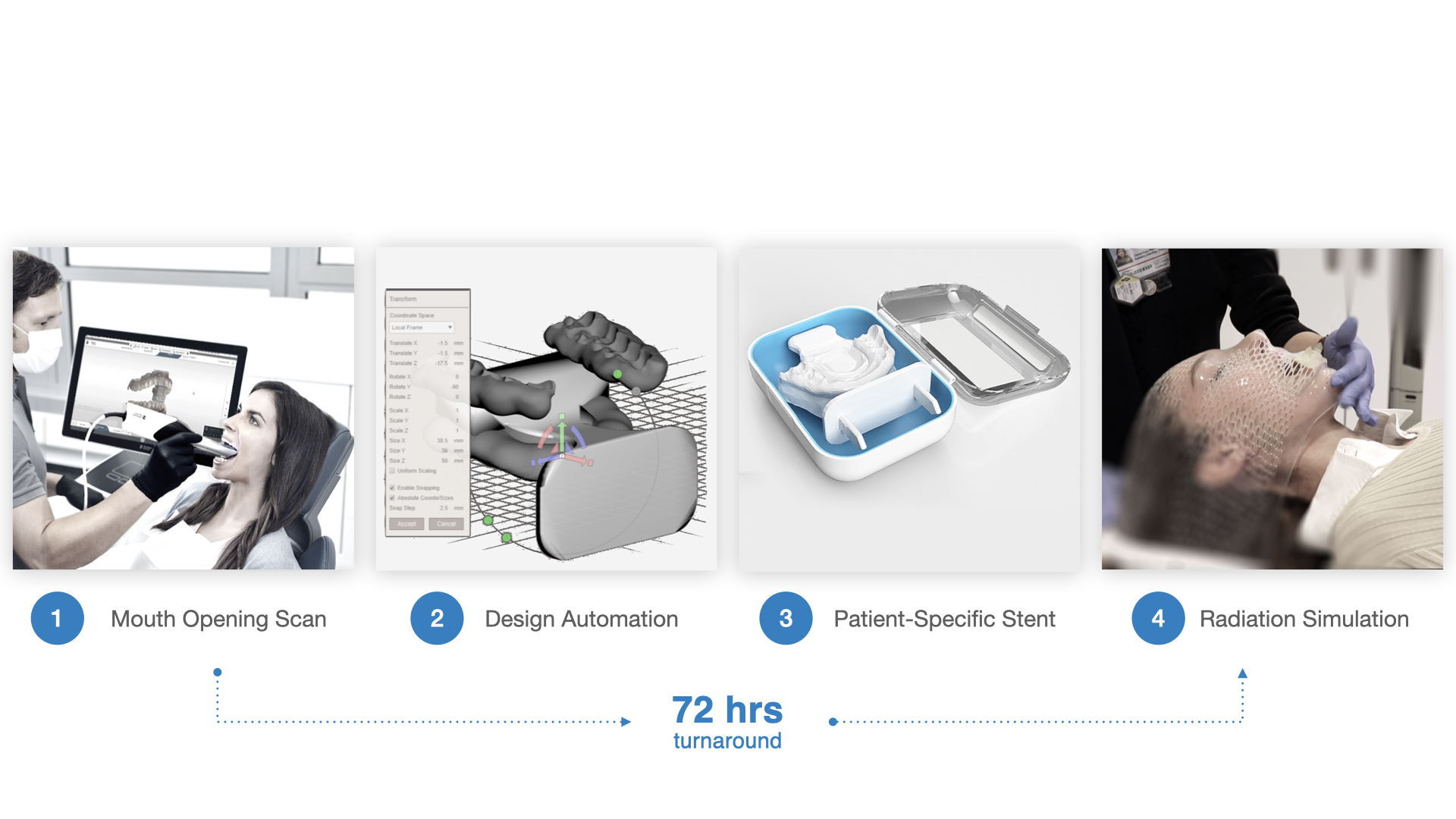
3D printed patient-specific oral stents are delivered through a digital workflow process that integrates seamlessly into treatment plans, ensuring timely, efficient, and personalized care. Both oncologists and patients benefit:
Precision and Efficacy
Radiation oncologists can deliver highly targeted treatments through consistent setup, stable immobilization, and precise positioning, thereby optimizing radiation dosing.
Improved Quality of Life
By protecting healthy tissues and displacing OARs, custom 3D-printed stents significantly mitigate radiation-induced toxicities, preserving patients’ quality of life during and after treatment.
Research shows custom-like intraoral stents for head and neck cancer patients can reduce radiation dose to healthy tissue by 41.6% and severe oral mucositis by 77.6%.
Rapid Production and Scalability
Beyond clinical benefits, the rapid production timeline made possible by 3D printing is transformative where it is possible for a patient-specific stent to be ordered, designed, and delivered in 72 hours. When an immediate therapy start time is critical, the patient’s oral cavity can be scanned with an off-the-shelf optical device during treatment consultation, and the stent shipped in time for radiation simulation a few days later providing an optimal solution from day one of treatment.
A New Era in Healthcare
Additive manufacturing is ushering in a new era for medtech, where patient-centric solutions are not only possible but scalable and equitable. By integrating 3D printing into healthcare, providers can redefine standards of care, offering advanced treatments that improve both patient outcomes and quality of life. As this technology continues to evolve its potential to transform the medical world is limitless, making it a cornerstone of the future of healthcare.
Kallisio CEO Rajan Patel will participate at Additive Manufacturing Strategies, Feb 4-6 in New York City.
Subscribe to Our Email Newsletter
Stay up-to-date on all the latest news from the 3D printing industry and receive information and offers from third party vendors.
Print Services
Upload your 3D Models and get them printed quickly and efficiently.











You May Also Like
Cybersecurity: A Necessity in a Maturing Additive Manufacturing Industry
Additive Manufacturing is no longer an experimental technology operating on the margins of industrial production. Over the past decade, it has become an integral part of how OEMs design, produce,...
How Metal Additive Manufacturing Is Reshaping the Future of Aerospace and Defense Engineering
Additive manufacturing (AM) is steadily changing the way we think about producing metal parts for aircraft. Whilst aerospace and defense companies have been using metal AM for over twenty years,...
The AM Adoption Problem No One Models
Through its short history, Additive Manufacturing has been presented to the investment community as a classic high growth technology story. Manufacturing is a multi-trillion-dollar market. Even a small percentage looks...
The Business of Customized Sports Equipment: How 3D Printing Is Changing Athletic Gear
For years, 3D printing in sports has been linked mostly with prototypes, concept shoes, and one-off experiments for elite athletes. Helmets, cleats, and footwear midsoles often took over the headlines,...