USS Somerset Employs Meltio’s Metal 3D Printing to Overcome Mission Challenge

It’s no secret that the U.S. Department of Defense (DoD) is steadily ramping up its use of 3D printing and doing so in increasingly critical areas and at crucial times. This was demonstrated most recently at the 2024 Rim of the Pacific (RIMPAC) exercise, when the USS Somerset, a San Antonio-class amphibious transport dock, successfully addressed a critical equipment failure using onboard 3D printing technology. Meltio’s hybrid-metal additive manufacturing system, integrated with Snowbird Technologies’ Snowbird Additive Mobile Manufacturing Technology (SAMM Tech) platform, played a pivotal role in restoring the ship’s operational readiness.
Addressing a Critical Failure During RIMPAC
RIMPAC, the world’s largest maritime exercise, involves 29 nations and over 25,000 personnel. Early in this year’s deployment, the USS Somerset encountered the failure of a reverse osmosis pump, essential for producing clean drinking water. Without the pump, the ship faced the prospect of returning to port, disrupting its mission.
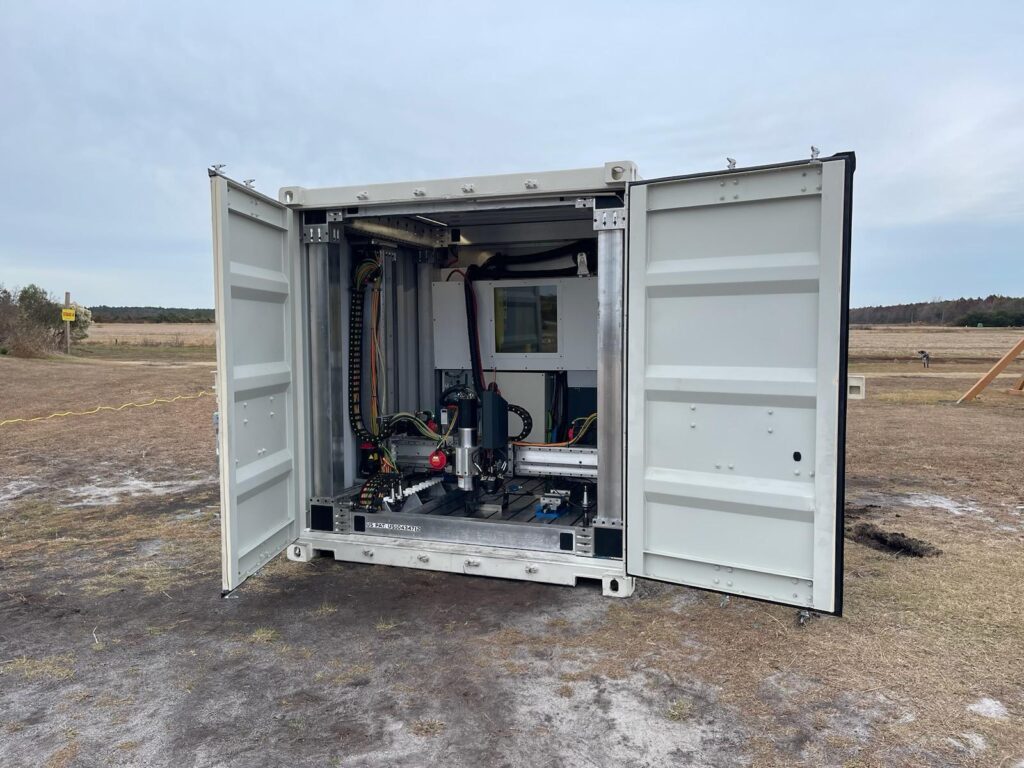
The SAMM Tech platform with Meltio technology. Image courtesy of Meltio.
Traditionally, replacing such a part would require weeks for the supply chain to deliver a replacement. However, with the SAMM Tech system onboard, which integrates Meltio’s wire-laser metal 3D printing technology, the crew was able to fabricate a replacement part in just hours. This ensured the ship could continue its operations without significant delay.
The SAMM Tech system combines Meltio’s additive manufacturing process with a CNC platform for post-processing. It enables ship crews to produce metal components by using computer-generated designs, making the replacement of critical parts faster and more efficient. This capability is particularly valuable in remote or high-pressure environments, where traditional logistics solutions may not be viable.
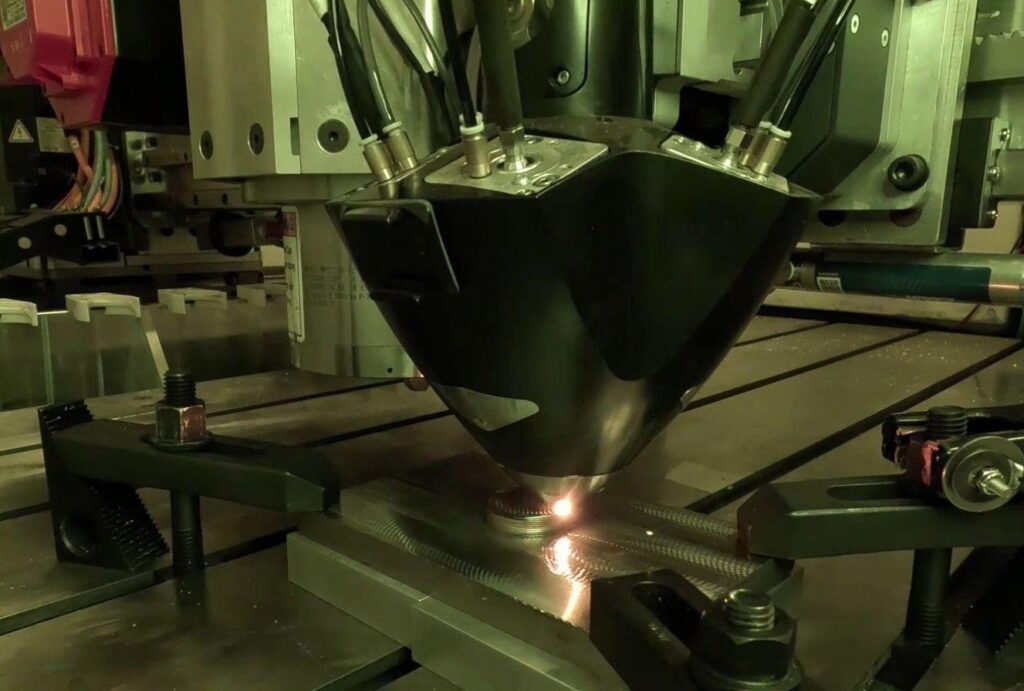
A replacement part being manufacturing using the SAMM Tech platform with Meltio technology. Image courtesy of Meltio.
Charles Wallace, a mechanical engineer from the Naval Postgraduate School, noted, “What we didn’t expect was that we would have the opportunity to directly help ship readiness so soon, especially for something as mission-essential as a reverse osmosis pump, where if you run out of water you’re going to be coming home pretty quick.”
“If the crew had to rely on a replacement part without using additive manufacturing, it would have taken weeks or months (…) With this technology, we’ll have the new component printed and ready for installation before the order for a replacement would be completed,” added Staff Sgt. Jordan Blake, a member of the Marine Innovation Unit.
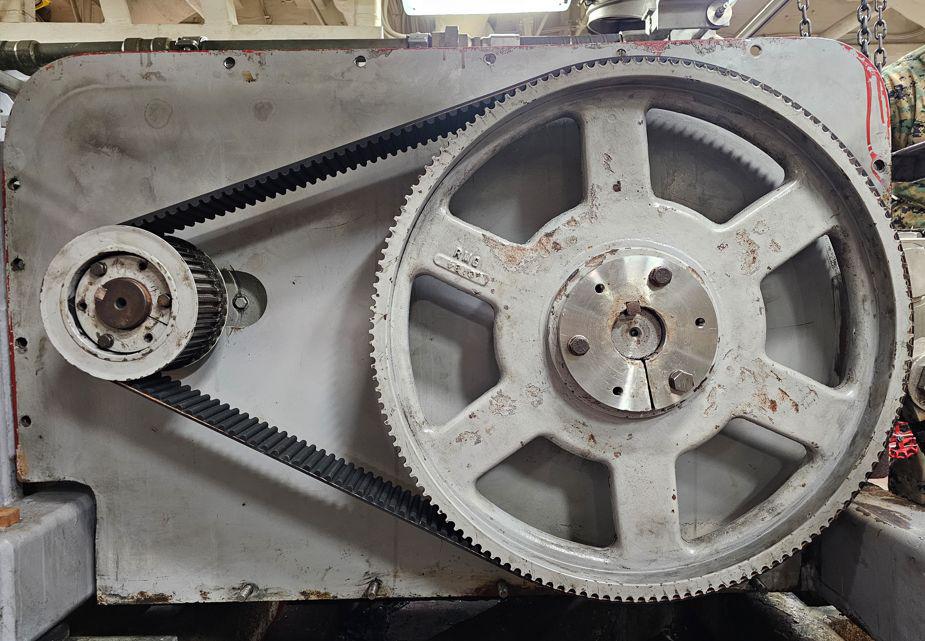
The new part installed. Image courtesy of Meltio.
Strong Military Partnership
Snowbird Technologies’ entry into AM through the SAMM Tech platform exemplifies how established expertise in environmental control can be leveraged to address the challenges of AM in demanding environments. By integrating Meltio’s wire-laser metal deposition technology, Snowbird has provided a comprehensive solution tailored to military needs. This collaboration has gained recognition not only from the U.S. Navy but also internationally, with the French Navy successfully validating Meltio’s technology in scenarios such as the Ursa Minor exercise, highlighting its cost efficiency and operational flexibility.
This collaboration aligns with broader trends identified in AM Research’s Additive Manufacturing in Military and Defense 2024 report, which projects defense AM spending to reach $2.6 billion by 2030. These investments underscore the military’s focus on deploying adaptable, high-quality AM systems, as demonstrated by the USS Somerset’s ability to resolve a critical failure in hours rather than weeks.
Subscribe to Our Email Newsletter
Stay up-to-date on all the latest news from the 3D printing industry and receive information and offers from third party vendors.
Print Services
Upload your 3D Models and get them printed quickly and efficiently.













You May Also Like
The Manufacturing Race Behind the Drone Revolution
We are in the middle of a major manufacturing shift focused on the production speed and payload capacity of uncrewed aerial systems (UAS), or drones. A recent Manufacturing Dive article...
ADDMAN to Buy Up to $10.8M in Nickel 718 Powder from 6K Additive Over 30 Months
After years of buildup, we’re finally starting to see what the US metal additive manufacturing (AM) market could look like at scale. To be sure, it’s still not quite there,...
Metal AM in a Multipolar World, Part 2: How PBF and DED Could Change by 2035
The first decades of PBF development were heavily shaped by machine capability: more power, more lasers, larger build volumes, better recoating, and improved process monitoring. These developments will continue, but...
Advanced Manufacturing at IMTS 2026: 3D Printing and AI and Drones, Oh My!
Last week’s International Manufacturing Technology Snow (IMTS) in Chicago welcomed over 90,000 attendees to the jungle that is McCormick Place. With over 1.17 million square feet of exhibit space, and...