AddUp’s MASSIF Metal 3D Printing Consortium Brings Heft to French Defense

French metal 3D printer manufacturer AddUp will be releasing a 3D printer with a substantial 750mm x 750mm x 1m build volume. The Metal Additive System, Sustainable, Industrial, Eco-Friendly (MASSIF) machine is expected to have an expanded build volume of 1.5m x 1.5m x 2m. The firm says that the system will increase productivity by 300%, and they hope part costs will be reduced by 50% to 70%. The massive system is based on the FormUp 350, and AddUp aims to reduce wasted power by 10% compared to that machine.
AddUp didn’t develop this system alone; the company collaborated with laser optics and directed energy weapons firm Cailabs, research institute CETIM, defense contractor and software firm Dassault Systèmes, precision motion control and mechatronics firm ISP Systems, and on-demand software company Vistory. Coincidentally, all the companies involved are French. In addition to making the lunches better and reducing driving distances, this is surely a victory for “un monde additif.” Now, French industry, including firms such as Dassault (which makes fighters and private planes), Thales (which produces defense technology, night vision goggles, and satellites), Safran (which manufactures aero engines, cabin interiors, and periscopes), and the quintessentially French giant Airbus, can benefit.
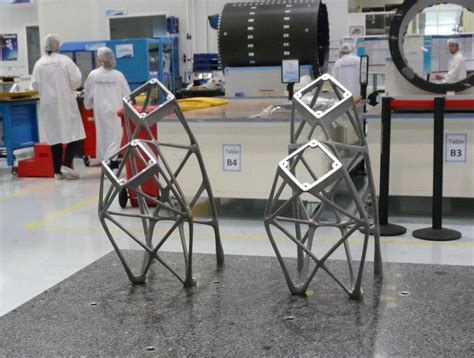
Thales satellite parts from 2015 made with a Concept Laser 1000R
It gives European players an alternative to U.S. and Japanese firms that produce large satellite components, rocket propulsion systems, and other defense-critical parts. The MASSIF is part of the Robots and Intelligent Machines of Excellence 2030 program, informally referred to as “France Makes.” With major system manufacturers now offering gigantic systems—including prominent Chinese firms—EOS is a notable absentee from this trend. EOS’ largest system is the 450 x 450 x 1,000 mm machine by AMCM. Is EOS being surpassed, or are they simply more cautious, focusing on delivering high-quality parts in a smaller build volume rather than risking questionable quality in larger builds?
AddUp, at least, is confident that its technological advancements will allow it to catch up with companies like SLM. AddUp hopes that its machine “ensures top-quality parts straight off the printer, utilizing AddUp’s proprietary technology to deliver best-in-class surface finishes that minimize or eliminate the need for costly and time-consuming postprocessing. Additionally, its robust in-process monitoring instills confidence that parts are printed correctly from the start, reducing the need for expensive quality assurance testing afterward.”
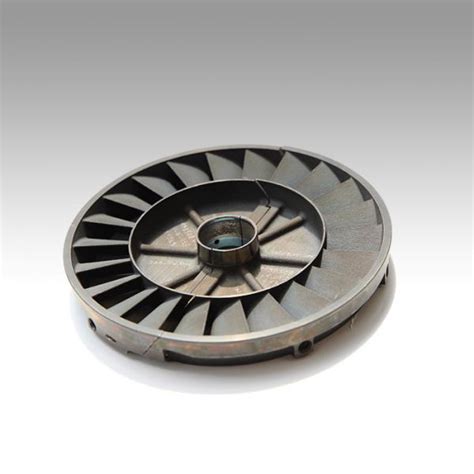
Safran is an early pioneer in manufacturing with 3D printing, using it for turbo machinery and gas turbines extensively since before 2017.
“It was the association of the best experts, each in their field, that allowed us to launch the MASSIF project. This technological leadership in large-scale metal 3D printing will enable us to meet the challenges of energy transition and productivity for aeronautics, defense and space players, always in a co-design approach by AddUp with its clients,” said AddUp CEO Julien Marcilly.
With Cailabs on board, the new machine was able to utilize beam shaping, which could improve part properties and enhance production speed. The beam shaping solution for the MASSIF was also developed in collaboration with ISP Systems. It would be interesting to see a French alternative to nLight emerge from this, or more beam shaping solutions in general. Dassault and Vistory contributed a certified parts manufacturing solution, which is central to distributed manufacturing strategies. The first machine will be tested and qualified by CETIM.
Through companies like Safran, Thales, and Michelin, France was an early pioneer in manufacturing critical parts with additive technologies. However, the country lacked the vast venture capital funding seen in the U.S., and did not benefit from the waves of innovative value engineering that China was able to provide. None of the major public 3D printing companies are French, and the largest OEMs hail from other countries. Belatedly, Team France is playing catch-up in this field—but will it matter? French firms tend to prefer domestically produced goods more than companies in places like Belgium or the Netherlands. Given the sheer size of the French economy, this preference alone could create a semi-captive market. Large French defense interests and the government are also likely to feel more comfortable with French-made 3D printers, especially considering France’s late entry into NATO and its strong independent streak.
The French arms industry, having been negatively affected by the AUKUS deal and strained relations with the U.S., may now see an independent approach to new weapons development as crucial. This makes non-U.S.-dependent 3D printing technology particularly valuable. On a European scale, having a powder bed alternative to EOS would also be beneficial.
Overall, this is a logical move for France, with its industrial companies acting in concert. A co-design project like this allows firms to provide highly specific feedback, which may differ from the needs of companies like SpaceX and Vast. Particularly in areas like aerostructures, aluminum, ducting, and heat management, more tailored requirements could benefit civil aviation, general aviation, and perhaps even the automotive industry. I’m cautiously optimistic about this venture.
Subscribe to Our Email Newsletter
Stay up-to-date on all the latest news from the 3D printing industry and receive information and offers from third party vendors.
Print Services
Upload your 3D Models and get them printed quickly and efficiently.













You May Also Like
3D Printing News Briefs, October 10, 2026: Drones, WAAM, Ceramics, & More
We have a packed 3D Printing News Briefs for you this weekend! First, America Makes celebrated the recent National Manufacturing Day with 3D printed drones, and then it’s on to...
10 Years of Multi Jet Fusion: Onsite at HP’s Vancouver, Washington Facility
At this year’s RAPID event in Boston, HP Additive Manufacturing Solutions celebrated ten years in the additive manufacturing (AM) market. The company ushered in the milestone with several innovations, including...
PharmaTher Plans U.S. Network to 3D Print Medicines on Demand
3D printing medicines has often been tied to the idea of personalization, basically making a pill in the right dose, shape, or drug combination for a patient. PharmaTher is now...
3D Printing News Briefs, September 17, 2026: 3D Printed Boat, UAS Development, & More
We’ll start with maritime manufacturing in this week’s 3D Printing News Briefs, and continue on to defense 3D printing. We’ll end with funding for Tripo AI. Read on for all...