Incodema3D Signals US Metal 3D Printing Scale-Up with 6K, Uniformity Deals

Incodema3D, an additive manufacturing (AM) services company specializing in the aerospace sector, announced two new projects recently, involving two different metal alloy powders.
First, Incodema3D, which is headquartered in upstate New York, has partnered with 6K Additive, the Massachusetts-based metal powders provider, to secure access to 6K’s Ni625 alloy powder (often referred to by the brand name Inconel 625). As part of the agreement, Incodema3D will also be joining 6K’s Powder Buy Back program, whereby 6K will recycle Incodema3D’s used metals.

In a press release announcing the partnership with 6K, Incodema3D’s director of AM and metrology operations, Kevin Engel, commented, “We are talking to clients now about projects for 2023 that will require ten tons of metal powder per month. When you’re going through that volume of powder, recycling becomes imperative…By recycling our used powder with 6K Additive we have been able to drive down our contribution costs for metal by 15% already.”
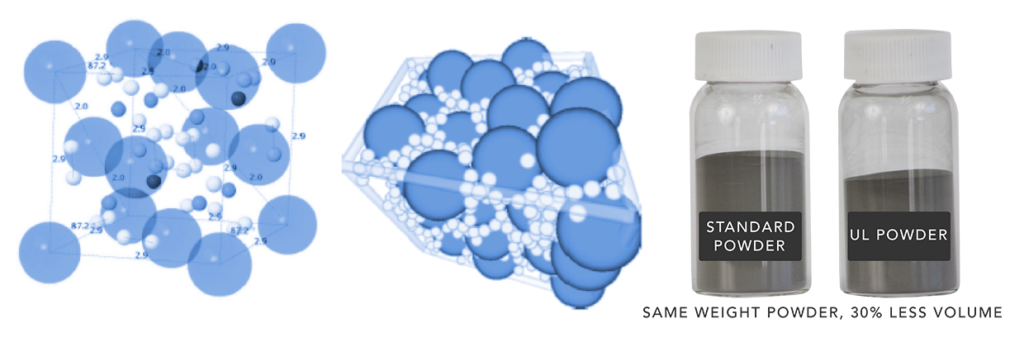
In addition, Incodema3D has also partnered with Uniformity Labs, a producer of metal powders based in Silicon Valley, to print a camshaft tray for a race car engine designed by engineering firm Polimotor. For the project, Incodema3D and Polimotor collaborated on a case study to evaluate the throughput benefits of Uniformity Labs’ AlSi10Mg (aluminum alloy) powder.
In a press release about the joint case study, the founder of Polimotor, Matti Holtzberg, explained, “Along with the inherent benefits 3D printing provides in reducing weight and optimizing designs, the ability to reduce cost without compromise to material properties has significant implications not just for producing racing engines but for the global auto industry, which faces a growing demand for lighter, more fuel-efficient cars.”
This particular point, about the relationship between research done in the race car sector and the objectives for the next generation of mass-production in the broader automotive sector is worth keeping in mind—and not just because Holtzberg invented the Polimotor 1, the world’s first polymer-based internal combustion engine, all the way back in 1980.
I mentioned something similar to the point Holtzberg makes, in a recent post about hypersonic aviation startup Hermeus. Concerning the role that research into highly specialized, “moonshot” applications could ultimately play in shaping the development of products with higher economies-of-scale, I wrote, “Regardless of the ultimate practicality of hypersonic flight, it seems to be a useful sandbox for all sorts of next-generation production systems, as well as a stimulus for investment in new hardware and materials.”
Thus, in the same way, mass-produced automobiles will never have to perform the same tasks as race cars. Nevertheless, as Holtzberg points out, there’s an overlap between the objective to lighten parts in order to maximize speed for specialty applications, and the same objective to lighten parts in the commercial automotive sector — even if the purpose in the latter is primarily fuel-efficiency.
Finally, both developments highlight the great impact on the sector made by case studies and third-party verifications. These admittedly boring-sounding things are necessary prerequisites for any particular application to start gaining traction. Regarding the 6K partnership, for example, 6K recently released a life-cycle assessment (LCA) for its UniMelt process, and Incodema3D did its own in-house assessment of 6K’s Ni625 alloy.
More broadly, all the hardware and materials involved took years of R&D before they could even reach the point where they could be tested for commercialization. The pay-off at the end of that very long road is what Incodem3D’s Kevin Engel mentioned about the company talking to individual customers about projects requiring ten tons of metal per month. The fact that Incodem3D, in turn, is just one of 6K’s clients shows how rapid the scale-up of the US metal AM sector will be, now that it is finally underway.
Subscribe to Our Email Newsletter
Stay up-to-date on all the latest news from the 3D printing industry and receive information and offers from third party vendors.
Print Services
Upload your 3D Models and get them printed quickly and efficiently.













You May Also Like
The Manufacturing Race Behind the Drone Revolution
We are in the middle of a major manufacturing shift focused on the production speed and payload capacity of uncrewed aerial systems (UAS), or drones. A recent Manufacturing Dive article...
ADDMAN to Buy Up to $10.8M in Nickel 718 Powder from 6K Additive Over 30 Months
After years of buildup, we’re finally starting to see what the US metal additive manufacturing (AM) market could look like at scale. To be sure, it’s still not quite there,...
Metal AM in a Multipolar World, Part 2: How PBF and DED Could Change by 2035
The first decades of PBF development were heavily shaped by machine capability: more power, more lasers, larger build volumes, better recoating, and improved process monitoring. These developments will continue, but...
Advanced Manufacturing at IMTS 2026: 3D Printing and AI and Drones, Oh My!
Last week’s International Manufacturing Technology Snow (IMTS) in Chicago welcomed over 90,000 attendees to the jungle that is McCormick Place. With over 1.17 million square feet of exhibit space, and...