Mitsubishi Enters Metal Binder Jetting with Digital Metal Deal


Mitsubishi has been one of the more interesting players in the 3D printing industry as of late, due to their steady growth in the space. Though I’ve been told that the separate companies under the conglomerate umbrella are so divided that they even compete at times, as a whole, the multinational is quickly penetrating multiple segments. The latest is metal binder jetting, thanks to a partnership with Digital Metal.
Mitsubishi Heavy Industries Machine Tool Co., a company within Mitsubishi Heavy Industries (MHI), is expanding its metal 3D printing services to include binder jetting (BJT) for small-scale parts. Together with its existing directed energy deposition (DED) technology, MHI can 3D print metal parts from 1mm in size up to elements over 1 meter.
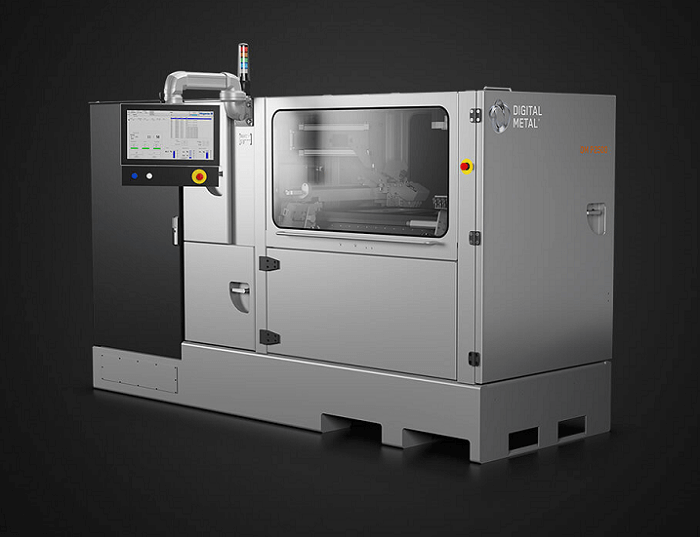
The DMP2500 from Digital Meta. Image courtesy of Digital Metal.
The binder jetting on offer comes from the DMP2500 system, manufactured by Digital Metal. Digital Metal is a subsidiary of Höganäs AB, the world’s largest producer of powdered metals. After developing a binder jetting method for metals back in 2013, only preceded by ExOne, Digital Metal began offering the technology as a service. It wasn’t until 2017 that the Swedish firm began selling the DMP2500 itself. This was followed in 2018 with technology for automating the process.
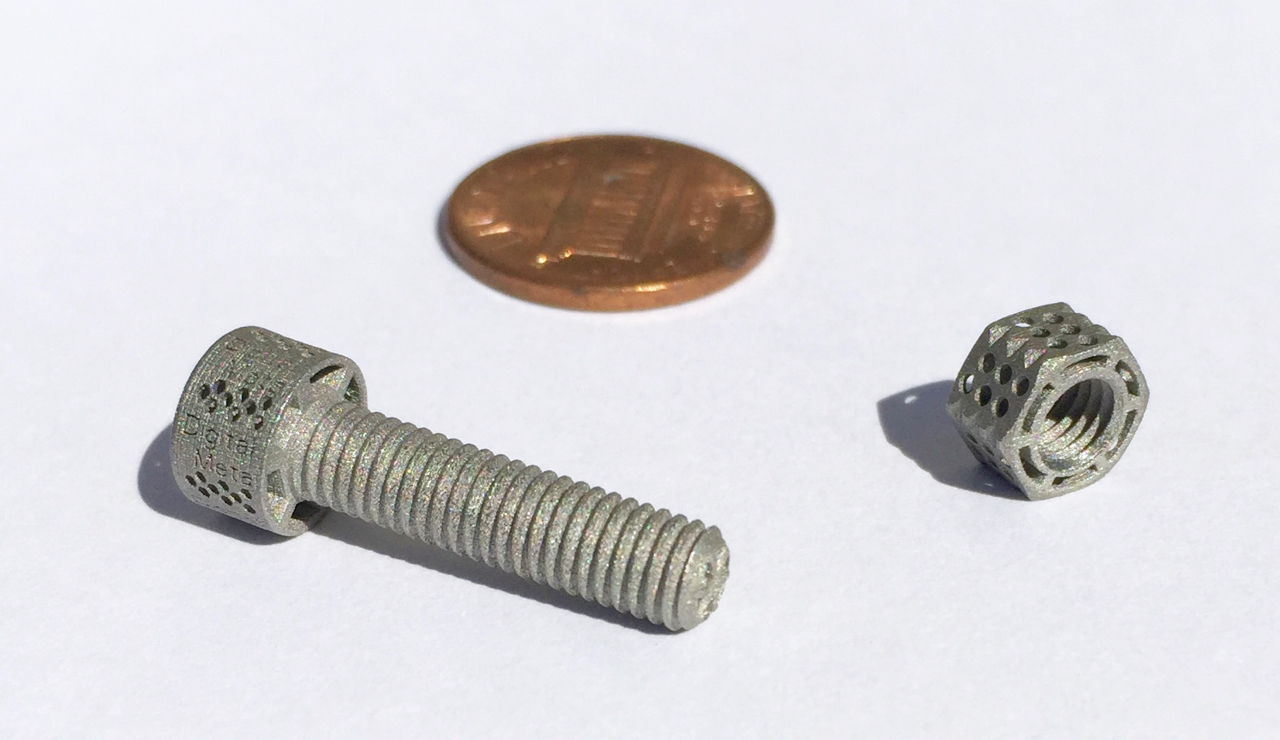
Metal parts 3D printed with Digital Metal’s binder jetting process. Image courtesy of Digital Metal.
In July 2020, MHI Machine Tool ended its contract with Digital Metal to market the system to Japanese customers. Now, the company is adding it to its own production portfolio, expanding its offerings both on the sales and after-sales services side of the business. The business notes that it is increasing its focus on services, knowing that metal 3D printing comes with significant challenges.

The LAMDA series of DED 3D printers from Mitsubishi Heavy Industries.
By understanding these challenges, MHI Machine Tool will be able to provide solutions to its customers, including expertise, and better enable the adoption of the technology. And it will be able to do so for a broad range of scales and applications, using its LAMDA DED series for large-scale parts and BJT for smaller series items.
Though binder jetting and other bound metal printing processes have received increased attention since the market entry of Desktop Metal, there is continued progress related to other metal 3D printing technologies. Binder jetting may be comparatively inexpensive and open to a wider range of materials, which still require significant processing and qualification. However, DED is still the go-to for large-scale parts. Meanwhile, there are other metal 3D printing methods out there that have their own benefits, such as cold spray and molten metal.
As a whole Mitsubishi continues to advance in the industry. We can see Mitsubishi Chemical growing not only through acquisitions, but also service partnerships. Mitsubishi Electric may be getting involved in post-processing after having developed a “dot-forming” technology in 2018. The conglomerate may not be buying up entire segments to dominate a particular vertical, but it is making interesting moves. When that will result in enough momentum to make it a force to be reckoned with is another story.
Subscribe to Our Email Newsletter
Stay up-to-date on all the latest news from the 3D printing industry and receive information and offers from third party vendors.
Print Services
Upload your 3D Models and get them printed quickly and efficiently.













You May Also Like
The Business Case for 3D Printed Stents
A new 3D printed stent developed at New York University (NYU) does not look like the devices doctors typically use today. Instead of a simple tube, the prototype resembles a...
AMS X Puts 3D Printing Business Center Stage; Registration Prices Increase August 26
The additive manufacturing (AM) industry has spent the last few years getting a lot more serious about business. Growth, profitability, consolidation, defense spending, supply chains, and scaling production now matter...
3DEO Liquidates Factory as Metal 3D Printing Business Is Broken Up
Metal additive manufacturing company 3DEO is being dismantled. On Tuesday, August 18, the remaining machinery at the company’s Torrance, California, factory went up for sale in an online auction. The...
Additive Economics 101, Part 1: Betwixt Rolex and Ryanair
Let’s look at what matters when we make things that matter. What considerations are there, what is important, what affects cost? Look at the levers in laser powder bed fusion,...