Researchers Explore Construction 3D Printing with Calcined Clay

While industries such as medicine, aerospace, and automotive often seem to steal the wow factor within the 3D printing spotlight, the construction zone has certainly not disappointed in terms of spectacular headlines. And as a wide range of materials continue to prove themselves, cement has certainly been no slouch; in fact, you could spend many hours poring over the different types of research involving both cement and additive manufacturing—from experimentation with self-reinforced strain hardening composites, spray-based materials, and even self-healing systems.
Now, researchers are studying how varied calcined clay affects cement for 3D printing, with their findings released in “Effect of different grade levels of calcined clays on fresh and hardened properties of ternary-blended cementitious materials for 3D printing.” Pointing out that concrete is often used in both particle bed- and extrusion-based 3D concrete printing (3DCP), the authors consider extrusion to be more suitable for the large scale.
While printability, buildability, and extrudability are key, other factors are necessary for quality extrusion, such as high fluidibility, low viscosity, and suitable layer adhesion. Most studies regarding cement include additives like ash, limestone, silica, and slag—offering improved sustainability with decreased use of Portland cement; however, with pressure on the additives now too, they are becoming more depleted.
Calcined clay is clay that has been converted into a ceramic via firing in a kiln up to 1500 degrees Fahrenheit. The material is most often used as a soil amendment on baseball fields. Previous research has pointed to calcined clay as a good alternative due to:
- Low CO2footprint
- Abundant raw materials
- Good compressive strength
- Capillary porosity refinement with pozzolanic reactions
Calcined clay may be prone to unpredictability though, due to manufacturer variances in production, as well as deviances caused by temperature, differences due to the structure and purity of raw materials, and more—along with reactivity dependent on metakaolin (MK).
During this study, the authors discovered that in experimenting with two different types of calcined clays (a low-grade calcined clay (LGCC) from France, containing 50% MK, and another from the US, made up of 95% MK—and considered to be “high-grade”) they were able to improve the cementitious mixture to the point of comparing with plain cement paste. This coincides with other research showing that fresh mixtures can be transformed with the addition of calcined clay, but very little has been performed overall in terms of study.
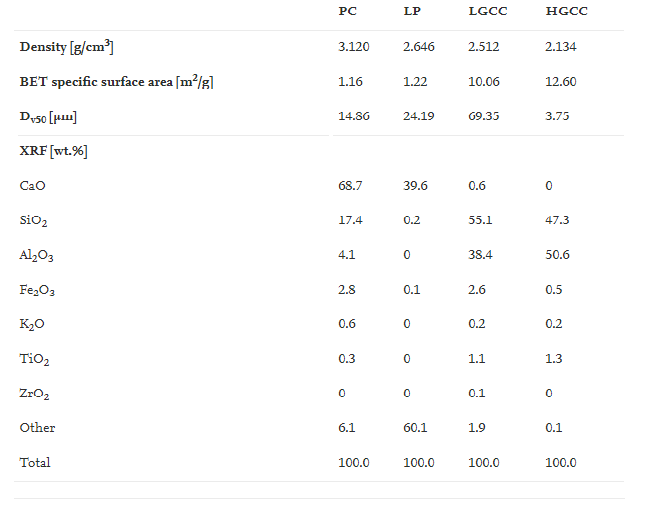
Physical characteristics and oxide composition from XRF of dry components in binders.
In ram extrusion testing (made up of a barrel, piston, stand, and an orifice, assembled in a servo-hydraulic Instron machine), they were able to change the MK content as well as the properties of the fresh mixture.
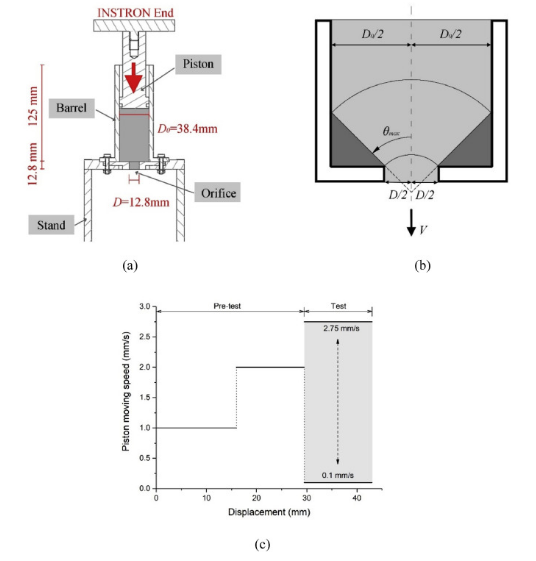
(a) Schematic drawing of the ram extruder; (b) Diagram of the orifice entrance flow region in a spherical coordinate system, according to Ref. [26,27]; (c) A typical trial of the ram extrusion test – predefined piston moving speed vs. displacement.
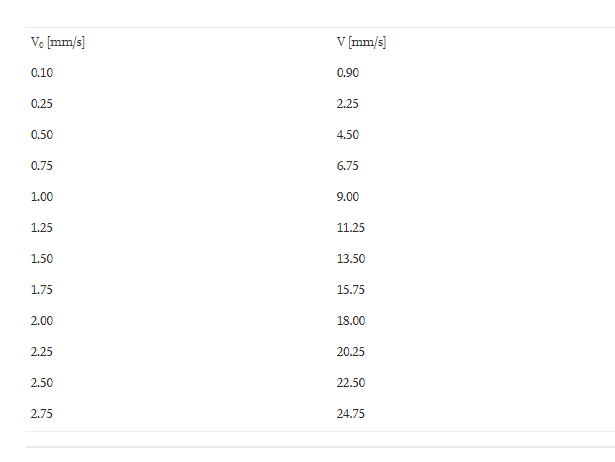
Piston speed (V0) and computed material flow rate (V) at the orifice.
A 3D printing test was performed on a “lab-scale 3DCP setup” at Delft University of Technology (TU Delft), made up of a three-degree freedom Computer Numerical Control (CNC) machine and a PFT Swing-M type conveying pump. Compressive strength after one week was reliant on hydration and the composition of the fresh mixtures while “at rest.” Air void content increased as they added high-grade calcined clay (HGCC) to cylindrical samples constructed from the upmost two layers of 3D printed beams
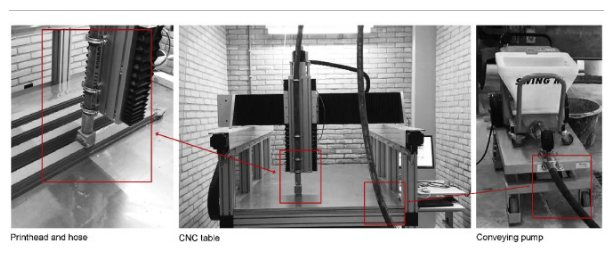
A lab-scale 3DCP setup at TU Delft. It consists of a CNC table, a conveying pump, a material hose, and a printhead (nozzle).
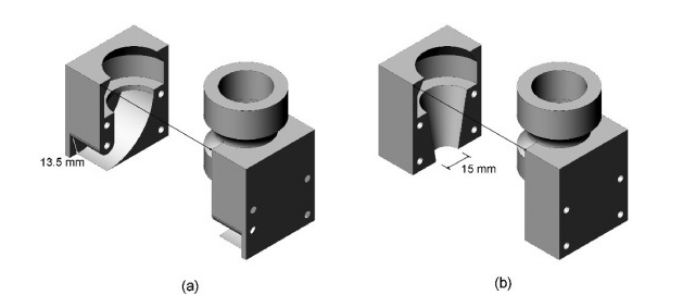
(a) Nozzle 1 with a rectangle opening (40 × 13.5 mm2); (b) Nozzle 2 with a round opening (Ø 15 mm).
“The results also confirmed that fresh mixtures with good buildability might be vulnerable to the formation of cold joint/weak interface between two adjacent layers,” said the researchers.
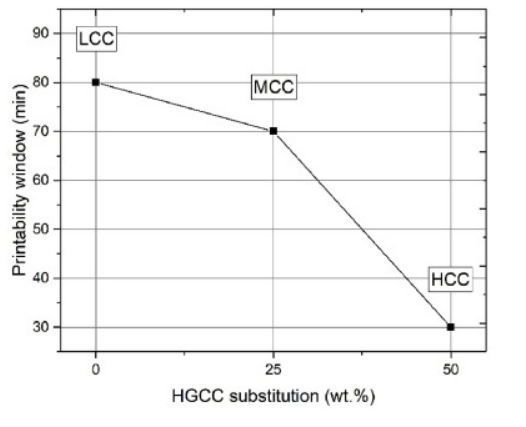
Printability window various with the HGCC substitution in calcined clay.

Buildability test results of method 1: (a) Buildability performance of mixtures LCC, MCC, and HCC; (b) Height and layer number of the printed object by using different mixtures (mixtures LCC and MCC: data recorded before collapse; mixture HCC: data recorded after the 21st layer); (c) Possible reasons for collapse of the rising structure.
Subscribe to Our Email Newsletter
Stay up-to-date on all the latest news from the 3D printing industry and receive information and offers from third party vendors.
Print Services
Upload your 3D Models and get them printed quickly and efficiently.











You May Also Like
Cybersecurity: A Necessity in a Maturing Additive Manufacturing Industry
Additive Manufacturing is no longer an experimental technology operating on the margins of industrial production. Over the past decade, it has become an integral part of how OEMs design, produce,...
How Metal Additive Manufacturing Is Reshaping the Future of Aerospace and Defense Engineering
Additive manufacturing (AM) is steadily changing the way we think about producing metal parts for aircraft. Whilst aerospace and defense companies have been using metal AM for over twenty years,...
The AM Adoption Problem No One Models
Through its short history, Additive Manufacturing has been presented to the investment community as a classic high growth technology story. Manufacturing is a multi-trillion-dollar market. Even a small percentage looks...
The Business of Customized Sports Equipment: How 3D Printing Is Changing Athletic Gear
For years, 3D printing in sports has been linked mostly with prototypes, concept shoes, and one-off experiments for elite athletes. Helmets, cleats, and footwear midsoles often took over the headlines,...