
Drone Deliveries: Wilhelmsen Turns to F-drones to Deliver 3D Printed Spare Parts

Wilhelmsen, one of the world’s largest maritime companies, is making continual progress in the field of 3D printing for its sector. The latest news from the firm is that it will begin using drones to deliver 3D-printed spare parts to its off-shore customers via a partnership with Singapore’s F-drones.
The announcement comes after Wilhelmsen launched its early adopter program for 3D printing spare parts in the maritime industry in December 2019. In February 2020, the company performed its first delivery of 3D-printed spare parts to a Berge Bulk ship. Now, the delivery of 3D-printed spare parts is going to be performed by unmanned aerial vehicles from F-drones, the only drone delivery business that has been authorized by the Civil Aviation Authority of Singapore to perform deliveries Beyond-Visual-Line-of-Sight to vessels.

A Series 1 Pro 3D printer printing a part for Wilhelmsen’s spare parts program. Image courtesy of Wilhelmsen Group.
While there has been a great deal of hype around giants like Amazon using drones to drop items off to ordinary consumers, F-drones is demonstrating the viability of such a technology for hard-to-reach locales, such as oil rigs and ships. With electric drones able to carry 5 kg across 50 km, F-drones will be partnering with Wilhelmsen to perform last-mile deliveries with a future goal of delivering up to 100 kg across 100 km. The firm suggests that the use of drones for such operations can reduce costs, time, labor and carbon emissions by 80 percent compared to boats and helicopters.
So far, Wilhelmsen has six customers in its early adopter program, including, in addition Berge Bulk: Carnival Maritime, OSM Maritime Group, Thome Ship Management, its own Wilhelmsen Ship Management, and Executive Ship Management. Involved in the spare parts printing program is the Ivaldi Group, a startup founded by former Type A Machines CEO Espen Sivertsen and invested in by Wilhelmsen. Also linked with the maritime giant is German steel leader thyssenkrupp. All of this activity is located in Singapore, which obviously has an ideal location for seafaring activities, but has also established itself as center of additive manufacturing (AM) activity. Combined, we may see Singapore as becoming the hub for maritime AM.
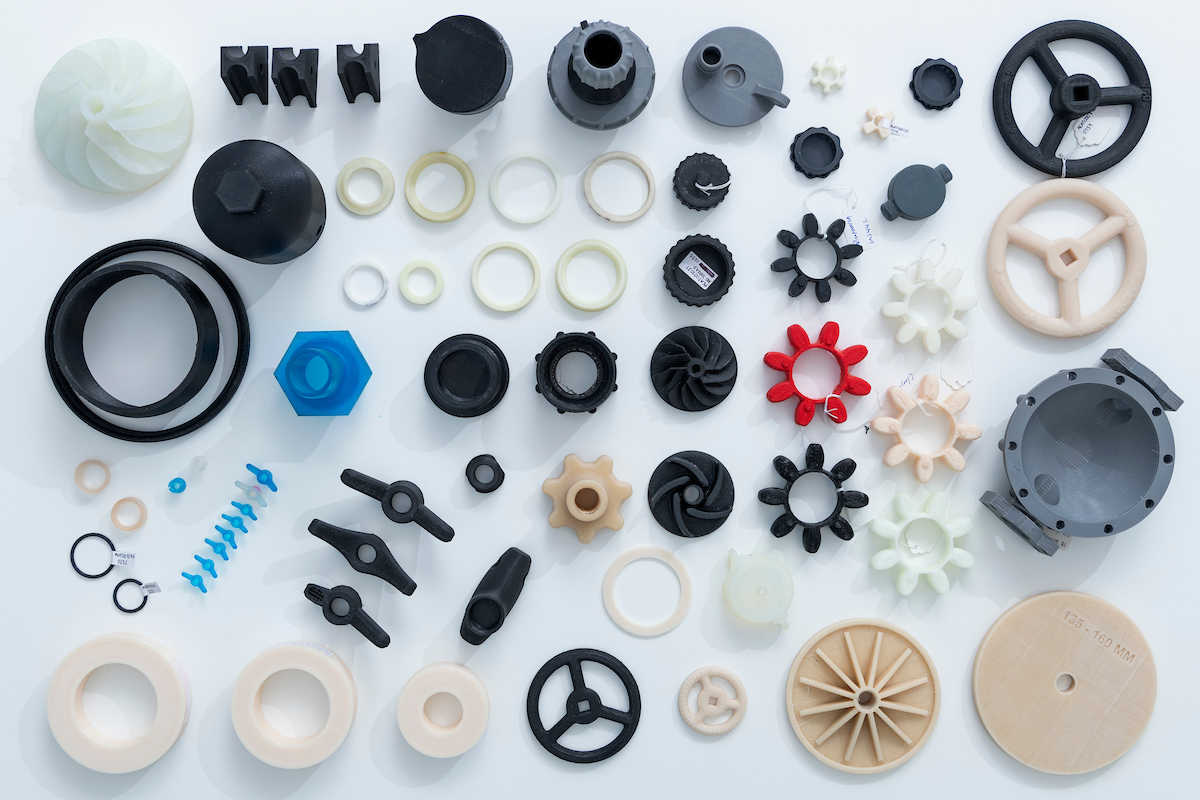
3D-printed spare parts for maritime. Image courtesy of Wilhelmsen.
As 3D-printed spare parts become established within this sector, we may also see the additive production of replacement components take off in other industries, where the promise of such a scheme has long been touted. Virtual inventory and spare parts 3D printed on-demand seem to make sense on paper, particularly for segments where individual components are specialized and high cost, like heavy equipment, industrial manufacturing, and energy. In the case of the maritime sector, perhaps all that will be needed to push 3D printable spare parts across that last mile is a drone delivery service.
[Feature image courtesy of F-drones.]Subscribe to Our Email Newsletter
Stay up-to-date on all the latest news from the 3D printing industry and receive information and offers from third party vendors.
Print Services
Upload your 3D Models and get them printed quickly and efficiently.













You May Also Like
Prusa Core One L+: A Worthy Upgrade?
Disclosure: The Core One L+ was provided to me by Prusa3d free of charge for the purpose of this review. I have not received any other compensation. All opinions expressed...
Building Profiles in the Additive Print Services Market – Market Research Beyond AI Scraping
AM Research New market research: AM Research is building its new Additive Manufacturing Services Market 2.0 model. View the report and preorder here → In case you haven’t heard, at...
3D Printing Services Near $2.5B as AM Market Shifts Beyond Hardware
The additive manufacturing market may be growing again, but one of the more interesting numbers behind that recovery has little to do with selling 3D printers. AM services generated nearly...
Bambu Lab and SUSAN FANG 3D Print for London Fashion Week
At London Fashion Week, some of the more unusual pieces on the runway came from 3D printers. Chinese fashion designer SUSAN FANG presented her Spring/Summer 2027 Air-Illusion collection at the...
























































