How Accurate is 3D Printing for Reconstructing Forensic Evidence?

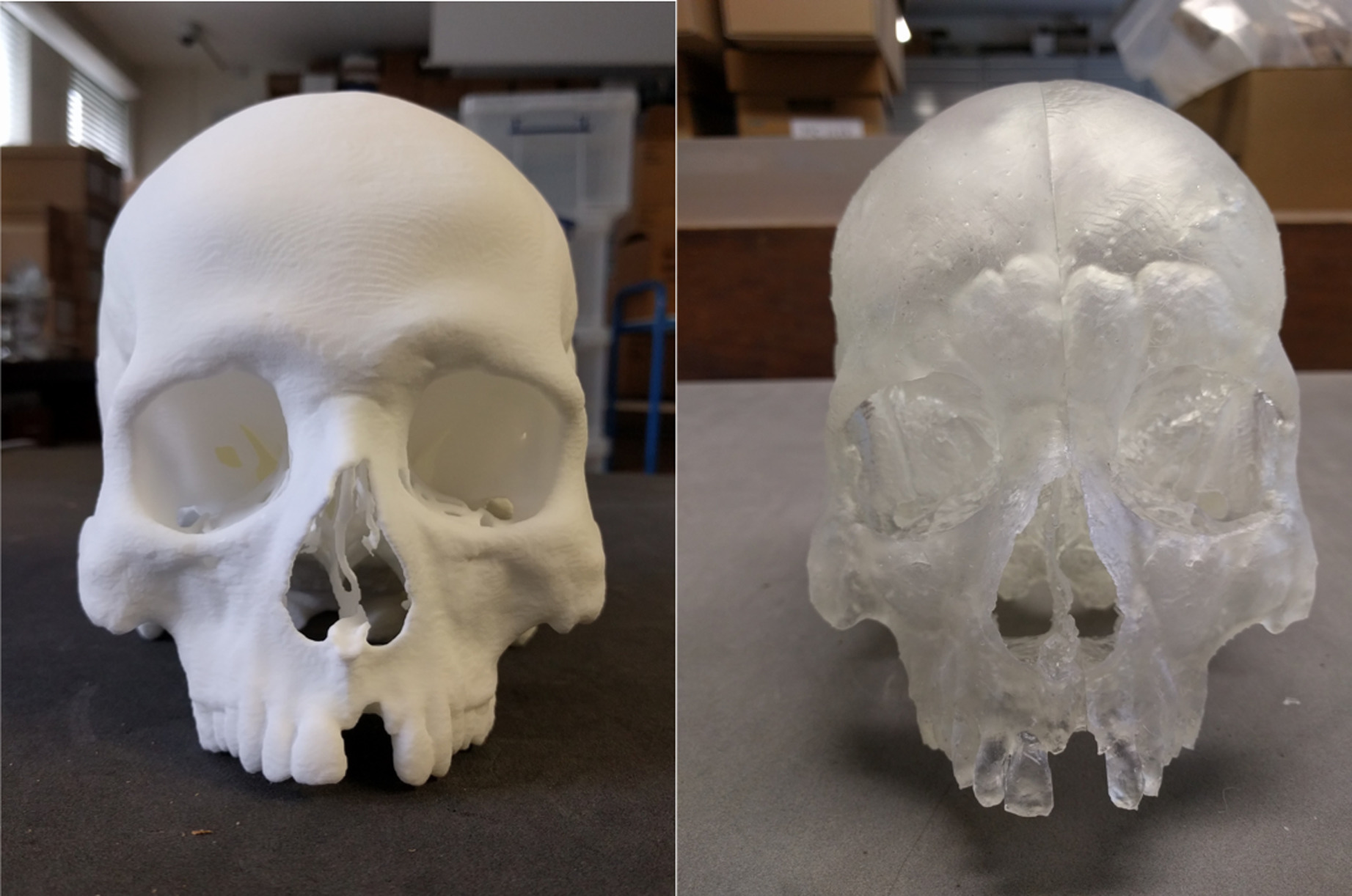
More than one crime, including multiple murders, has been solved with help from 3D printing, as the technology can help recreate forensic evidence. But in a new study entitled “A Preliminary Investigation into the Accuracy of 3D Modeling and 3D Printing in Forensic Anthropology Evidence Reconstruction,” a team of researchers examines just how impactful 3D printing and 3D modeling actually are in solving cases.
The researchers affirm that 3D printed evidence has been useful in several court scenarios. 3D printed replicas of bones can be more effective than photographs at showing the nature of injuries to victims, but while there is quite a bit of circumstantial evidence demonstrating that this is the case, there is still a lack of published empirical evidence. This study aims to change that.
“Digital methods have become increasingly popular and have been used in place of traditional photographs for demonstrating evidence in court for a number of years,” the researchers point out. “It can be argued that both photographs and 3D virtual models may not always provide accurate representations of their original subject. First, subjects can be distorted via the light or angle used in a photograph or a virtual rendering; second, when presenting a 3D object such as a bone as a 2D image, whether as a photograph or a virtual model, depth and spatial information is immediately lost; and third, virtual 3D models are stereoscopic, meaning that they only give the illusion of depth. A novel way to address these problems has been the introduction of 3D printed replicas: a physical 3D object that has depth, haptic, and spatial characteristics.”
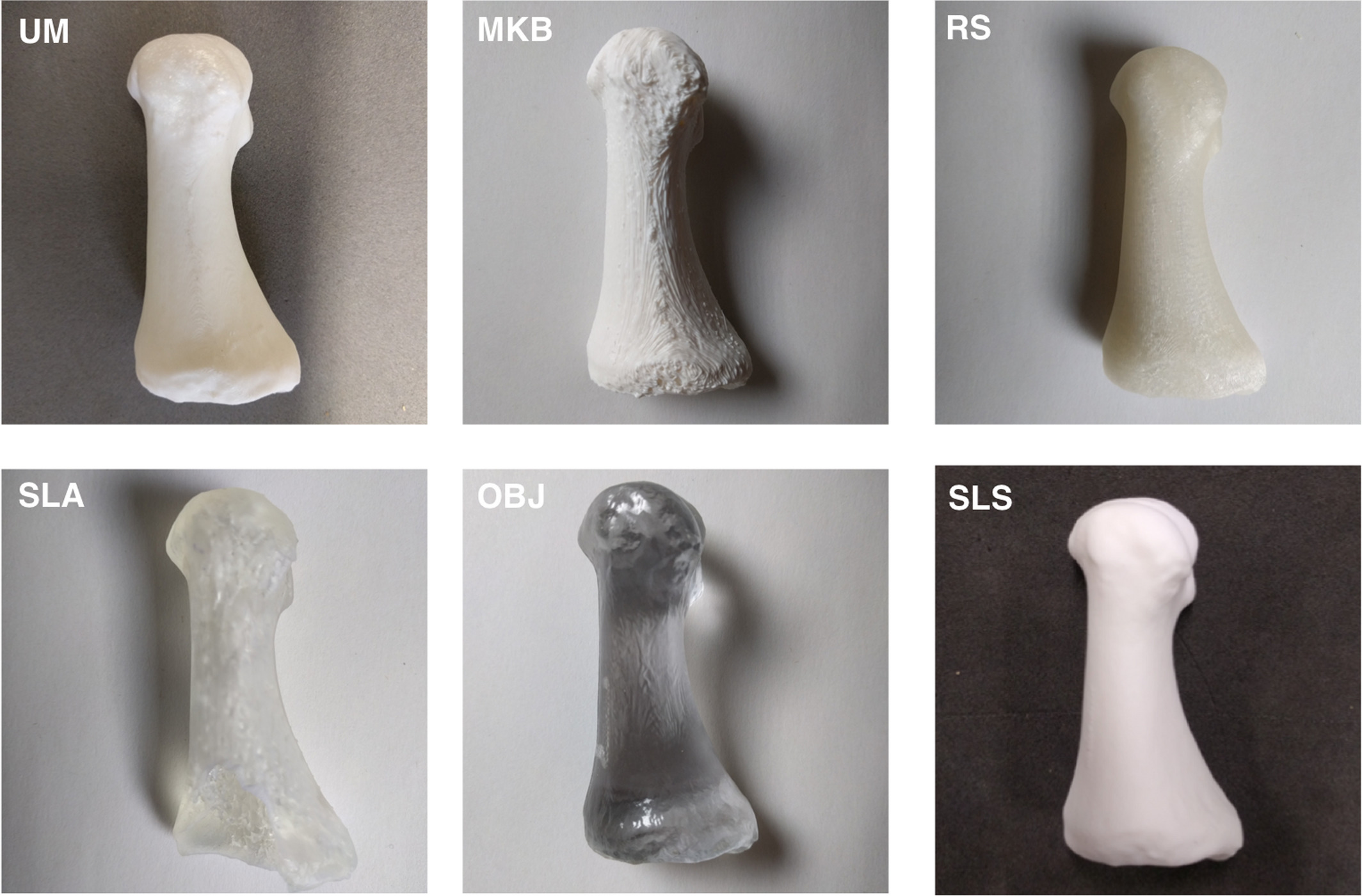
For the study, the researchers borrowed archaeological human bone specimens from University College London: a cranium, a clavicle and a first metatarsal. The bones were scanned and then 3D printed using six different commercial 3D printers: an Ultimaker 2, an RS Pro, an EOS P1, an Objet500 Connex 3, a Form 2 and a Makerbot 2. Osteometric measurements were taken of the bones and the 3D printed replicas by five doctoral students in archaeology and forensic anthropology.
“The results from this study found good intraobserver reliability and indicate good accuracy,” the researchers state. “The data resulted in mean differences ranging from −0.4 to 1.2 mm (−0.4% to 12.0%) for the virtual model data, and from −0.2 to 1.2 mm (−0.2% to 9.9%) for 3D print data.”
Overall, the virtual models and 3D printed replicas were highly accurate to the source specimens. The cranium model showed the most inaccuracy, likely because of its complexity and large curved surface. Three major conclusions were reached from the study:
- It is possible to produce accurate 3D printed replicas from CT scanned skeletal elements
- Each printer tested produced replicas with mean differences within ±1.2 mm
- SLS was the most metrically accurate printer type used, and produced prints that were the most aesthetically true to the original specimen
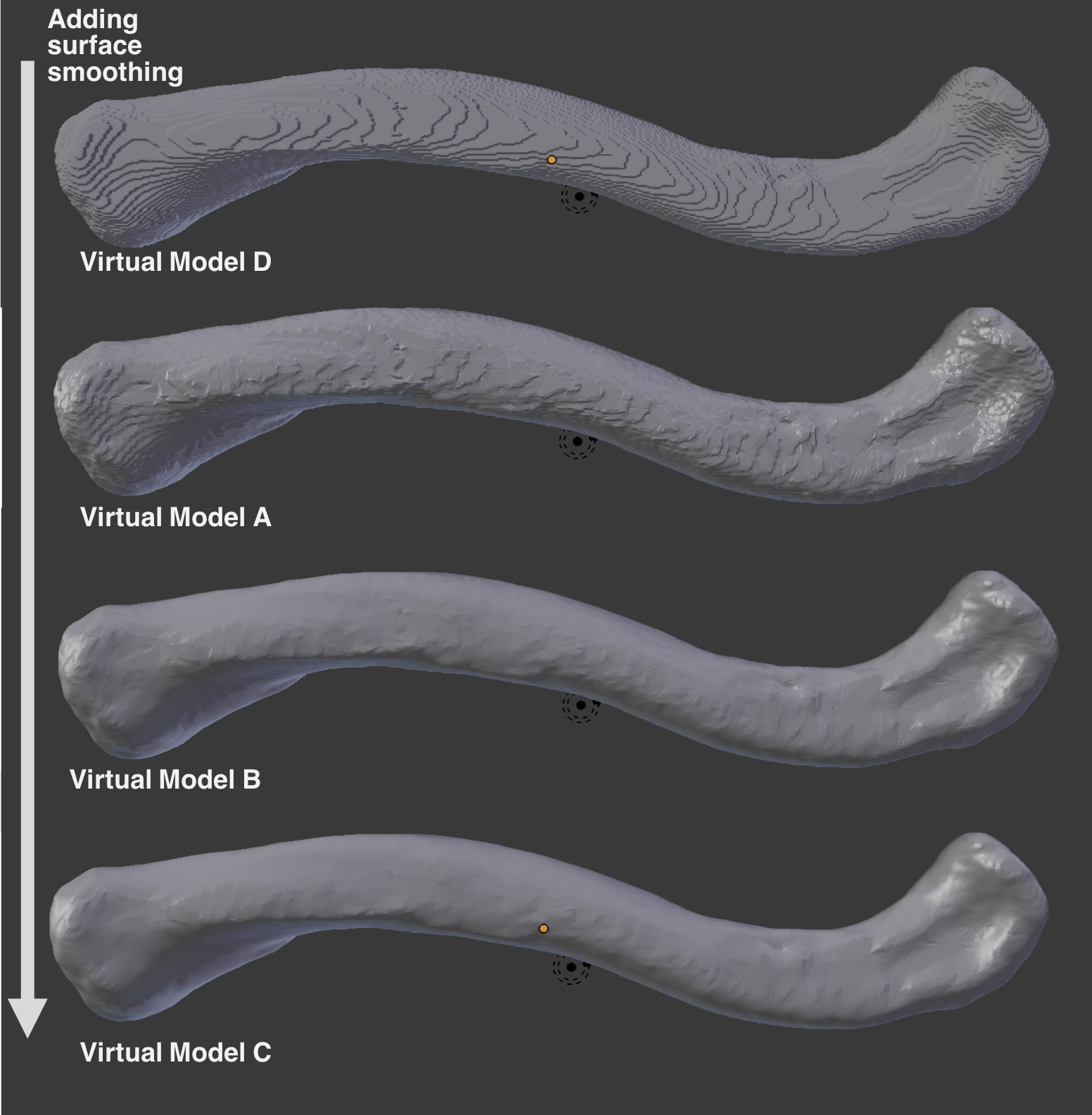 Recommendations include employing the highest CT scan resolution possible, using a high/hard CT reconstruction filter, applying an appropriate degree of surface smoothing, and using a 3D printer that does not require support structures. The researchers conclude that 3D printed forensic samples are indeed a valid method of providing evidence in court.
“Further work will explore 3D printer capabilities for printing forensic case specimens exhibiting trauma and fine details, and crucially an experimental investigation into the evidential impact of using 3D techniques for demonstration of evidence,” the researchers state. “The issues surrounding the validity and reliability of printed replicas and their evidential value must be addressed urgently, to avoid a lack of transparency in evaluative interpretation and the risk of misleading evidence creating unsafe rulings.”
Authors of the paper include Rachael M. Carew, Ruth M. Morgan and Carolyn Rando.
Discuss this and other 3D printing topics at 3DPrintBoard.com or share your thoughts below.
Subscribe to Our Email Newsletter
Stay up-to-date on all the latest news from the 3D printing industry and receive information and offers from third party vendors.
Print Services
Upload your 3D Models and get them printed quickly and efficiently.











You May Also Like
AMUG 2026 to Feature LEGO, Aerospace Collaboration Keynotes
AMUG 2026 puts the spotlight on the people and partnerships driving additive manufacturing forward. According to AMUG’s pre-conference overview, this year’s agenda reflects cross-industry collaboration, hands-on learning, and tangible business...
Generative AI Is Moving From Design to Factory Floors: TCT Asia 2026 Shows the Full Workflow
Generative AI is rapidly moving beyond digital experimentation and into real manufacturing environments — but the key challenge remains: can AI-generated 3D models move seamlessly from creation to production? At...
From “Magic” to Metal: How Intrepid Automation Wants to Make 3D Printing Matter at Scale
Ben Wynne still talks about 3D printing the way people do when they’ve felt that “wow” moment up close. Back in the early 2000s, he was working at HP’s advanced...
From Vision to Volume: The Next Chapter for Additive Manufacturing
Additive manufacturing has spent years navigating skepticism, hype cycles, and industrial validation. Now, the industry finds itself at a decisive turning point. The conversation has shifted away from futuristic possibilities...