See3D Uses 3D Printing to Connect Visually Impaired and Fully Sighted People

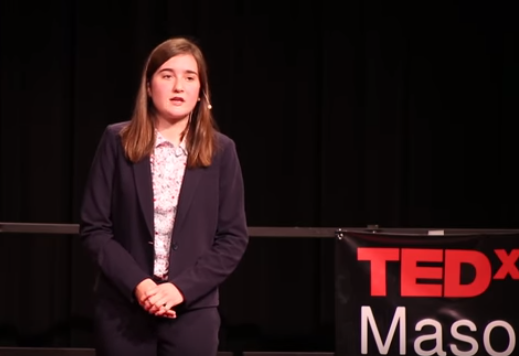
Caroline Karbowski
When Caroline Karbowski was a child, she decided that she wanted to learn Braille so that she could read in the car without getting carsick. She quickly found that it was more complicated than she had imagined, however: Braille isn’t just a straightforward alphabet. There are symbols for certain words, rather than everything being spelled out the way it is with standard type. She abandoned her idea of reading Braille in the car, but never lost her interest in the language, and when she got older she discovered an entirely new method of helping the visually impaired to “see”: 3D printing.
Karbowski described in a TED talk how she read an article about people who were using 3D printing to create telescope and microscope models so that the visually impaired could feel them – and including Braille labels on them.
“When I went to high school, we had a whole bunch of 3D printers, but I noticed that a lot of times they weren’t being used,” she said. “Sometimes kids didn’t know how to work them, they didn’t know how to fix them, and those that did know how to work the printers didn’t know what to create, so they just started making random objects. We also had a rainbow assortment of filament colors just sitting around the lab.”
[Image: See3D]
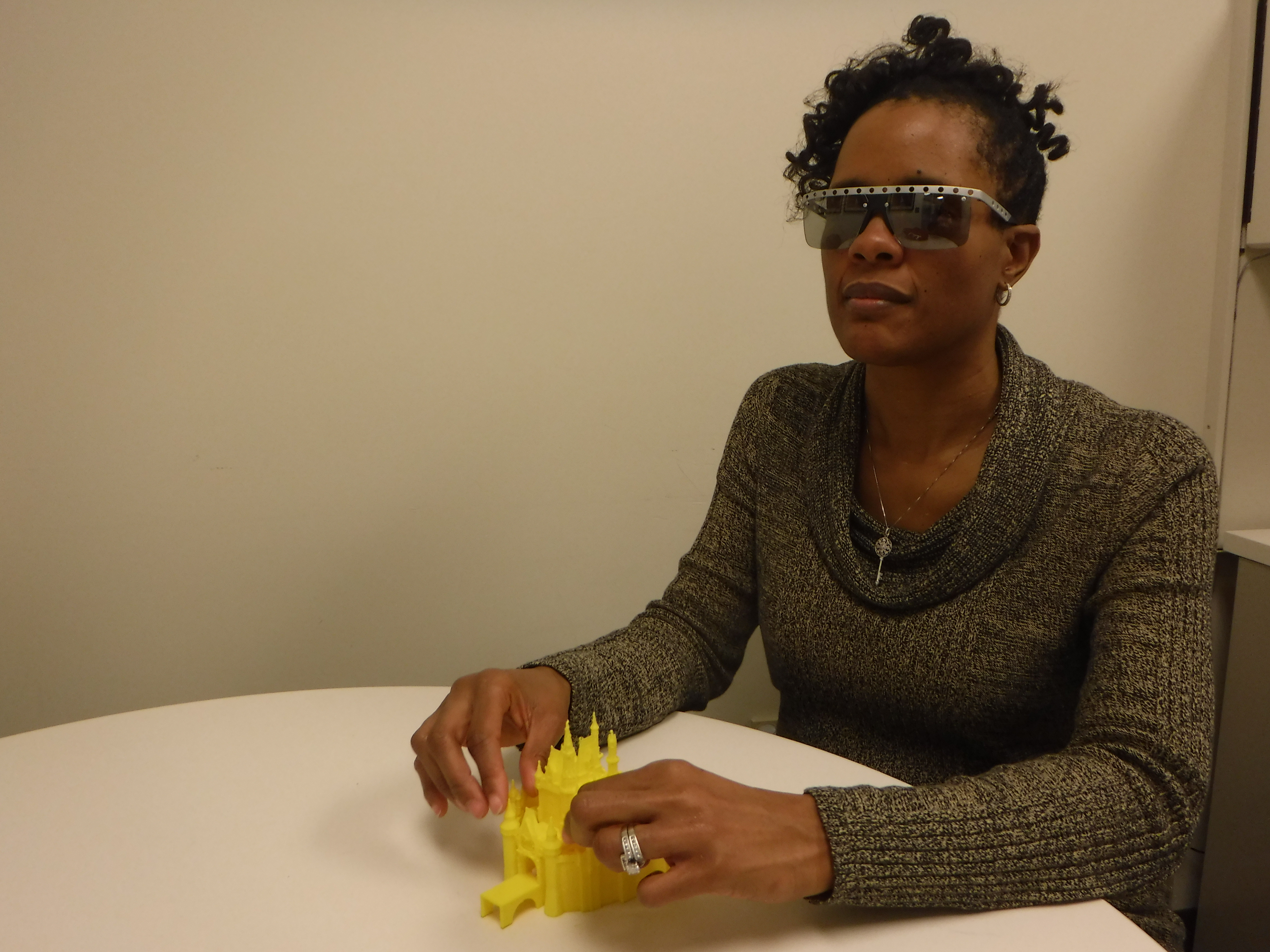
“I have a clearer, more vivid image of what ‘castle’ is now,” she said. “Before I touched the model, ‘castle’ was just a word.”
Inspired by the encounter, Karbowski decided to create a website that would connect people who were interested in 3D printing with visually impaired people who wanted tactile models to help them make words into images. She called it See3D. Visually impaired people who want a specific tactile object can make requests through the site, and then someone will 3D print the object and send it to them.
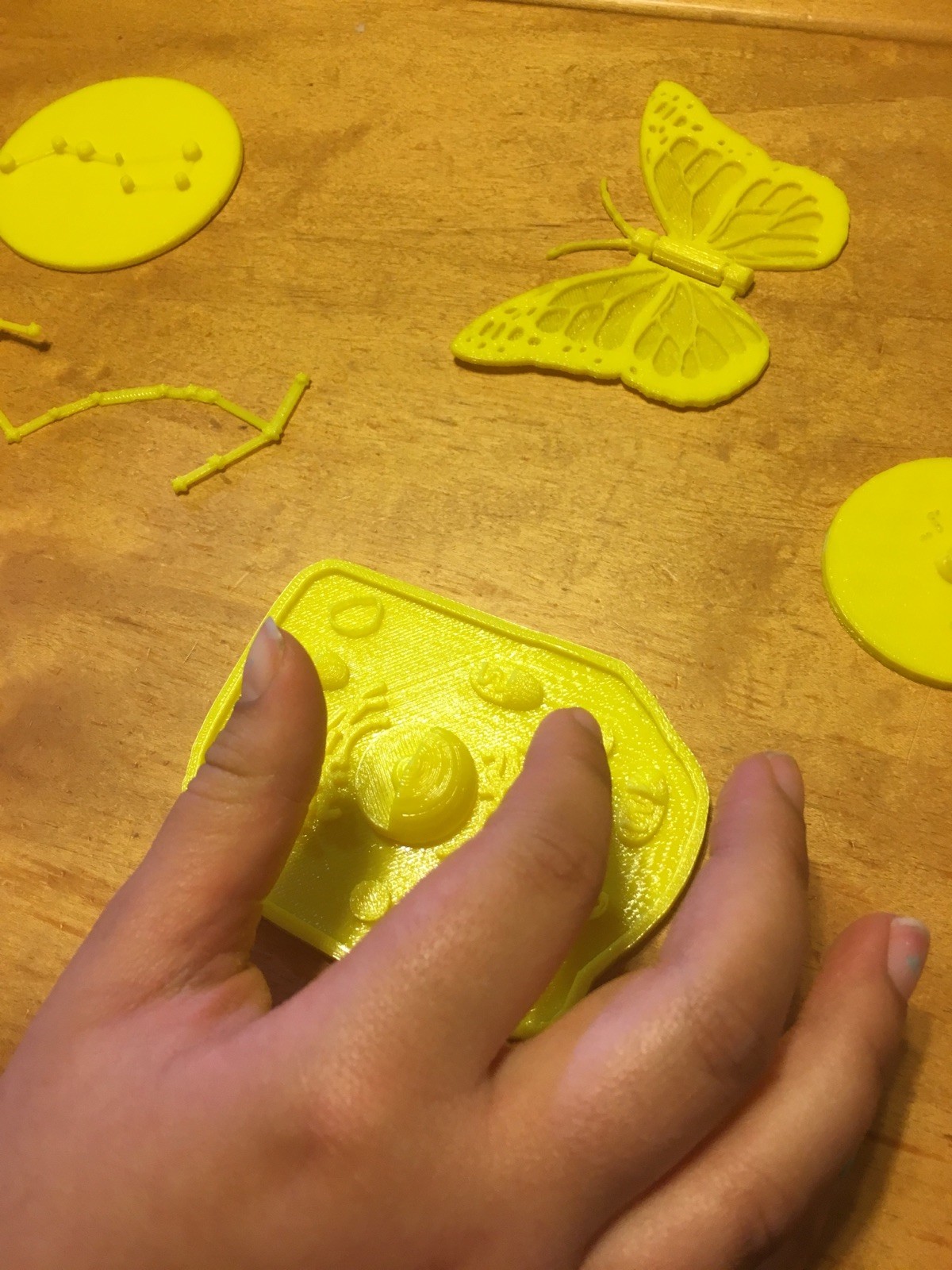 Karbowski points out that while tactile models for the blind existed before 3D printing, they often came in the form of expensive or overly large models that schools would have one or two copies of. There was nothing for students to take home and study on their own. But with 3D printing, it only takes a few hours to print an entire kit of shapes for a child to take home at the end of the day.
She also notes that one does not have to be blind to benefit from tactile objects. She herself was better able to understand DNA after seeing a 3D model of it, while a visually impaired friend could not grasp the concept of a double helix at all until feeling a model. Karbowski’s friend, who is now a PhD student in cognitive neuroscience, felt that the model made science more accessible to her in a way that it often isn’t to visually impaired students.
“It’s so important to include people who are blind in discussions like science or any field because they can provide a unique perspective on the world,” Karbowski said. “Because they view the world differently than people who are sighted.”
There is so much we can learn, Karbowski continued, if we use all our senses, rather than just sight. The Art Institute of Chicago, she said, 3D printed a selection of its artifacts and found that it wasn’t just blind people who benefited, but everyone, as they gained a different perspective on what they were usually used to just seeing in two dimensions.
See3D is all about connecting the blind and the sighted, and learning from each other. People who are sighted can 3D print objects for those who are blind, and in return can gain a new perspective on objects they take for granted – such as the blind man who, after feeling the shape of a snowflake, described it as “a fancy cookie.” See3D has already made more than 500 models, and anyone who is interested in 3D printing can create an object for someone who is blind.
The most requested models? Cells, protein carrier molecules, the Statue of Liberty, insects – and castles.
Discuss this and other 3D printing topics at 3DPrintBoard.com or share your thoughts below.
Subscribe to Our Email Newsletter
Stay up-to-date on all the latest news from the 3D printing industry and receive information and offers from third party vendors.
Print Services
Upload your 3D Models and get them printed quickly and efficiently.











You May Also Like
Top 10 3DPrint.com Stories of 2025: Kickstarter, Consumer Goods, Bankruptcy, & More
As Vanesa Listek wrote, last year was a major turning point for additive manufacturing (AM), as the industry is working to sort itself out. Customers want proven use cases and...
Will the FCC New Drone Ban Be a Boon for 3D Printing?
The US FCC (Federal Communications Commission) has said that it will not certify any new foreign-made drones for use in the US. Models currently on offer in the US can...
3D Printing News Briefs, December 27, 2025: Additive Construction in the U.S., Canada, & India
In this holiday weekend’s 3D Printing News Briefs, the focus is entirely on additive construction! We’ll start with news out of North America, specifically Canada and the United States, and...
Inside Xometry’s 2026 Outlook: What Manufacturers Are Worried About — and Where AM Fits In
When Xometry released the topline results of its new Manufacturing Outlook Report, the data showed just how much pressure manufacturers feel heading into 2026. Costs are rising, reshoring is accelerating,...