Autodesk CEO Carl Bass Dishes Out His Opinion on the 3D Printing Industry


Last week I was lucky enough to be able to attend the “Inside 3D Printing,” conference and expo in New York City, organized by Media Bistro. On the final day of the conference, Autodesk CEO Carl  Bass gave the opening key note, in which he discussed the future of 3D printing, and where he saw the technology headed. After the conference I was able to talk to him one on one for a couple of minutes.
Bass first learned about 3D printing 25 years ago, and although he feels that there is lot of excitement surrounding the technology, he believes that only some of that excitement is warranted. He does not think there will be a 3D printer in every home anytime in the near future, nor does he think that people will be printing out all of there everyday needs from their living rooms. He feels that the time constraints of the technology will hold it back on a consumer based level.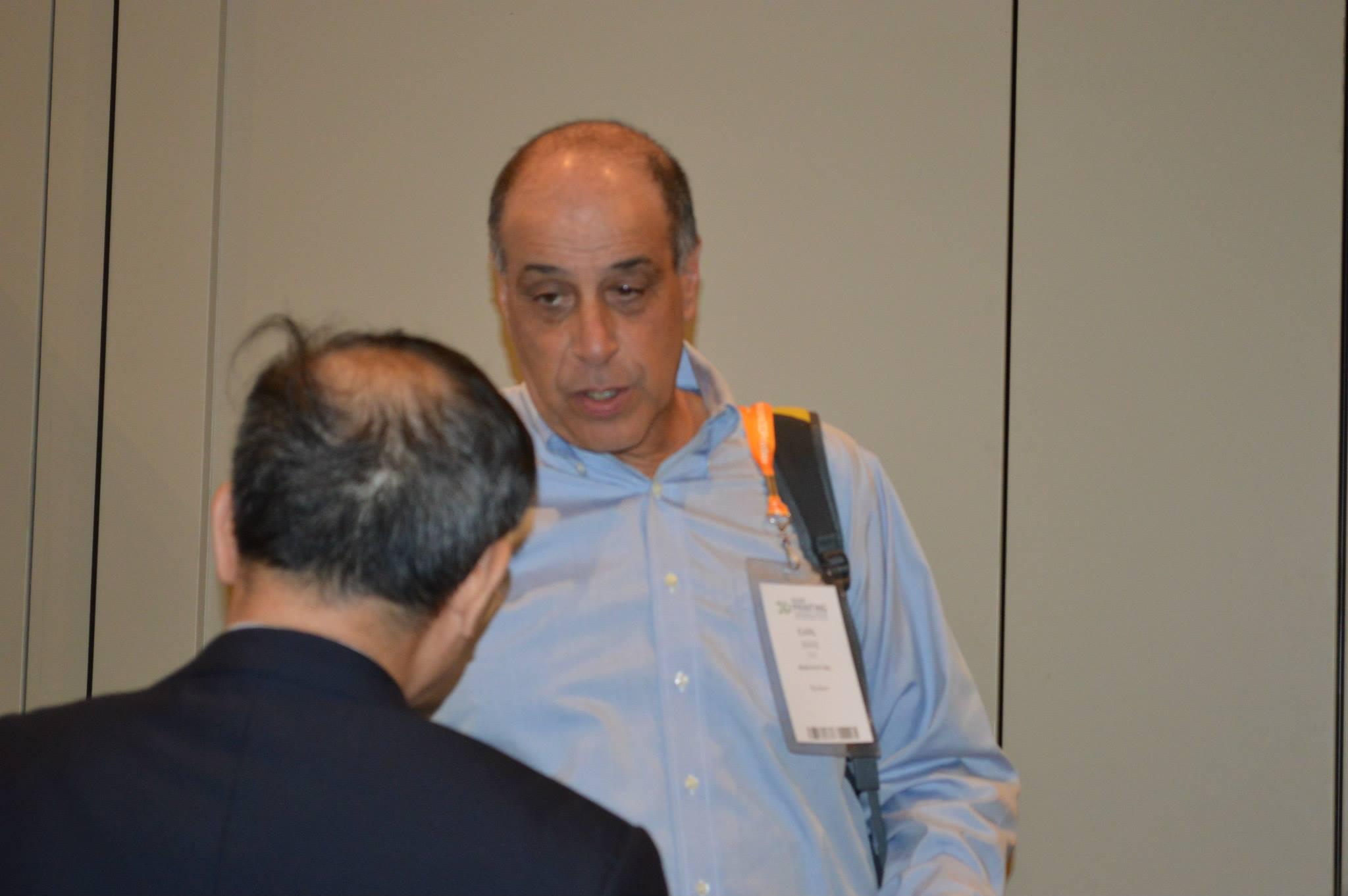
Bass explained that as you double the size of a printed object, the time it takes to print that object will increase by a power of 3. 2^3 = 8, he explained. An example would be as follows: You decide to create an object which takes two hours to print, but if you were to decide to double its size, that object will then take 16 hours to complete.
Although he was somewhat negative about the consumer market for 3D printers, he was very positive about the industrial side of things, saying that with 3D printing, “Shape complexity is free.”
Bass feels that the materials industry is the most important for the advancement of 3D printing technology as a whole. He believe that industrial scale 3D printing is where the major growth will be, envisioning business models which offer 3D printing services as being the true path towards progress. Business’s like Shapeways, have a very high printer utilization rate, while home 3D printers have a utilization rate similar to that of a toaster. It won’t make sense to purchase a printer when you can get cheap access to much higher quality printers, online or at local hubs. Everyone will have access to 3D printers, just not in their own homes.
 Bass also touched on some of the newer devices, like the Mark One carbon fiber printer, created by a company called Mark Forged. He seemed to be excited about this machine, stating that Autodesk was working with them from a software point of view.
Although Bass didn’t come into his key note, ecstatic about 3D printing on a whole, he clearly believes that this is an exciting, growing industry, which will have a tremendous impact on the manufacturing industry. He intends to be right there as CEO of Autodesk, pushing the envelope within the CAD industry. Discuss Bass’s insights and opinions, and get the full live blog about his Key Note from Friday at 3DPrintBoard.
Subscribe to Our Email Newsletter
Stay up-to-date on all the latest news from the 3D printing industry and receive information and offers from third party vendors.
Print Services
Upload your 3D Models and get them printed quickly and efficiently.













You May Also Like
3D Printing News Briefs, June 6, 2026: Expansions, New 3D Printers, & More
We’re starting with business in this weekend’s 3D Printing News Briefs. Axtra3D just opened its expanded facility in Italy, and Austal USA expanded its leadership team. Then we’ll move on...
3Dnatives to Present ADDITIV Metals 2026: Resolving Key Barriers to Scaling Metal Additive Manufacturing
As the metal additive manufacturing sector prepares for a massive leap—with market valuations expected to climb from $6.02 billion to $7.02 billion this year—the industry is shifting its focus from...
3D Printing News Briefs, May 28, 2026: Continuous Fiber Reinforcement, Bioprinted Trachea, & More
In today’s 3D Printing News Briefs, America Makes announced the winners of its JAQS-SQ Project Call. Axtra3D is partnering with Keystone Industries to expand its dental material ecosystem, while BigRep...
DoW Accelerates Drone Readiness with AMTrain Phase 2 Launch at Camp Lejeune
Equipping today’s warfighter with the most advanced technology is paramount, driving increased prioritization and investment in drone development and advanced manufacturing training within the Department of War (DoW). In this...