4WEB Medical Launches 3D Printed Foot and Ankle Osteotomy Implants


 It’s a winning combination for all involved: No longer are choices so narrow when it comes to foot and ankle osteotomy implants, plus, they are now being constructed with new technology. The previous norm in osteotomy solutions for surgeons was around 15 different choices for implant sizes. That’s all changed, thanks to 4WEB Medical, and surgeons are already enthusiastically making use of the largest offering of foot and ankle osteotomy implants ever, with the implants being produced through 3D printing truss implant technology. There are now 74 choices being offered, allowing much greater options for customization.
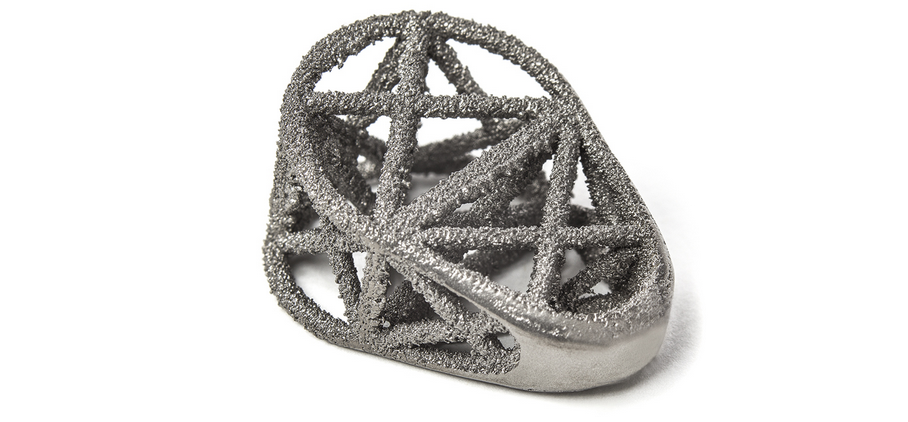
Osteotomy-Truss-System
4WEB Medical announces the formal launch of the largest offering of 3D-printed foot and ankle osteotomy implants on the market today at this weekend’s American Orthopaedic Foot and Ankle Society annual meeting in Chicago. AOFAS is an organization of 2,100 orthopedic surgeons from the US and abroad who specialize in the treatment of injuries, diseases, and other conditions of the foot and ankle. They will be meeting this weekend, September 19-23, for two events: IFFAS 5th Triennial Scientific Meeting: September 19-21, 2014 and AOFAS Annual Meeting: September 21-23, 2014.
“Within a short amount of time surgeons have already utilized 55 of the Osteotomy Truss System’s 74 sizes in surgery, demonstrating the significant market demand that 4WEB Medical has now addressed,” said Jessee Hunt, President of 4WEB Medical. “Due to the breadth of this offering, the Osteotomy Truss System brings an FDA-cleared solution closer to a design that is tailored for patient-specific needs.”
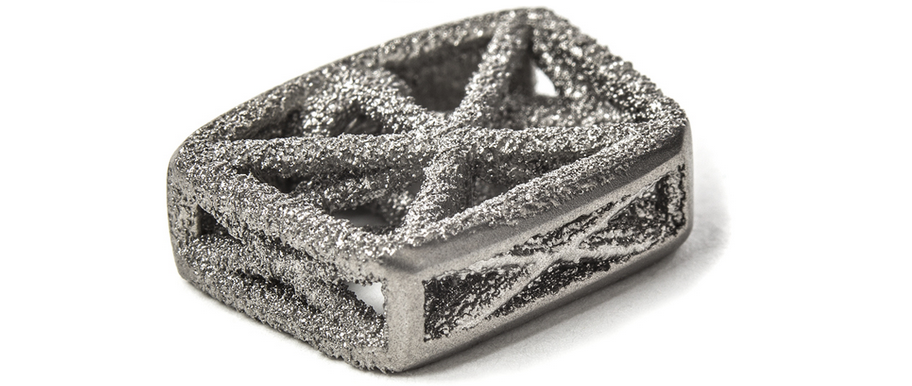
Cervical truss
4WEB Medical is the leader in 3D-printed medical technology as the first company to receive FDA clearance for an additive manufactured spine implant. 4WEB’s initial focus was on the spine implant market but it soon became clear the 4WEB truss implant technology could be used as a broad platform to develop an array of products across the entire orthopedic arena. The designs can be applied to any orthopedic procedure requiring structural support.
“Similar to the technology used in bridges, skyscrapers, and airplane wings, truss designs provide strong structural support and integrity when implanted within the body with the goal of sustaining angular corrections,” said John Crates, MD, Foot and Ankle Surgeon. “Additionally, the structural mechanics and surface topology of the Osteotomy Truss System promote osseous incorporation and potentially accelerate healing.”
4WEB Medical offers the following FDA-cleared implant systems:
- ALIF Spine Truss System
- Cervical Spine Truss System
- Osteotomy Truss System
Founded in 2008 by President and CEO Jessee Hunt in Frisco, TX, thirty years of research led to the 4WEB, a building block used to create high-strength, lightweight web structures. Mr. Hunt leveraged this breakthrough along with cutting-edge 3D printing technology to develop 4WEB Medical’s proprietary implant platform. The 4WEB Medical product portfolio currently offers comprehensive surgical solutions to neurosurgeons, orthopedic spine surgeons, and foot and surgeons.
Do you know anyone who has received a 3D-printed implant? Share your thoughts about this technology with us in the 3D printed ankle/foot implant forum thread at 3DPB.com.
Subscribe to Our Email Newsletter
Stay up-to-date on all the latest news from the 3D printing industry and receive information and offers from third party vendors.
Print Services
Upload your 3D Models and get them printed quickly and efficiently.













You May Also Like
3D Printing News Briefs, June 24, 2026: Name Change, Digital Foundry, & Yeast
In today’s 3D Printing News Briefs, we’re starting with a formal name change for an African industrial technology company that’s a major user of additive manufacturing (AM) in the oil...
3D Printing News Briefs, May 2, 2026: Soft Robots, Agricultural Waste, & More
In this weekend’s 3D Printing News Briefs, we’ll start off with a multi-laser metal powder bed fusion 3D printer and post-processing news. We’ll end with research into soft robotics and...
Polymaker Goes Direct in Europe
Rather than just going through resellers, Chinese filament giant Polymaker is also going direct in Europe. The company wants to continue to work with 3D printing shops, webshops, OEMs, and...
Lucky 7: Free 3D Printed Models to Help You Welcome the New Year
Last week was Christmas, and in just a few days, it will be New Year’s Eve, and then New Year’s Day. 2025 will end, and 2026 will begin. Out with...