Philips IntelliSpace Portal 9.0 Includes Enhanced 3D Imaging and 3D Printing Features

 Philips is one of those companies that seems to have a technological solution for just about everything. The company has been a consistent and creative presence in the 3D printing world, as well, inventing everything from 3D printed customizable electric shavers to 3D printed MRIs. Now Philips is introducing a new, sophisticated platform that uses 3D technology to improve the diagnosis and treatment of neurological conditions such as dementia, multiple sclerosis, ALS, and strokes.
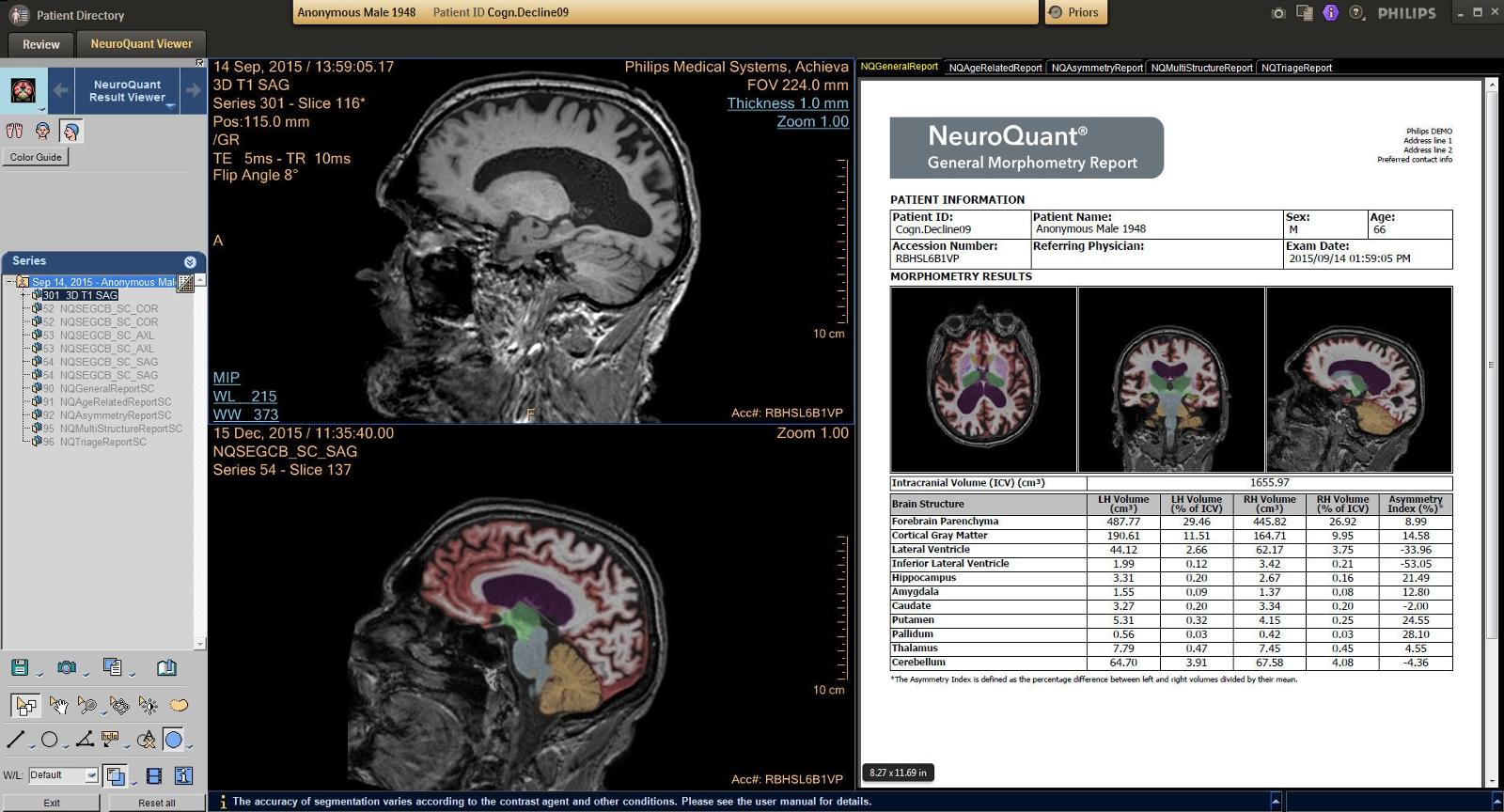
The Philips IntelliSpace Portal 9.0 is the newest edition of the company’s advanced visual analysis and quantification platform, featuring a suite of expanded functions and tools to help radiologists detect, diagnose and treat neurological injuries and disorders. Existing features have been enhanced, such as CT Brain Perfusion and MR T2 Perfusion, and new tools have been added, including Longitudinal Brain Imaging, which helps neurologists monitor the progression of diseases, and the NeuroQuant measurement application from CorTechs Labs, which helps clinicians to quantify brain loss.

IntelliSpace Portal 9.0 CT Brain Perfusion
“As the rates of dementia and neurodegeneration rise, neuroradiologists need advanced tools to help referring physicians treat these challenging cases,” said Professor Dr. Leo Wolansky, Acting Chief of Neuroradiology at University Hospitals Cleveland Medical Center. “IntelliSpace Portal 9.0 offers a comprehensive set of robust tools so neuroradiologists can quantify disease expediently.”
 The IntelliSpace platform includes more than 70 applications and offers invaluable tools to a variety of clinical areas including neurology, oncology and cardiology – any practice area that requires the use of radiology, in fact. The IntelliSpace Portal 9.0 has several enhanced 3D features including improved advanced 3D rendering and refined STL export, allowing clinicians to 3D print detailed, high-resolution medical models.
“Radiology has a unique ability to influence and improve outcomes, and intelligent tools enable us to empower radiologists with the right information,” said Yair Briman, Senior Vice President and General Manager of Healthcare IT for Philips. “With advances in machine learning, IntelliSpace Portal 9.0 will now be able to continually learn the usage patterns of users to enhance the important daily functions of a radiologist such as pre-preprocessing of images, encouraging faster and more streamlined diagnosis.”

IntelliSpace Portal 9.0 Longitudinal Brain Imaging
IntelliSpace Portal 9.0 also has a multimodality feature that allows its applications to be accessed from any point in the hospital network. It can also integrate with typical PACS and hospital information systems to allow information to be shared broadly across networks, facilitating collaboration. Additional features include:
- MR Cardiac Enhancements, which enable easy visual scoring and functional volumetric analysis. The suite now includes a Whole Heart STL export feature for 3D printing, as well as enhanced workflow and batch tools
- CT Spectral Applications: the Philips IntelliSpace Portal Spectral Diagnostic suite of clinical applications has now been optimized for viewing and analyzing spectral data sets from the IQon Spectral CT scanner. Clinicians can now quickly and easily access the applications they need from anywhere in their enterprise, allowing them to get a quick but comprehensive overview of their patients for diagnosis.
Philips will be showcasing the IntelliSpace Portal 9.0 at RSNA 2016, which is taking place in Chicago from November 27 to December 2. Stop by and take a look at Philips’ booth #6735. Discuss in the Philips IntelliSpace forum at 3DPB.com.
Subscribe to Our Email Newsletter
Stay up-to-date on all the latest news from the 3D printing industry and receive information and offers from third party vendors.
Print Services
Upload your 3D Models and get them printed quickly and efficiently.













You May Also Like
Kickstarter is Testing the Next Wave of Desktop 3D Printing
3D printers are raising serious money again…on Kickstarter, that is. Over the last few months, a new group of 3D printer campaigns has attracted millions of dollars and thousands of...
Stratasys vs. Bambu Lab: What’s Really Behind the $27.6M Patent Verdict?
Editor’s note: This is Part 1 of a two-part series by Xu Fanglei examining the technology and patent issues behind the Stratasys-Bambu Lab dispute. Part 1 looks at the U.S....
Bambu Lab and SUSAN FANG 3D Print for London Fashion Week
At London Fashion Week, some of the more unusual pieces on the runway came from 3D printers. Chinese fashion designer SUSAN FANG presented her Spring/Summer 2027 Air-Illusion collection at the...
Stratasys Wins $27.6M in Patent Case Against Bambu Lab; Bambu Challenges Verdict
Update, September 21, 2026: This article has been updated with a statement from Bambu Lab responding to the verdict, along with additional information about the company’s ongoing patent challenges against...