16,000 Jobs Opened in the UAE This Year, 3D Printing Tops List of In-Demand Skills

 It wouldn’t be a normal week if we didn’t write something about Dubai. If you’ve been following 3D printing news at all, you’re certainly more than familiar with the city and its drive to become a world leader in 3D printing technology. In between flashy revelations like the world’s first 3D printed office building and progress towards the world’s first 3D printed laboratory, Dubai has been steadily marching towards its goal with new construction standards, additional funding,and more initiatives.
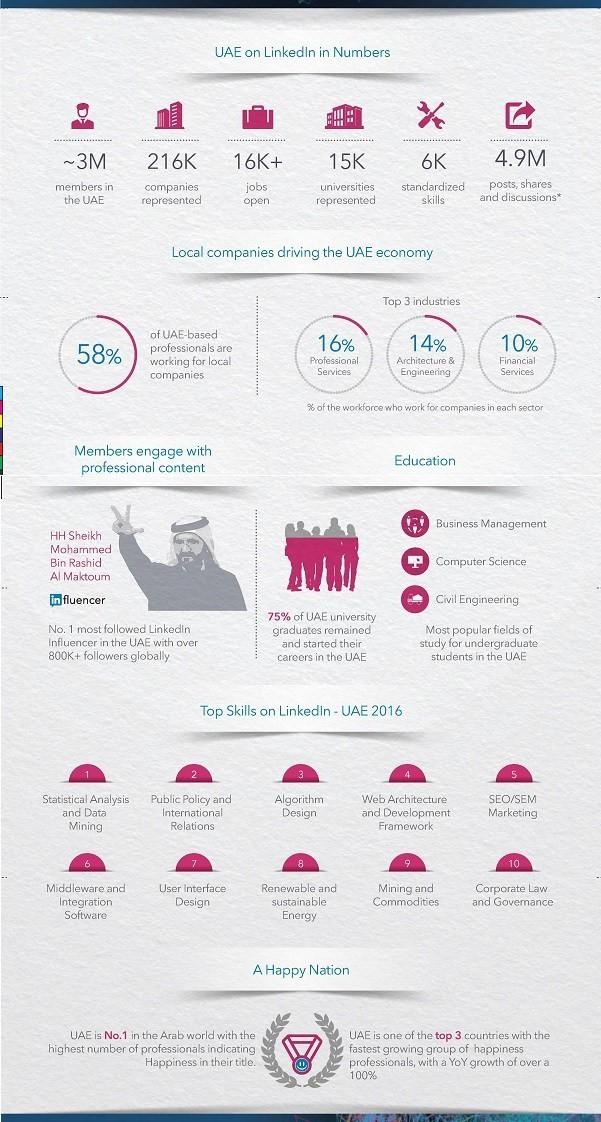
As it turns out, the United Arab Emirates is already reaping big rewards from the Dubai 3D Printing Strategy, as well as the growth of other tech sectors. According to LinkedIn, the UAE saw an incredible 16,000 job vacancies offered to job seekers in 2016, and many of them were in the tech industry. Out of the top ten skills most in demand in the country, six were technology-related, including skills in 3D printing, robotics, data science, and the Internet of Things.
“Currently, UAE is number 16 globally in having the highest number of 3D printing and design talent,” said LinkedIn. “Over 60 per cent of 3D talent professionals work for local UAE companies.”
 It’s not all good news, though, as economic downturn has resulted in a decline in hiring overall. Online recruitment activity fell sharply in September, with the biggest decline in hiring coming from the hospitality industry. HR and administrative professionals are seeing job shortages, and customer service, hardware, software and telecom positions also became more scarce.
Ironically, many companies in the UAE are having a hard time filling open positions. There are plenty of workers looking for jobs, but their skills don’t match up with available positions, unfortunately. While many companies are having trouble finding employees for jobs in the financial sector, such as accountants, financial controllers, and private banking sales professionals, the tech industry is also having trouble filling positions.
An issue with the tech industry overall is that its needs are constantly changing, leaving skilled professionals suddenly incompatible with the industry’s requirements. While software and hardware positions are declining, companies are now having difficulty finding workers to fill positions in IT security, for example. According to LinkedIn, businesses are in need of professionals who can help them integrate new technology and update their systems. There’s a high demand for ERP application and functional experts, as well as project managers, business partners, sales directors and managers, and IT security managers.
“Firms are seeking professionals who not only have technical expertise to execute projects but also require a collaborative nature and cultural fit, as these investments in IT are integral part of the commerciality of the business,” said Gareth El Mettouri, Associate Director of Robert Half UAE.
 The solution? Education. The UAE Financial Graph, which was compiled by LinkedIn and the UAE Ministry of Education, took its information from LinkedIn’s massive database of professionals, and not only provides an overview of the country’s economy but also gives students valuable direction on what types of studies to pursue.
“The findings from the Economic Graph will aid students in deciding which qualifications they need in order to make them more employable,” said LinkedIn.
Computer science, civil engineering and business management are popular majors for UAE undergraduate students, while industrial engineering, computer science and business management topped the list for postgraduates. One takeaway from the UAE Financial Graph is that tech skills are going to be vital to have in the current and future economy – particularly in frontier technology like the Internet of Things, robotics and, of course, 3D printing. Discuss in the UAE Jobs forum at 3DPB.com.
[Source: Gulf News]Subscribe to Our Email Newsletter
Stay up-to-date on all the latest news from the 3D printing industry and receive information and offers from third party vendors.
Print Services
Upload your 3D Models and get them printed quickly and efficiently.











You May Also Like
Norsk Titanium and Airbus Sign Collaboration Agreement for RPD Technology
Norsk Titanium has signed a collaboration agreement with Airbus. The two firms will deepen their understanding for Norsk’s RPD (Rapid Plasma Deposition) DED technology. This is a good step forward...
The Real World Impact of Simulated Parts: Why Novineer and Stratasys Partnered on Performance Simulation for FDM
If one of the primary advantages of additive manufacturing (AM) is that it’s “digitally-native,” then the hardware will ultimately only be as good as the software guiding the process. That...
3D Printing News Briefs: February 19, 2026: Market Data, Africa, Metal Parts for Defense, & More
We’re starting with some business news for you in today’s 3D Printing News Briefs! The Wohlers Report 2026 is now available, Carbon announced its new Chief Technology Officer, and Farsoon...
How Metal Additive Manufacturing Is Reshaping the Future of Aerospace and Defense Engineering
Additive manufacturing (AM) is steadily changing the way we think about producing metal parts for aircraft. Whilst aerospace and defense companies have been using metal AM for over twenty years,...