
Diabase Engineering and Micro Swiss LLC Introduce the Flexion HT 3D Printer Extruder, Featuring an All-Metal Hot End and Expanded Material Capabilities

 A good extruder can mean the difference between an average-to-mediocre 3D printer and a printing powerhouse. By swapping out your standard extruder with a high-performance one, you have the potential to drastically improve the performance of your 3D printer for much less expense than investing in a newer, fancier printer. Two months ago, startup Diabase Engineering promised to take desktop printers to the industrial level with the introduction of the Flexion Extruder, a versatile, multi-material extruder capable of printing both rigid and flexible filaments with high speed and precision.
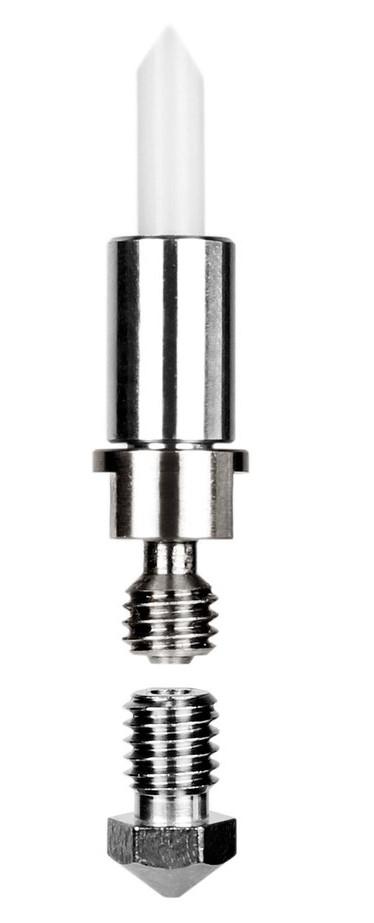
Micro Swiss hot end
The Flexion Extruder, which can be retrofitted to most desktop 3D printers, has been getting positive reviews from customers and is already showing up as a feature of some newly-released printers. Now, just two months after its release, the Flexion Extruder is even better than before, according to Diabase Engineering. The Colorado company has teamed up with Minnesota’s Micro Swiss LLC to develop the Flexion HT, an even higher-temperature – and thus even more versatile – version of the extruder that’s now on the market.
The original Flexion Extruder had such strong appeal because of its capability to print especially soft thermoplastics alongside more typical rigid materials with high quality results. Users of the extruder could count on high-resolution results even with thermoplastic materials of extremely low durometers – but the new Flexion HT enables the printing of an even wider range of challenging materials, including nylons and polycarbonates, at high resolutions.
The enhanced capabilities of the Flexion HT come from an all-metal hot end developed by Micro Swiss. Able to reach temperatures of up to 290°C, the hot end allows the Flexion HT to accurately print with a wider range of filaments than any other FFF/FDM extruder on the market, according to Diabase Engineering – from 85 shoreA urethanes to super-hard, fiber-filled nylons.
“High-temperature capability is something our customers have been clamoring for, so we’re really excited to be releasing the HT,” Diabase Engineering founder Stephen Heston told 3DPrint.com. “It’s a great compliment to our standard product. Now with a dual extruder setup, we can reliably print everything from the softest elastomers to high temp Nylons.”
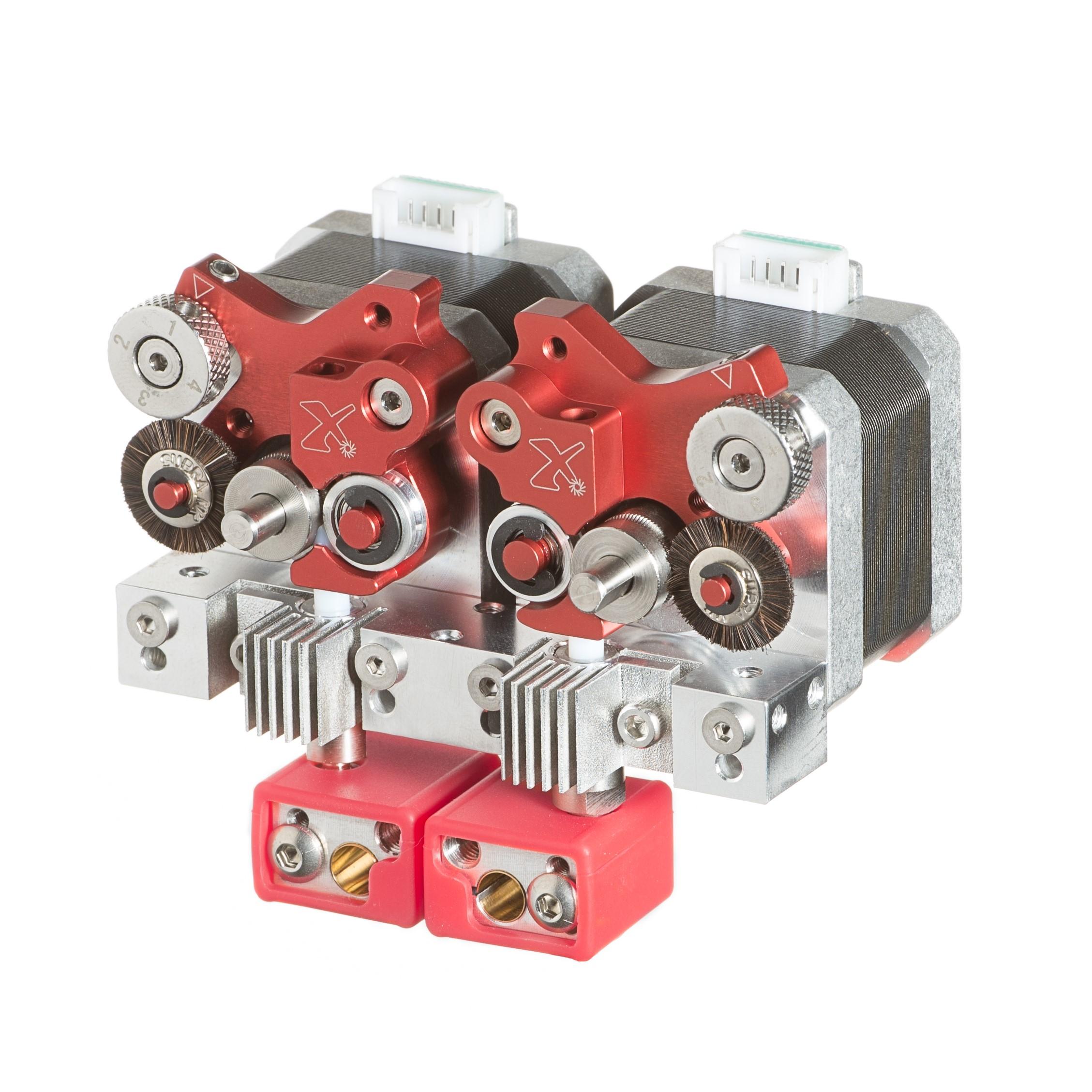
Dual Flexion HT Bundle
The hot end combined with the tight control of the Flexion drive system results in a smooth, seamless print job with no risk of degradation to the low-friction barrel liner. Customers will have a couple of options for purchase. Users who currently own a Flexion extruder can purchase just the hot end from Micro Swiss as a single component, fully backward compatible with all Flexion extruders. Within the next week or so, Diabase Engineering will also be launching a full retrofit kit that includes the hot end along with a newly-developed silicone insulation and high heat transfer mounting block.
Customers can also take advantage of the Dual Flexion HT Bundle, which includes both a standard Flexion extruder and a Flexion HT, enabling users to flawlessly print with a full range of materials in dual-extrusion format. The hot end itself is available from the Micro Swiss website now; stay tuned to the Flexion site for further details about the full kit, which will be on sale soon. Discuss further over in the Diabase 3D Industrial Printing forum at 3DPB.com.
Subscribe to Our Email Newsletter
Stay up-to-date on all the latest news from the 3D printing industry and receive information and offers from third party vendors.
Print Services
Upload your 3D Models and get them printed quickly and efficiently.













You May Also Like
Foundation Alloy Raises $22M in Series A for Solid State Molybdenum
Foundation Alloy has just raised $22 million in Series A financing. The alloy company is trying to create a platform that will enable the solid state manufacturing of alloys. In...
Aerospace Giant IHI Bets on Freemelt E-Beam 3D Printing for Next-Gen Turbine Alloys
IHI Europe has purchased a Freemelt electron-beam powder-bed fusion (E-PBF) system. Previously, parent IHI bought two Freemelt systems, bringing the total to three. IHI is a Japanese engineering conglomerate. The...
Goldilocks’ Flywheel: Refractory Complex Concentrated Alloys (RCCAs) & The Race for the Future
Recently, Metalysis, Skyrora, and Thermo-Calc Solutions started to try to commercialize Tanbium. This alloy has been created for use in combustion chambers and rocket nozzles. Tanbium is a Refractory Complex...
3DPOD 236: AM Materials Science & Applications with Nick Sonnentag, Sunnyday Technologies & Oshkosh Corporation
Nick Sonnentag is a Senior Principal Engineer at Oshkosh, where he contributes to the development of some of the world’s toughest vehicles using additive manufacturing (AM). Drawing on experience from...























































