Myanmar Farmers Utilize MakerBot 3D Printers to Create Their Own Tools


Oftentimes, when we talk about 3D printing and its many potential uses, our conversation is generally framed in the future, a newfound emerging technology that will impact our lives in unimaginable ways. But sometimes 3D printing can be used to simply improve upon preexisting traditional processes, such as farming. For instance, a couple of years ago, the Italian-based company FarmBot unveiled an open-sourced CNC farming machine to help plant crops in a more efficient and automated manner. More recently, Perfect Day Foods has hinted at the possibility of 3D printed cow DNA, which would effectively substitute plain old cow milk for an eerily similar animal-free dairy product.
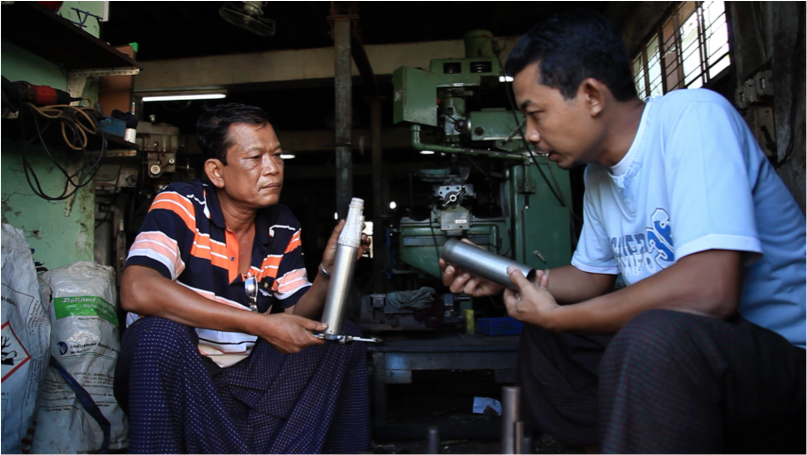 But, as I said before, 3D printing technology isn’t only valuable as a catalyst for major change. It can also help farmers produce traditional tools and equipment at a much more affordable and rapid rate. This is especially useful in countries like Myanmar, which is debilitated by low annual incomes, poor infrastructure, and the lack of access to quality tools. The Southeast Asian country’s economy is heavily dependent on their agriculture, and one social enterprise based out of the city of Yangon, called Proximity Designs, has turned to 3D printing technology to help make the country’s agrarian industry more sustainable.
After learning about the Brooklyn-based 3D printing company MakerBot back in late 2015, Proximity Designs realized that additive manufacturing was the optimal way to rapidly prototype inexpensive farming equipment and tooling. Prior to utilizing 3D printing technology, the organization was prototyping parts with CNC machining, which was both too slow and pricey to be a sustainable option for them. Once their former design fellow Zachary Gould introduced the team to MakerBot, however, they decided to find out whether or not this new technology could help them address some of the prototyping challenges in their product development cycle.
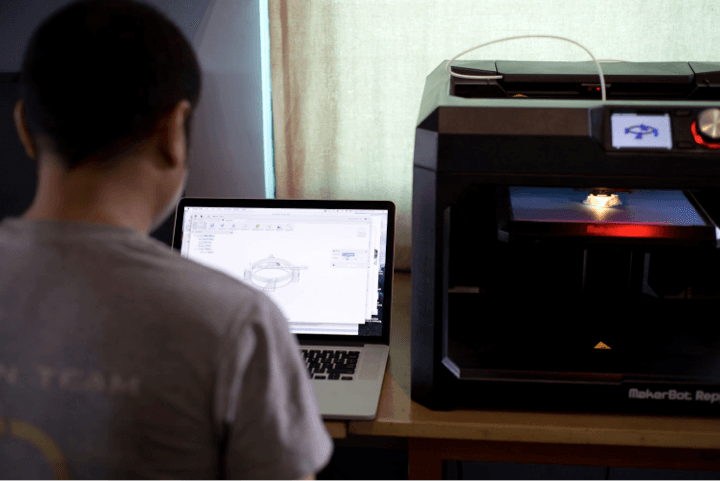
“The design team no longer needed to wait for precision, manually-machined parts,” said Gould. “Prototypes were quickly adapted and repaired with 3D printed components, providing more opportunities to test the parts in the field. We can get valuable feedback and improve on previous designs faster.”
While Myanmar is known for having a relatively resourceful maker community, slow and inefficient manufacturing processes have made it extremely difficult to prototype products at a proper rate. MakerBot decided to donate a 3D printer to the design firm, and with it, they were able to better address the needs of the rural community across the country. For instance, the team was now able to physically assemble parts of the prototype and refine them accordingly before having them manufactured in aluminum.
 Not only has incorporating 3D printing technology helped improve the speed and efficacy of their prototyping, it’s also allowed them to showcase physical products to local vendors, rather than only having 2D drawings of parts that have yet to be created. According to Proximity Designs, their use of 3D printing has helped increase the speed, reliability, and versatility of their prototyping process, and they will continue to implement the technology in the future. With the help of MakerBot 3D printing, the design firm has improved their capability to prototype and adapt their farming tools faster than ever before. Discuss further in the Proximity Designs 3D Printing forum over at 3DPB.com.
Subscribe to Our Email Newsletter
Stay up-to-date on all the latest news from the 3D printing industry and receive information and offers from third party vendors.
Print Services
Upload your 3D Models and get them printed quickly and efficiently.












You May Also Like
ADDiTEC Demonstrates Material Freedom and Mission Readiness at JIFX 2026 with HYBRiD-X
At the Naval Postgraduate School‘s Joint Interagency Field Experimentation (JIFX) in May, ADDiTEC demonstrated how advanced manufacturing can support the future of defense sustainment through its HYBRiD-X expeditionary manufacturing platform....
AM Asia Watch: China’s 3D Printing Boom Is Creating a New Class of Micro-Manufacturers
China’s additive manufacturing (AM) industry has spent years trying to reduce its reliance on foreign technology. In polymer 3D printing, domestic companies have already become major players. In metal AM,...
3DPOD 302: Digital Inventory for AM with Mikhail Gladkikh, Würth Additive Group
Mikhail Gladkikh has worked in oil and gas for many years. With this background, we obviously talk about energy market turbulence and the adoption of AM in oil and gas....
3D Printing News Briefs, June 13, 2026: Management Changes, Project Calls, & Wheelchairs
We’ll kick this weekend’s 3D Printing News Briefs off with some advisory board and management changes, and then move on to project call news. We’ll end with some heartwarming stories...