Robo 3D Releases New Specs on the R2 and R2 Mini 3D Printers and Previews Robo Mobile App


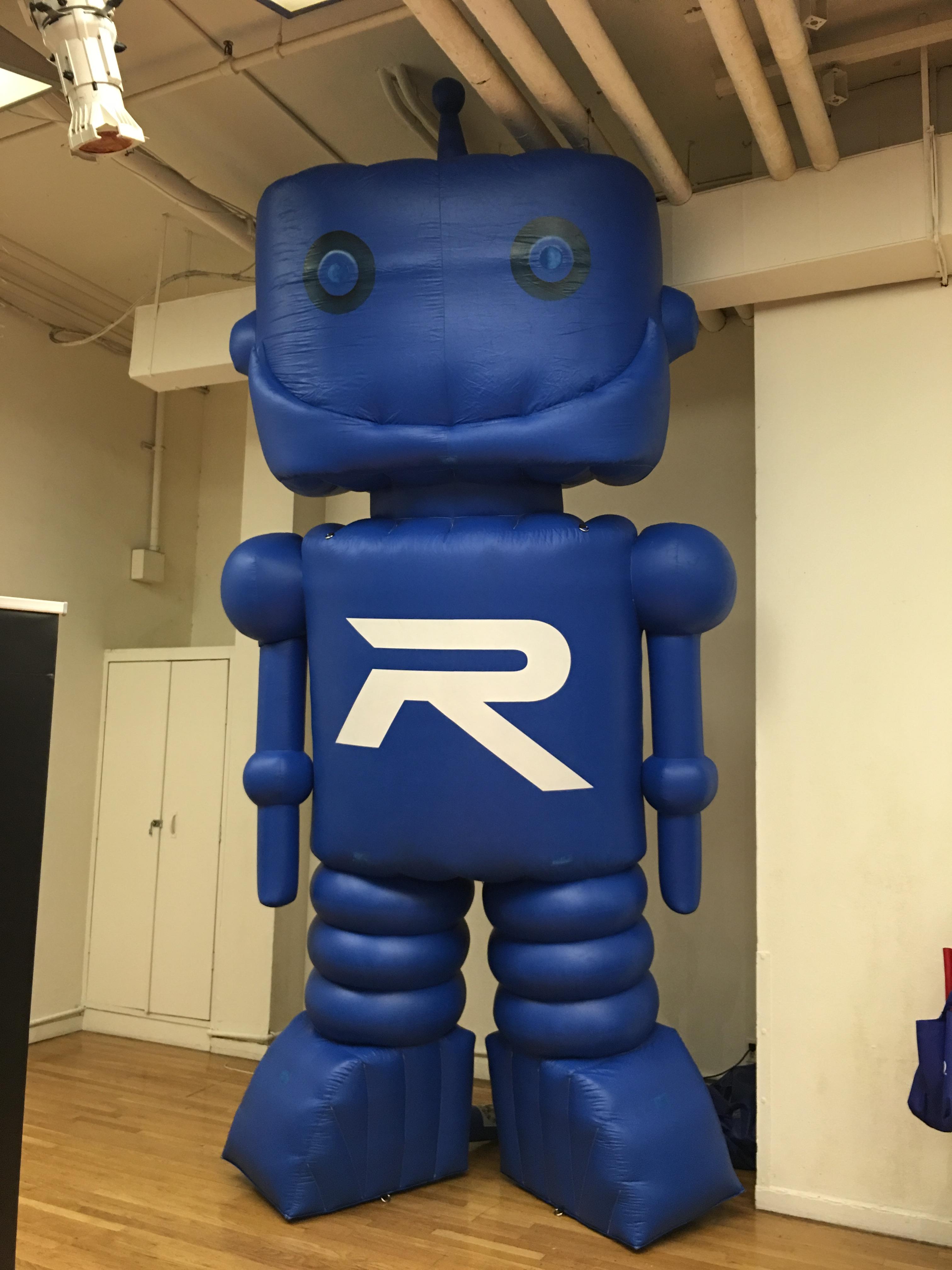
Robo 3D’s Robbie the Robot on the exhibit floor at CE Week NYC
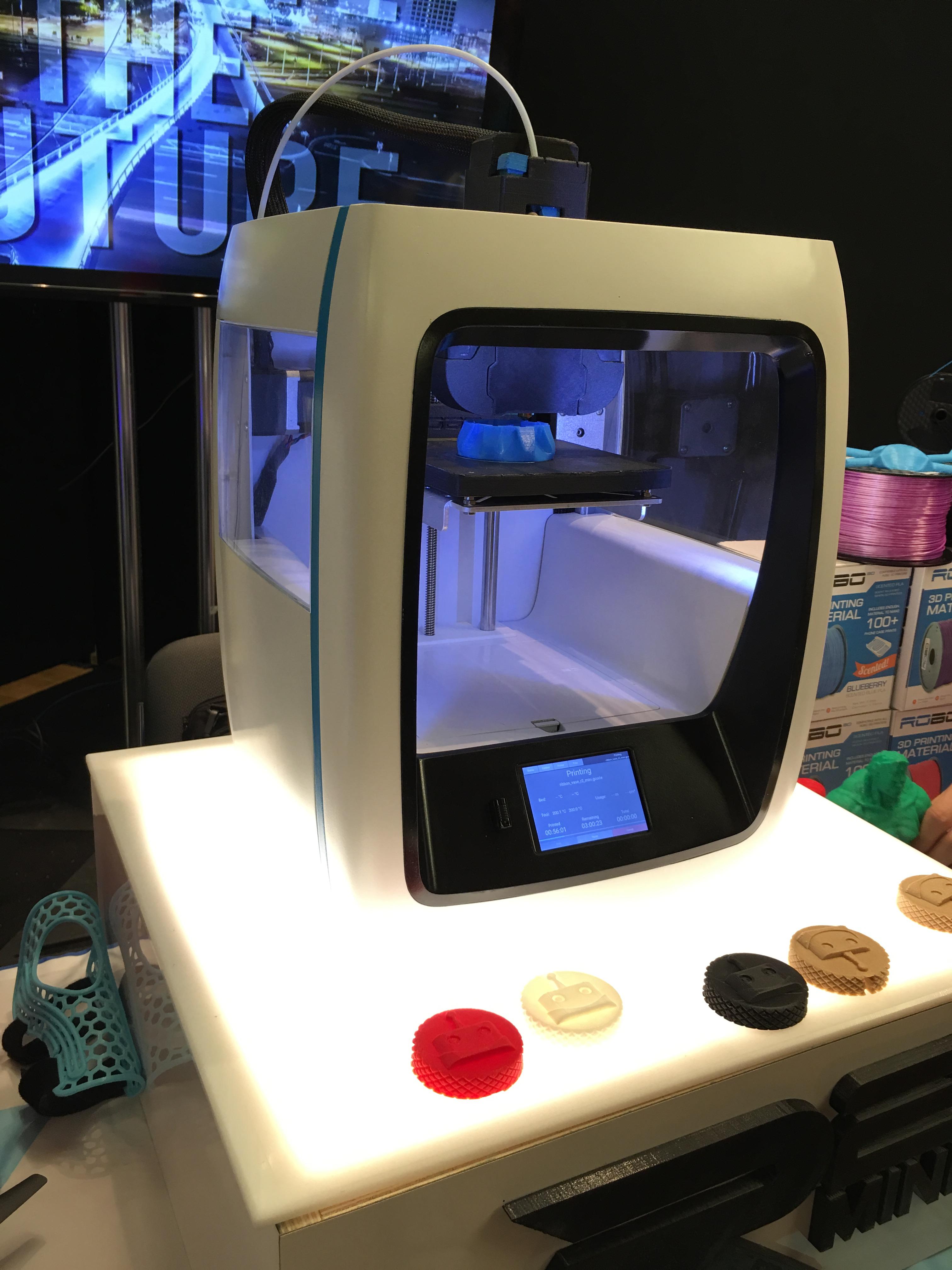
At CE Week NYC, I got the opportunity to see the R2 Mini prototype in person. Recently, I covered Robo 3D at the Inside 3D Printing Conference & Expo NY. It was good to see the machine in the flesh.
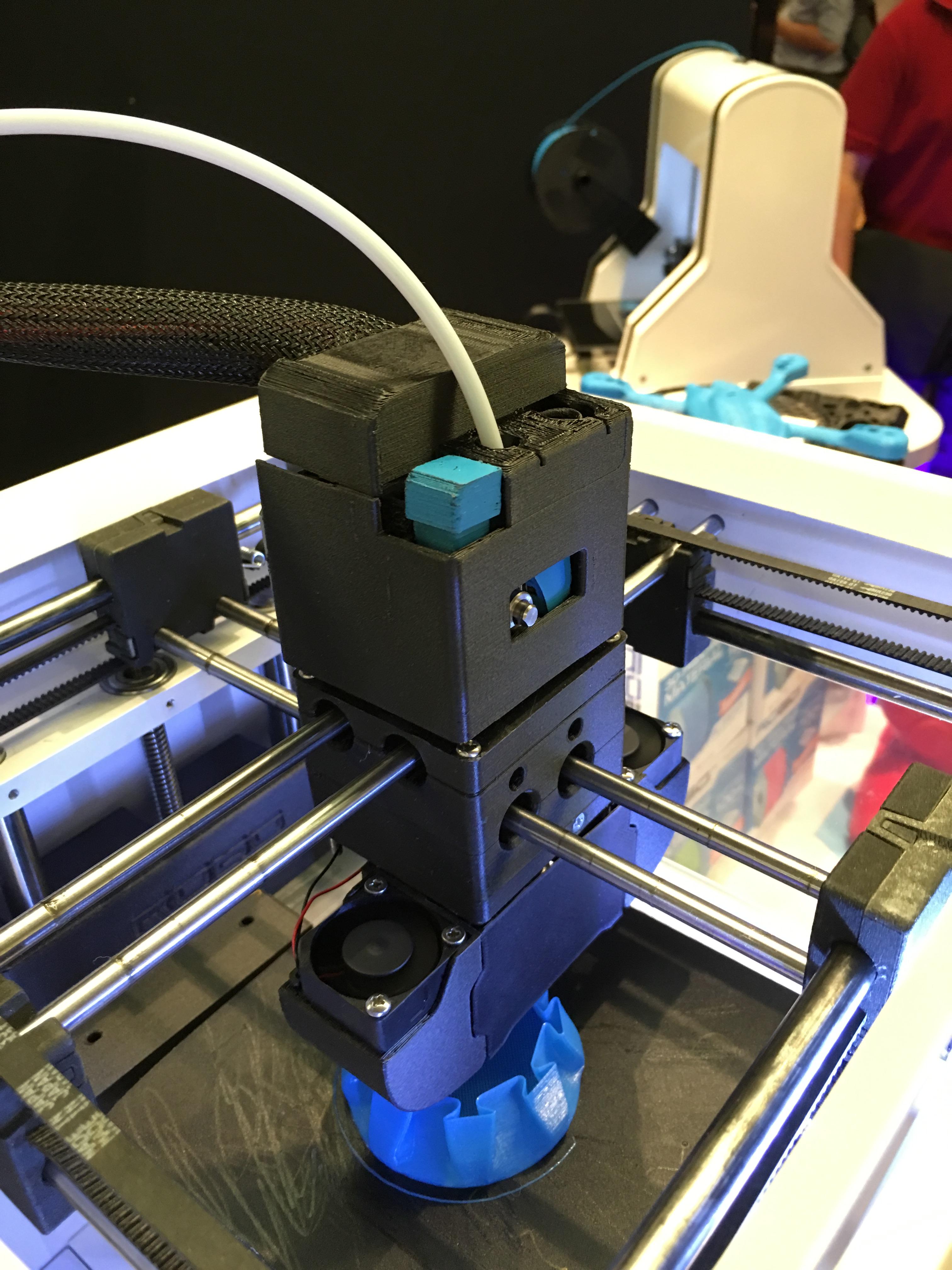
The R2 Mini is a sleek machine. Cosmetically, it’s reminiscent of the Ultimaker 2 series, with some notable differences. The body of the 3D printer is curved. There are windows on the sides, which makes it easy to view the progress of your prints. The single direct drive extruder makes it well suited for printing in exotic materials and is upgradable to a dual extruder. And while it has a significantly smaller build volume than Robo 3D’s R1 +PLUS, it’s a semi-enclosed printer and should appeal to schools. Seeing how Robo 3D is strongly pursuing the educational market, this seems to be a good design choice.
-

- R2 Mini prototype at CE Week NYC
-

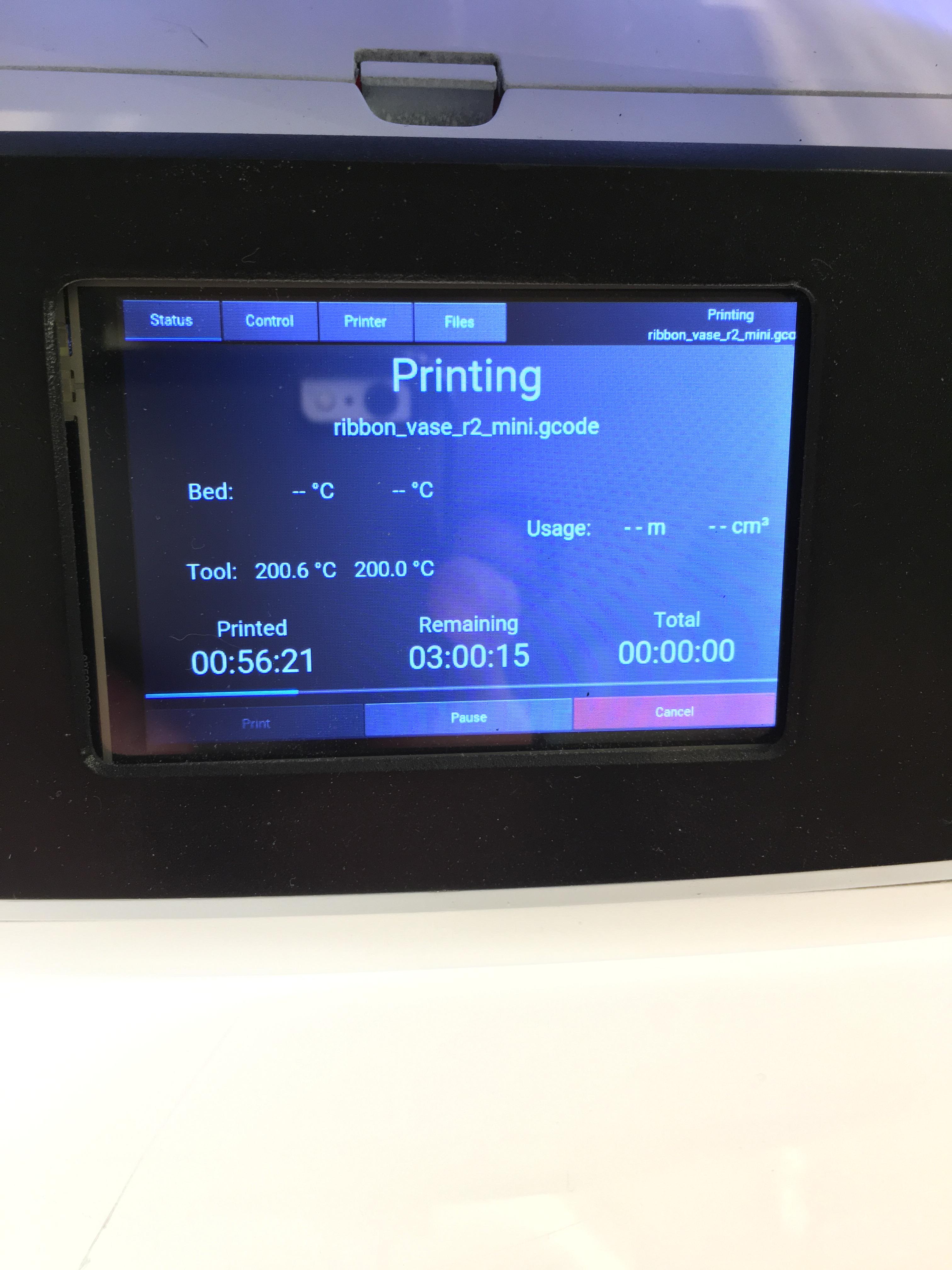
- R2 Mini color LCD screen
-

- Direct drive extruder on the R2 Mini
The specs on the R2 and R2 Mini have changed a bit since my last post. The R2’s build volume is 8″ x 8″ x 8″ (512 cubic inches). Print speeds are 2 to 4 times that of the R1 +Plus (up to 300mm per second), with the ability to control 2 print heads simultaneously. It comes stock with a single extruder and quick change printhead and can be upgraded for dual extrusion. Layer resolution is up to 50 microns. It also features a 5″ color touchscreen with USB Flash Drive Memory, auto-calibration and self-leveling, and the ability to print in true arcs and circles. It also has a clear door, which is nice in that it more fully encloses the printer without obstructing the view of the print.
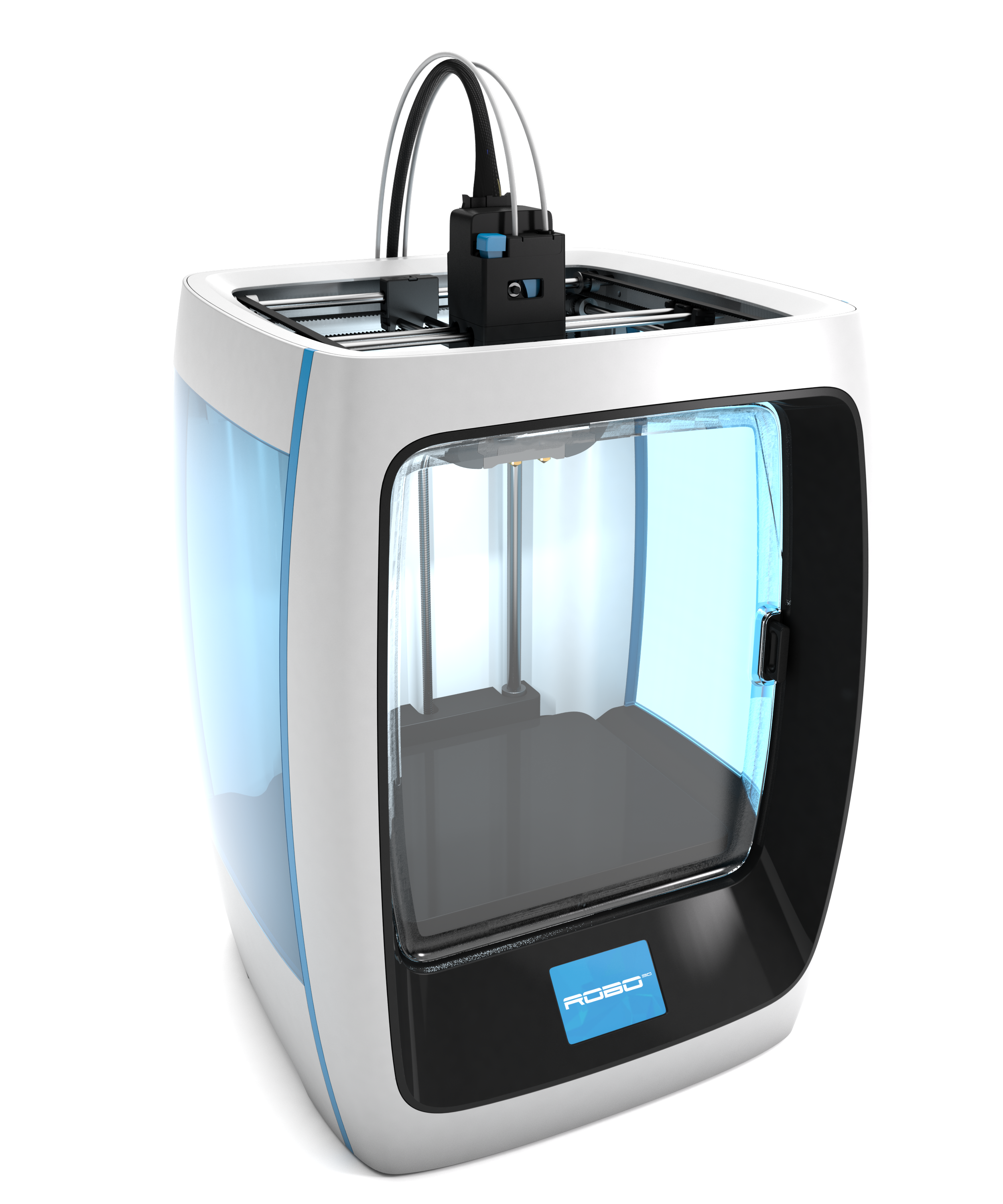
Robo 3D’s R2 3D printer.
The R2 sports WiFi connectivity without using a computer and can be controlled directly from a smartphone or tablet PC through the Robo Mobile App, as well as through its full-size ethernet jack. The Robo R2 is integrated with Google Drive and Dropbox, has Autodesk integration for designers, and onboard model slicing for seamless and easy user flow from model to finished print. The heated build platform is removable and the R2 supports a laser engraver, paste extruders for chocolate and other foods, ceramic extruders or bioprinting extruders. Filament detection ensure that your print won’t be ruined if you run out of filament during printing and the onboard camera allows users to monitor the print through the app or web interface. Expected pricing is $999.99.

Robo 3D’s compact and portable R2 Mini 3D printer
The R2 Mini has a build volume of 5″ x 5″ x 6″ (150 cubic inches). It also features WiFi/mobile connectivity on smartphones and tablets through the Robo Mobile App, up to 300mm per second print speed, 50 micron resolution, auto-calibration/self-leveling and the ability to print true arcs and circles, like its big brother. The R2 Mini will also support paste, ceramic and bioprinting extruders. Its price-point is estimated at $599.99. Both the R2 and R2 Mini have all metal hotends and can print in a multitude of materials.
Robo 3D’s current printer, the R1 +Plus, was also on display at the show. The R1 +Plus has a large build volume at 10″ x 9″ x 8″ and can print down to 100 microns. It features auto-leveling, an all metal hotend and a heated bed. It is capable of printing over 20 materials and is open source. The R1 +Plus comes with its own version of Matter Control desktop software. Prints can be started through a USB connection with a computer and then the rest of the print can run off of SD card (LCD screen doesn’t come installed with the consumer version of the R1 +Plus). The Robo Mobile App will let you run the R2 or R2 Mini remotely. It can display a video feed of the print, extruder and bed temp, time left to print, and percent of print completed. It will also allow you to pause the print and change filament and will send you a notification through the app when the print is done.
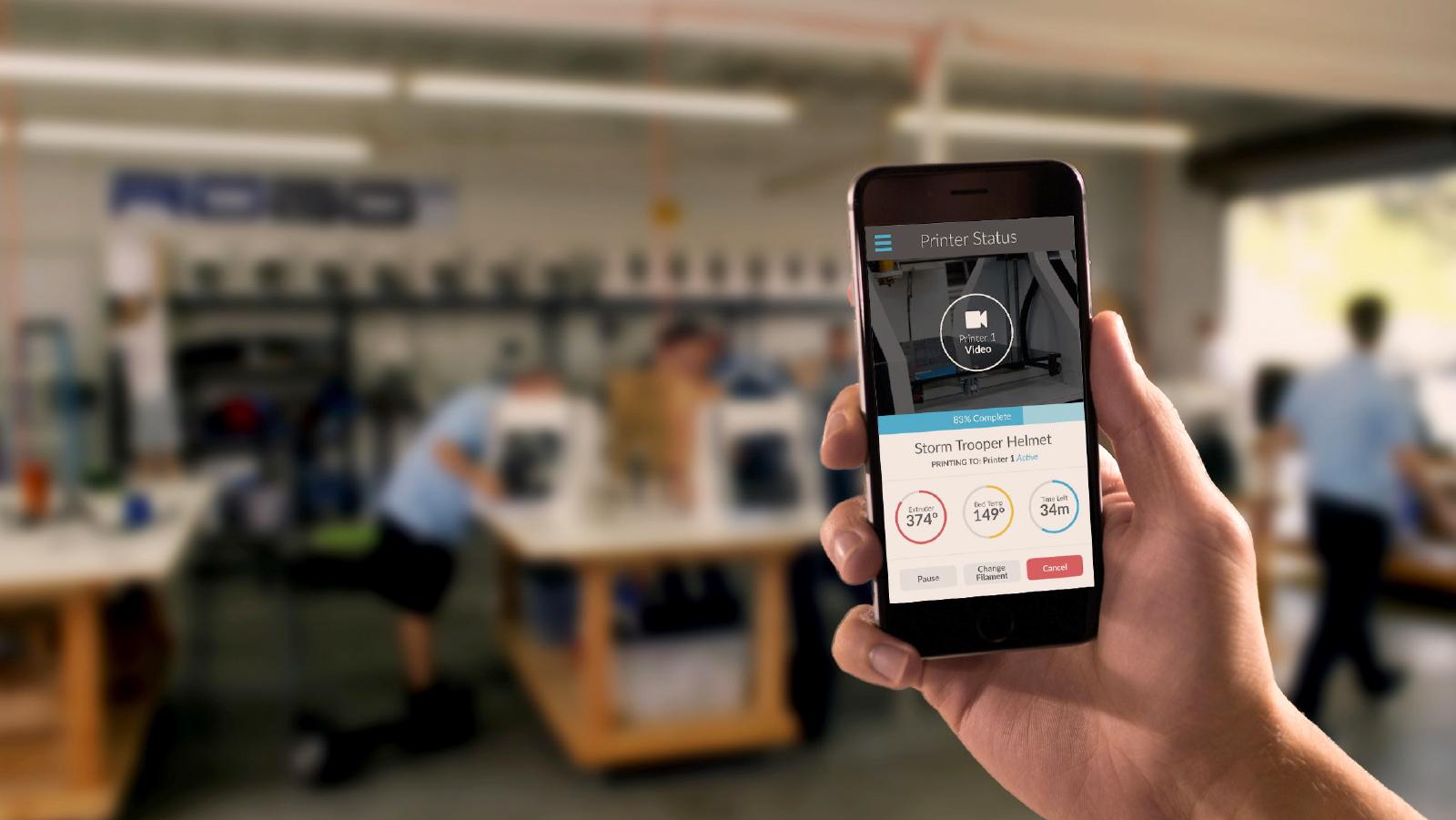
Both the R2 and R2 Mini can be controlled via WiFi on smart phones and tablets through the Robo Mobile App
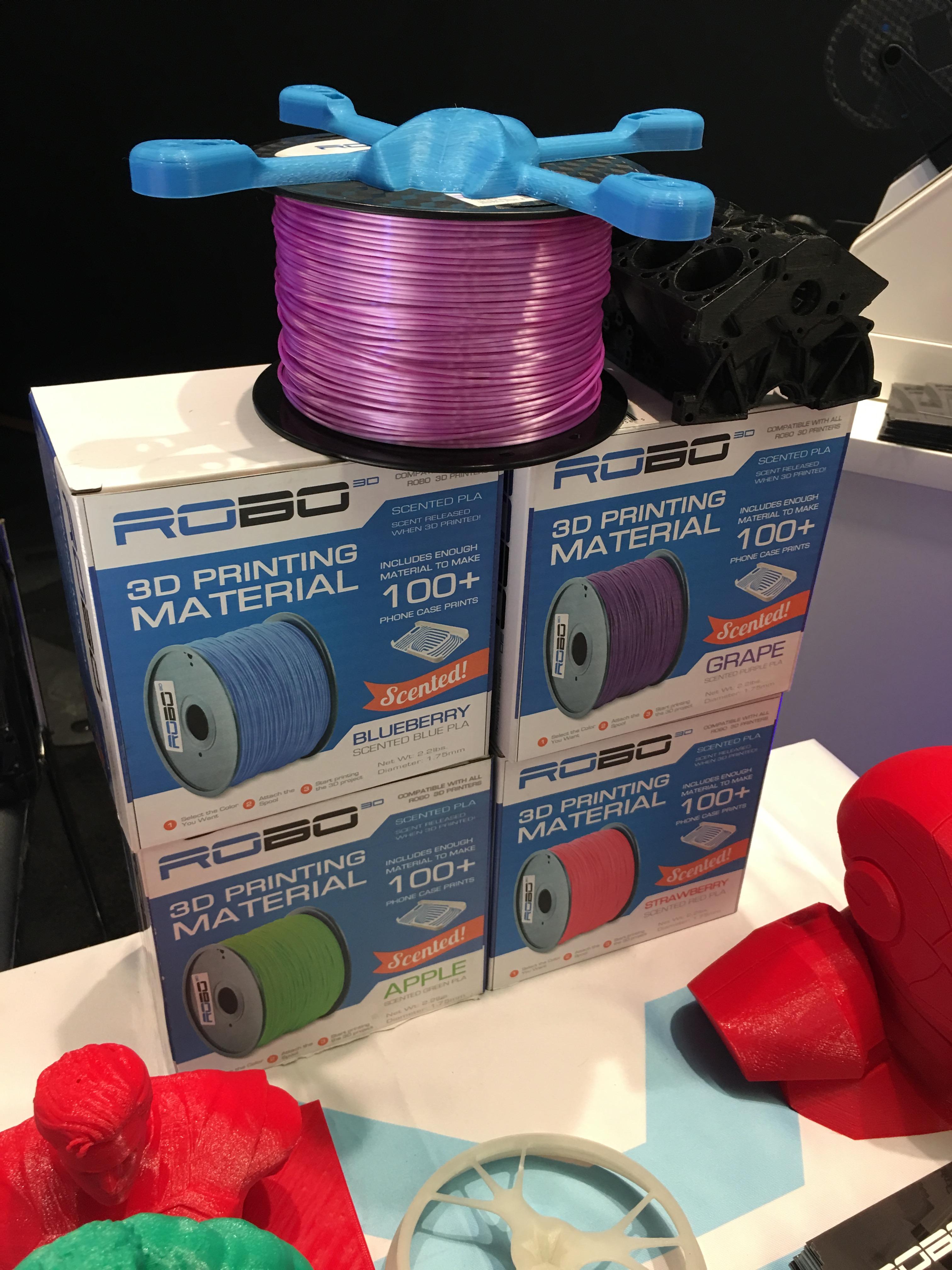
Robo 3D is a company committed to supporting STEAM (science, technology, engineering, arts and mathematics) education. Not only do they sell individual 3D printers, but they also sell bundles, educational packages and even 3D printing kits. Their Printer + Filament bundle comes complete with an R1 +PLUS 3D printer, 18-month extended warranty, 2 spools of 1kg. PLA filament (blue and red), installed graphics LCD display, and full lifetime access to EDU.ROBO3D.COM K-8 educational curriculum for $999.99 ($1,699.99 value). They also offer a more comprehensive Educational Cart bundle, which includes an R1 +Plus 3D printer, 30-month extended warranty, 6 spools of 1kg. PLA (black, white, red, blue, green and specialty wood), a custom 3D printer roller cart, and full lifetime access to EDU.ROBO3D.COM K-8 educational curriculum for $1,999.99 ($2,899.99 value). Robo 3D has several other bundles available to consumers, as well as 3D printed model kits and scented filaments.
-
- Robo 3D’s scented filaments
-
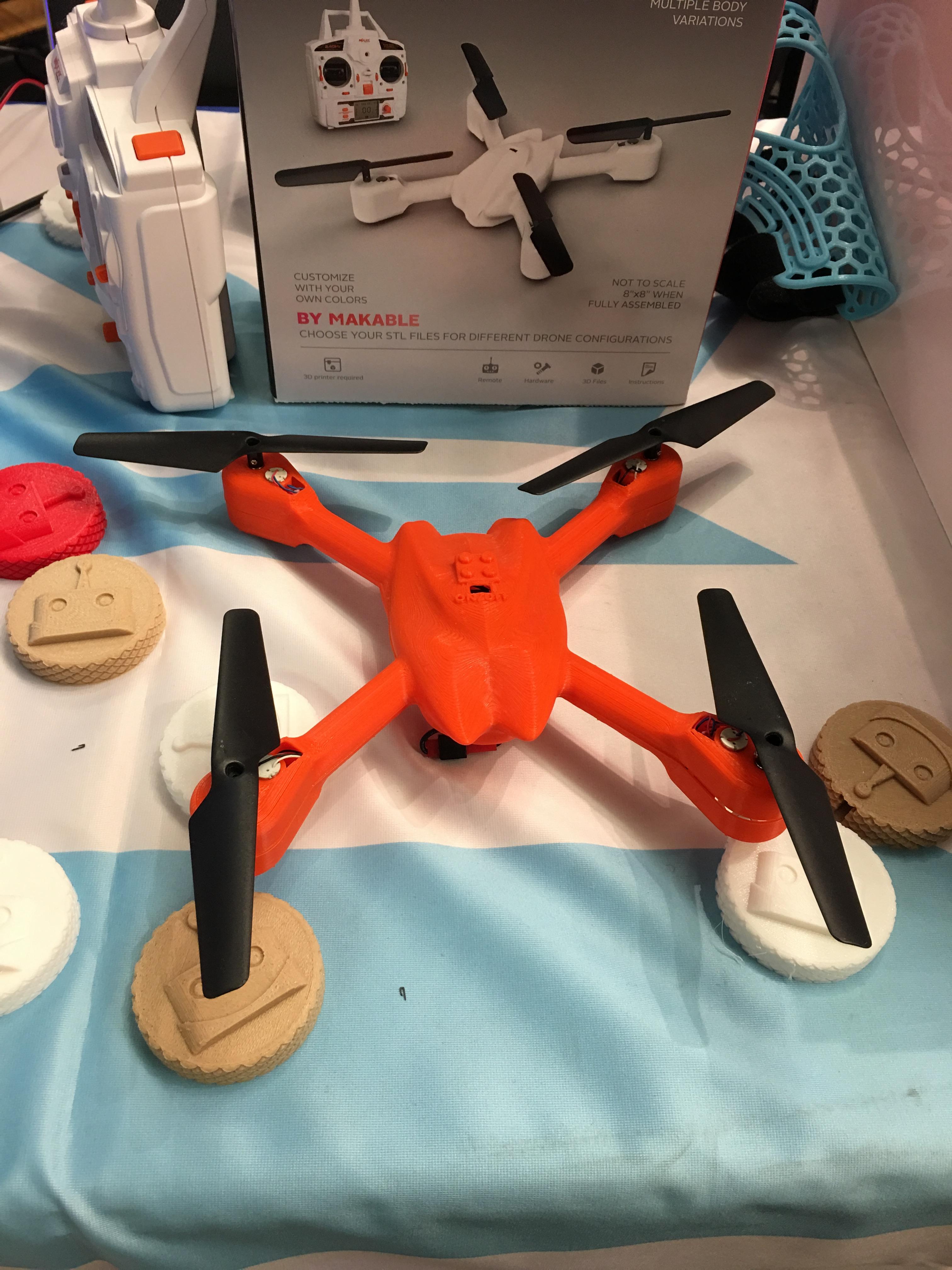
- Quadcopter 3D Drone Kit Pack
The R2 and R2 Mini have been a long time coming, but look to be worth the wait. They are both expected to be released in October. I’m certainly looking forward to testing them.
Subscribe to Our Email Newsletter
Stay up-to-date on all the latest news from the 3D printing industry and receive information and offers from third party vendors.
Print Services
Upload your 3D Models and get them printed quickly and efficiently.













You May Also Like
$51 Million Revenue VMP Wants to Become a Leading Additive Manufacturing Metal Powder Producer
Chinese powder producers have traditionally had little impact on the additive manufacturing market. Typically, they offer low-cost powders without much in the way of settings or application support. But China’s...
SprintRay Releases Midas Restore
SprintRay‘s new U.S. Food and Drug Administration (FDA)-cleared Midas Restore is a material for restorative dentistry. The ceramic-doped resin is meant for definitive inlays, crowns, and veneers. The resin has...
Alibaba Selling Fiber Optic Military Drones for $200
Ukraine was saved by Turkish-made Baykar Bayraktar drones and many brave soldiers in the first stages of the conflict. Then hobbyists and their DJI Mavics showed how drones could be spotters...
The Formlabs Shuffle
For the latest development on 8/31/26, please see an update at the end of this article. Formlabs is doing a management shuffle, pointing the firm even more surely towards an...