India’s ShaperJet Wants Every Student to Have Access to 3D Printing

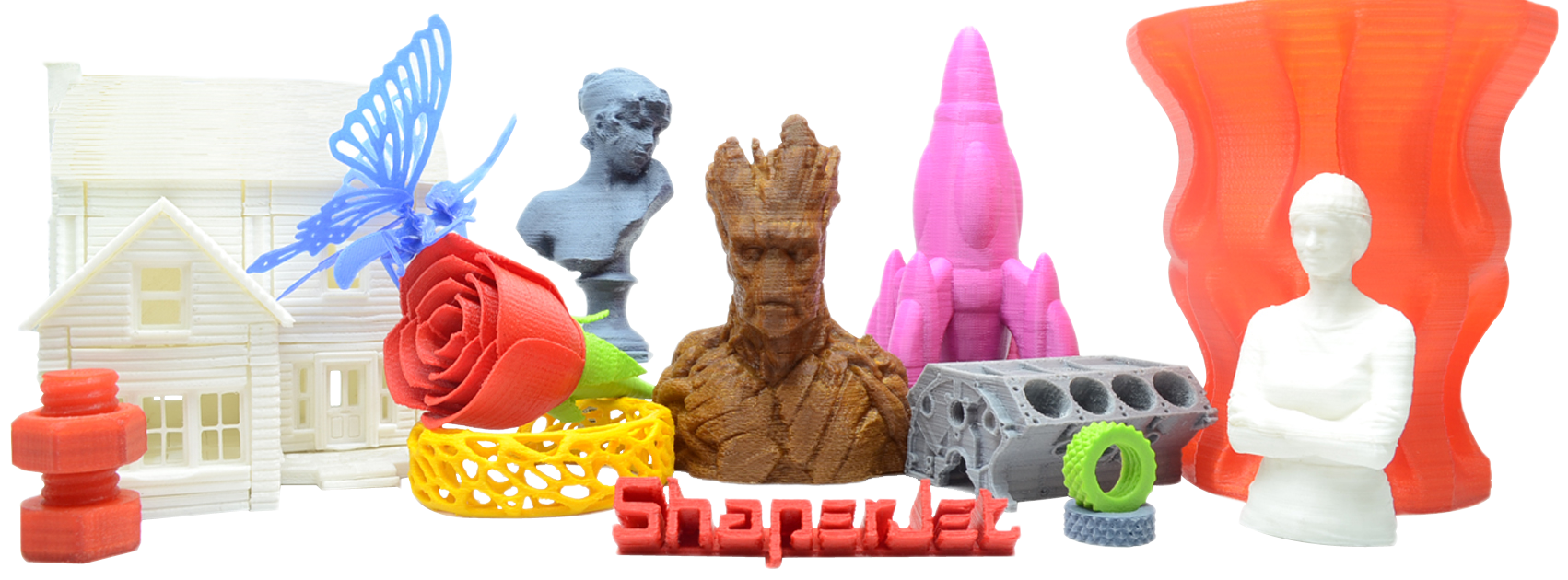
As desktop 3D printers get more affordable and easier to make, it’s easy to imagine a vision in which each school-aged student has access to one. Shaperjet is just one of many new 3D printer manufacturers that is especially focused on the education market. Delhi, India-based ShaperJet was founded by Raman Sachdev, an expert in additive manufacturing and prototyping technologies. Sachdev has a Bachelor’s Degree in Mechanical Engineering, and now he has set his sights on expanding the 3D printing education market, and other markets using 3D printing, in India, too.
 There are a few qualities that ShaperJet 3D printers have that make them appropriate for students. For one, the ShaperJet printer prints using a corn-based biodegradable plastic to avoid hazardous fumes from some of the other materials used for 3D printing. Also, the company offers training programs, which are essential for anyone just trying out 3D printing technology for the first time. Another very important feature is that ShaperJet has built the necessary clientele needed to get the word out there about this new 3D printing company. ShaperJet’s clients include educational and maker space facilities, as well as small businesses, artists, and other organizations.
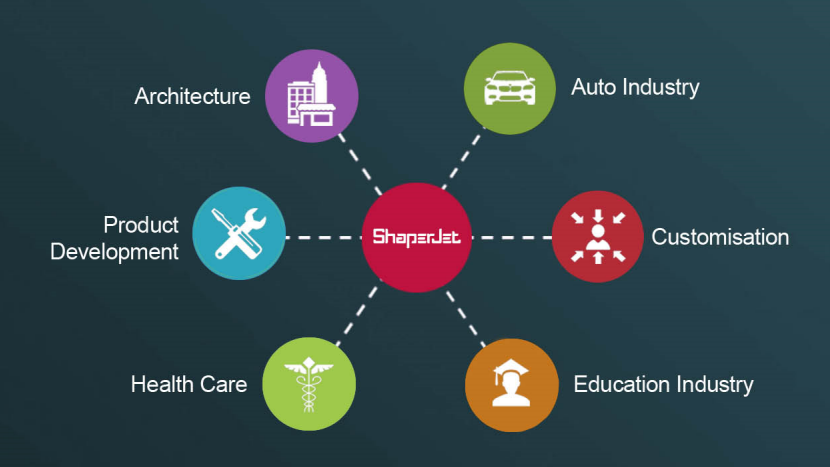
While the company is currently focused on India’s education market, its long-term plans are to expand into engineering, medical, fashion, architecture and other industries. These expansion plans are based on projections from a recent study by 6Wresearch: “India 3D Printer Market (2015-2021).” This study states that by 2021, the 3D printer market will record $70 million. That’s a large market, and ShaperJet is positioned to contribute greatly to it if the company’s plans go well. In the last five months, it has already sold 63 3D printers from its line that carries 2 models: the ShaperJet SJB and ShaperJet SJL, which are, respectively, priced at Rs. 48,000/- and Rs.55,000/-. The company also plans to launch another model which has a bigger build volume called ShaperJet+ (and so far the price for this printer is undisclosed).
Another development that will give Indian 3D printing companies a big boost is the initiative “Make in India” which, according to its website, is a major new national program designed to facilitate investment, foster innovation, enhance skill development, protect intellectual property rights, and build best-in-class manufacturing infrastructure. So far the initiative is quite effective, as a 44% increase in FDI Equity flow has been reported since Make in India was launched. Recently India’s Minister of Defense reported an investment of $2 billion in the next two years for defense manufacturing in India.
No doubt, given the increasing use of additive manufacturing and 3D printing for defense manufacturing globally, the Make in India initiative will also help companies like ShaperJet get involved with more of the sectors using 3D printing beyond education. And don’t forget Sachdev’s honorable goal of a 3D printing lab in every institution in India one day.
[Source: iamwire]You can watch a video below of a ShaperJet 3D printer in action here. Discuss further in the ShaperJet to Make 3D Printing Accessible forum over at 3DPB.com.
Subscribe to Our Email Newsletter
Stay up-to-date on all the latest news from the 3D printing industry and receive information and offers from third party vendors.
Print Services
Upload your 3D Models and get them printed quickly and efficiently.












You May Also Like
Nikon SLM Solutions Sells SLM 500 to Primary Weapon Systems to Expand Suppressor Production
Primary Weapons Systems (PWS) is a Boise, Idaho-based manufacturer of suppressors, firearms, and related components. A subsidiary of Vigilant Gear and a sister company to aftermarket Glock slide manufacturer Lone...
3DPOD 261: Tooling and Cooling for AM with Jason Murphy, NXC MFG
Jason Murphy´s NXC MFG (Next Chapter Manufacturing) is not a generalist service; instead, the company specializes in making tooling. Using LPBF and binder jet, the company produces some of the...
HP and Firestorm Labs Form Partnership to Use Multi Jet Fusion 3D Printers in Deployable Factories
HP Inc., maker of a range of additive manufacturing (AM) solutions including the Multi Jet Fusion (MJF) ecosystem, has announced a partnership with Firestorm Labs, a developer of containerized, deployable...
3D Printing News Briefs, July 2, 2025: Copper Alloys, Defense Manufacturing, & More
We’re starting off with metals in today’s 3D Printing News Briefs, as Farsoon has unveiled a large-scale AM solution for copper alloys, and Meltio used its wire-laser metal solution to...