PowerUp Kayaking Uses 3D Systems’ Designing and Printing Technologies


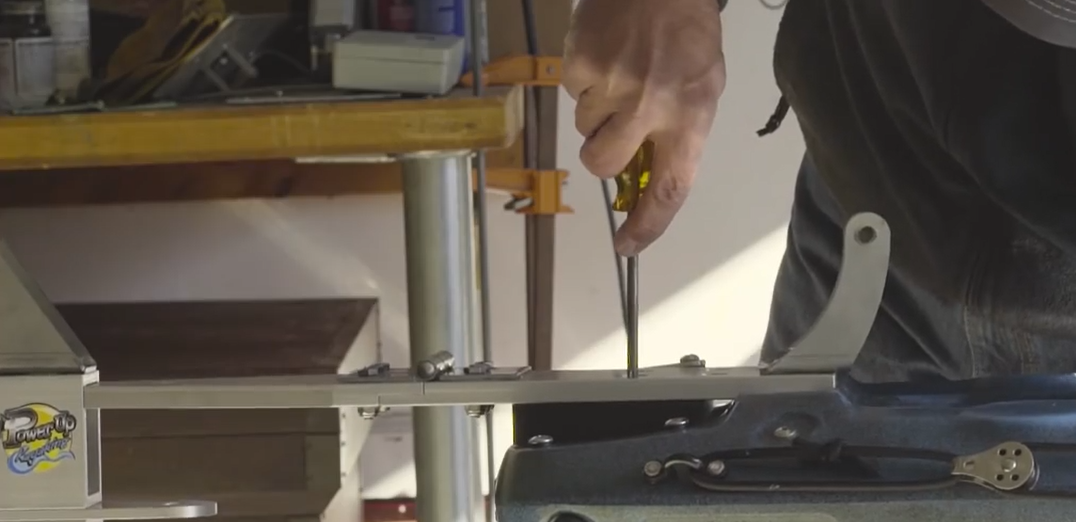
We have electric bicycles, so why not electric kayaks? After all, not everyone can row a kayak, but they should still have the option to ride on the water comfortably. This is exactly the idea behind PowerUp Kayaking. The company’s founder, Mark Schmidtke, uses a range of 3D Systems’ technologies to outfit kayaks with his patented custom mount system that allows for a trolling motor to be added. By simply modifying a mounted base plate to the kayak’s interface, Schmidtke has been able to go from customizing one kayak to opening a business working with a wide range of watercraft.
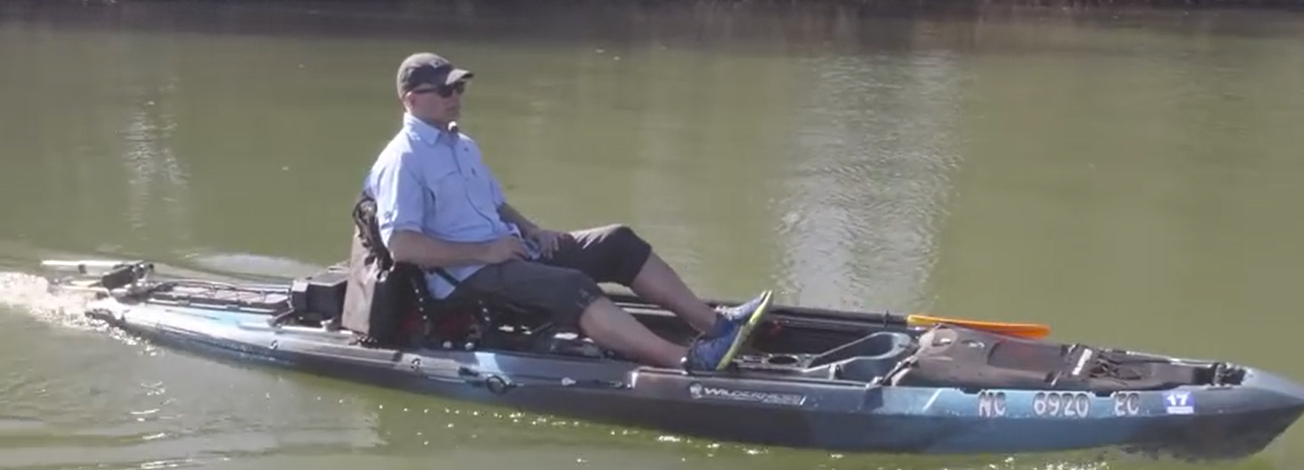
In a YouTube video, which you can see below, Schmidtke summarizes the initial challenge that led him to try 3D Systems’ products:
“When I decided to commercialize the mount, I noticed right away that I was going to have challenges with the universal adaptation of the mount to the stern of the kayak. What I needed was to create an interface between my base plate and the surface of the kayak.”
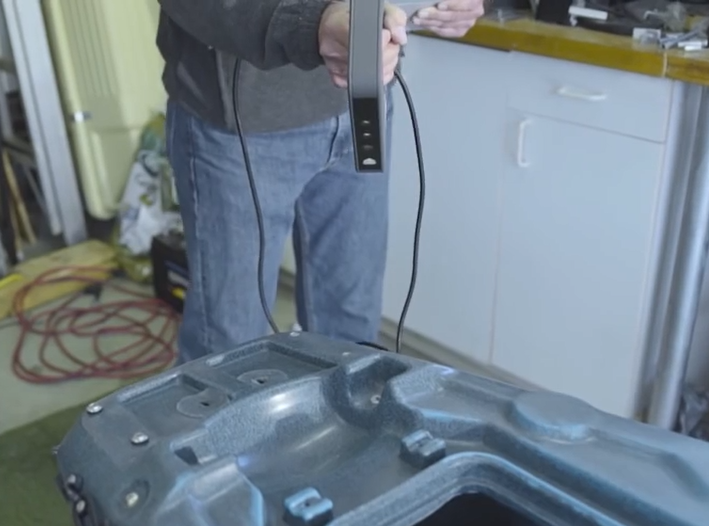 The first 3D Systems device that Schmidtke came across in his research for the project is the Sense 3D Scanner. Recently re-released, the latest Sense uses the Intel RealSense camera array; color and scanning range are both improved in this latest version. Also, Sense software improves 3D data editing and has a direct link to Sketchfab for users to upload their 3D data.
How did the scanner help Schmidtke with his project? First it retrieved a digital framework for the kayak interface. Once the kayak was scanned, Schmidtke used the Boolean subtraction process of Geomagic Design to carve a contour from a plain block mount. Then, in a set-up that can best be described as an optimal digital desktop workstation, the design was 3D printed in durable Nylon using the CubePro® 3D printer.
Here Schmidtke explains his design process in his own words:
“I acquire the model and save it as an STL file and upload it to my desktop computer where I use Geomagic Design, a software, a very sophisticated software… I use their Boolean subtraction within the software to subtract the model within the kayak surface from the block or platform.”
Overall, Schmidtke credits 3D Systems’ products — a scanner, software, and 3D printer — for his ability to prototype and create functional pieces:
“I am at a point in my business where I am still at a very low volume. The cost that would be associated with prototyping and creating really functional pieces at this point could be prohibitive for me. So 3D Systems gives me a way to do that easily and very cost-effectively.”
If you are interested in getting your own kayak “powered up,” or you want to consider one of the company’s DIY kits, you can check the website out here. For more information, also look at the below video to see Schmidtke making and then cruising on the water in his own powered-up kayak. What do you think of these watercraft? Discuss in the Powered Up Kayak & 3D Systems forum over at 3DPB.com.
Subscribe to Our Email Newsletter
Stay up-to-date on all the latest news from the 3D printing industry and receive information and offers from third party vendors.
Print Services
Upload your 3D Models and get them printed quickly and efficiently.













You May Also Like
Creality K3 Opens for Pre-Order at $849, Advancing Multi-Color 3D Printing
Creality has officially opened pre-orders for the Creality K3, its latest flagship K Series 3D printer, starting at $849 in the United States. Recognized as an IFA Innovation Awards 2026...
Prusa Core One L+: A Worthy Upgrade?
Disclosure: The Core One L+ was provided to me by Prusa3d free of charge for the purpose of this review. I have not received any other compensation. All opinions expressed...
Prusa Upgrades Its Lineup with CORE One+ (Gen 2), CORE One L+, and XL+
Prusa Research has updated its high-end desktop 3D printer lineup. The company is offering new and improved versions of the machines it targets at industrial and power users, with the...
Zaha Hadid Architects Print 6M Model with WASP’s Robotic Arm Solutions
Zaha Hadid Architects (ZHA) have successfully used WASP 3D printers to make a 6-meter-tall model of an aircraft control tower. Zaha Hadid Architects’ Tech Lab made the tower in-house for the ZHAviation...