Eat Yourself! Eclectical Engineering Shows You How to Make a 3D Printed Jello Mold of Your Own Head

As a whole, humans seem to have an odd and disturbing desire to eat our own faces and those of our loved ones. Ever since screen-printed cakes became a thing, we’ve been gleefully plastering our likenesses all over things that we’re about to chomp into. Thanks to 3D printing, we’ve gone even more crazy with this habit – from 3D printed selfies on a stick to cookie cutters shaped like your head, there seem to be no limits on the ways we can turn ourselves into food. Perhaps it’s subconscious preparation for the zombie apocalypse? Whatever the psychology behind it, it seems to be a trend that’s getting bigger, for better or worse.
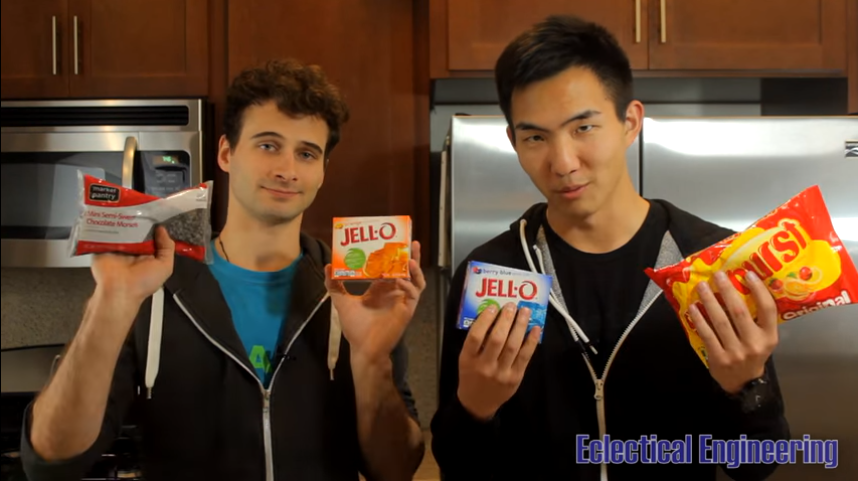
 The enterprising engineers from Eclectical Engineering have taken advantage of this odd human predilection in their latest experiment. You may remember David and Ryan from a few months ago when they documented the process of building a pneumatic cannon and shooting a GoPro camera out of it. That was the engineering team’s debut project video; since then they have gone on to produce additional experiments such as an ultra-flammable, seriously-don’t-try-this-at-home LED cloud lamp, and, in their newest production of weird science, they’ve used 3D technology to create some slightly creepy selfie Jello molds.
“Because, after all,” comments David, “nothing exudes confidence more than extreme narcissism.”
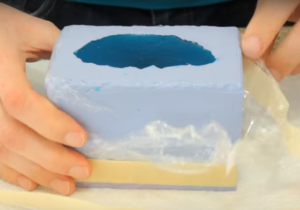
To start, the lads scanned themselves with a handheld 3D scanner, although they add that a smartphone and some free 3D software will do the trick just fine. Once they settled on scans that they liked, they printed their 3D selfies on a MakerBot. They then placed their selfies into boxes made from foam board, poured in a silicone compound, and waited for it to harden. After letting the molds cure for six hours, they broke them open, and that’s when the fun part started. David and Ryan bought several materials to experiment with, including wax, chocolate, butter, and Jello, which they then poured into the molds.
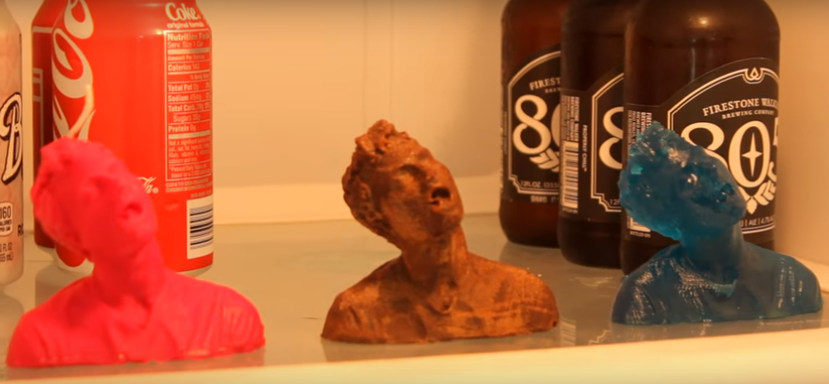
The results were mixed. The most successful seemed to be chocolate, which held its shape well, and wax also held up nicely, if you’re interested in setting yourself on fire rather than devouring yourself. Ice was successful, which strikes me as an excellent way to fool people into thinking you’re a master ice sculptor the next time you host a party. Jello worked…interestingly. It held its shape, but produced a rather bobbleheaded effect.
“This didn’t work well because Jello is actually more sugar than gelatin,” the team explains. “We recommend trying this with actual gelatin mix.”
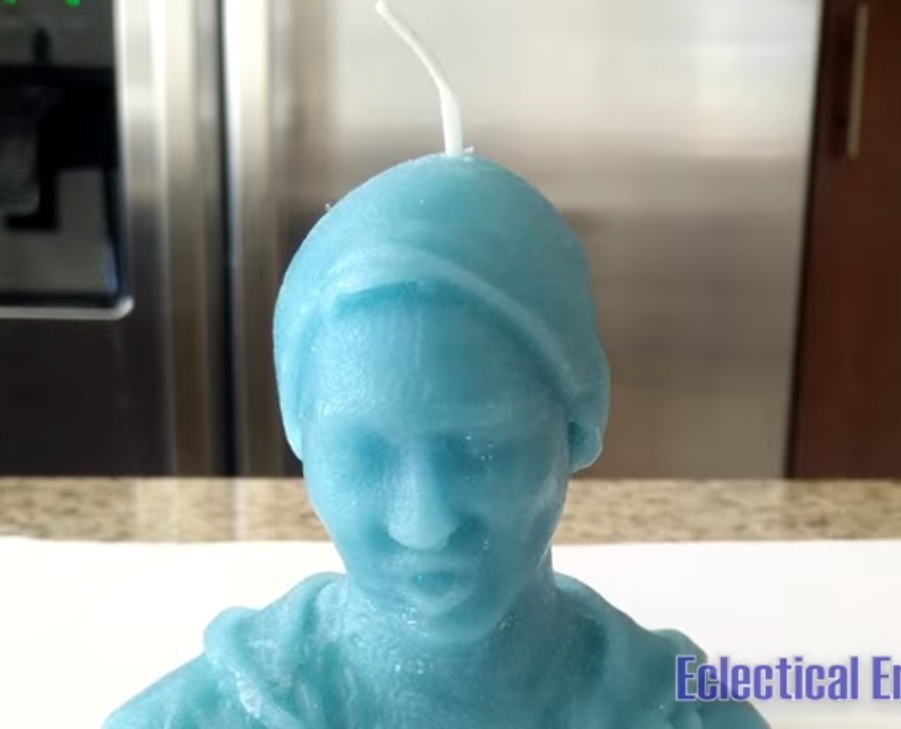
All in all, this looks to be a relatively easy – and safe – experiment, if you’re looking for a new way to make yourself consumable. Full instructions will soon be available on Eclectical Engineering’s website, as with their other projects. While you might wish to eat your Jello head (really, I’m not judging – much), David and Ryan decided to go a more fun route, setting their printed selves on fire, running them over, throwing them out windows, firing them out of their now-famous GoPro cannon, and overall reveling in their destruction. You can watch a video of the whole process below. Is this something you’d like to snack on? Discuss in the 3D Printed Jello Selfie forum over at 3DPB.com.
Subscribe to Our Email Newsletter
Stay up-to-date on all the latest news from the 3D printing industry and receive information and offers from third party vendors.
Print Services
Upload your 3D Models and get them printed quickly and efficiently.











You May Also Like
EOS Invests $3M In Its Texas Manufacturing & Logistics Facilities to Serve North American Customers
The trajectory of reshoring under President Trump has been largely a mixed bag so far. While tariffs still seem to be doing more harm than good to the U.S. domestic...
At AIAA SciTech 2026, 3D Printing Was Part of the Workflow — Part I
The AIAA SciTech Forum 2026 brought much of the aerospace community together in one place. With roughly 6,000 attendees, 115 exhibitors, 21 sponsors, and nearly 3,000 technical paper presentations, the...
3D Printing News Briefs, January 21, 2026: Scanning Inspection, Manufacturing Upskilling, & More
In 3D Printing News Briefs, we’ll start with 3D scanning news from Artec 3D. Then, Nanoscribe opened a demolab in Shanghai, and The Ohio State University Center for Design and...
Camp Lejeune’s II Marine Expeditionary Force Innovation Campus: An Existing Model for the U.S.’s Future in Additive Manufacturing
A recent article in Military.com highlights the II Marine Expeditionary Force (MEF) Innovation Campus, located at Marine Corps Base Camp Lejeune in North Carolina. It provides a good touchstone for the...