3D Printed Leg Allows Completely Natural Movement for Injured Whippet

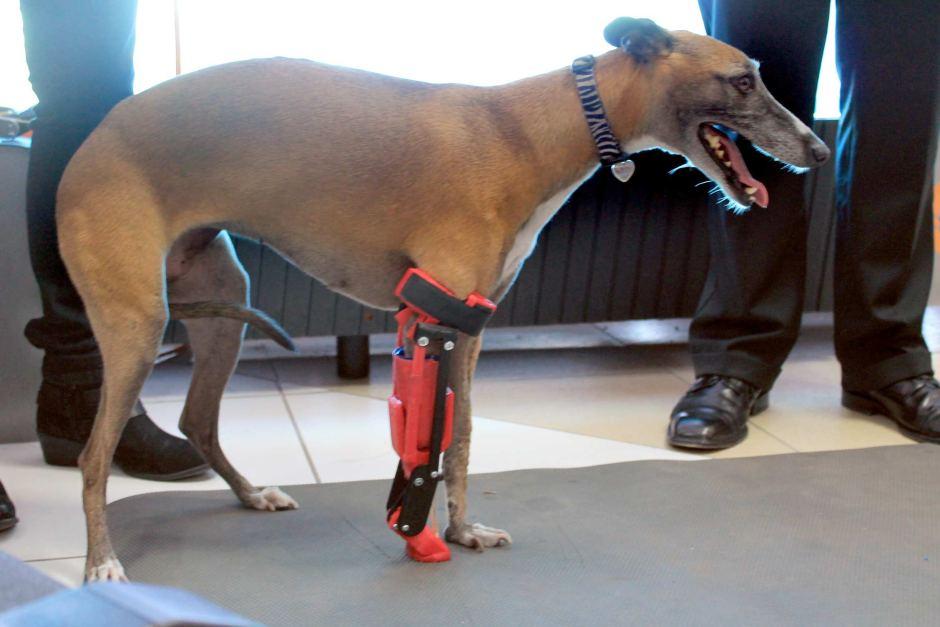 Whippets are graceful, leggy dogs related to greyhounds, and although they are smaller, they can run just as fast as their larger counterparts. In fact, they can reach speeds of up to 40 miles per hour and can accelerate faster than any other dog in the world. In short, whippets are born to run. But a whippet named Romina lost her ability to run in 2013, when she had a terrible accident with a lawnmower in Brazil. Veterinarians were able to save her left leg, rebuilding it with titanium plates, but she lost all movement in her leg. The right leg had to be amputated completely.
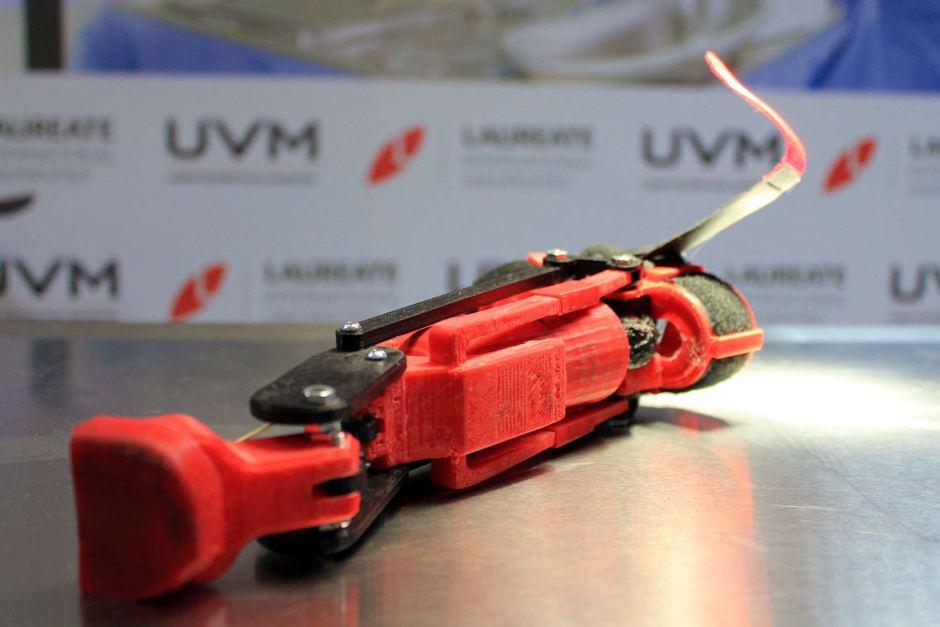
Romina’s distressed owners knew there had to be a better way to help their dog, so they began searching for alternatives, which they found at the Universidad del Valle de Mexico’s Veterinary Hospital (UVM). Dr. Beremiz Sanchez surgically removed the original prosthesis and, with the help of a team from UVM, designed a 3D printed prosthesis that would allow Romina to move her leg in the same way her natural anatomy would. The first articulated prosthetic leg in Mexico, the device took six months to design and prototype, but the extra time seems to have been worth it.
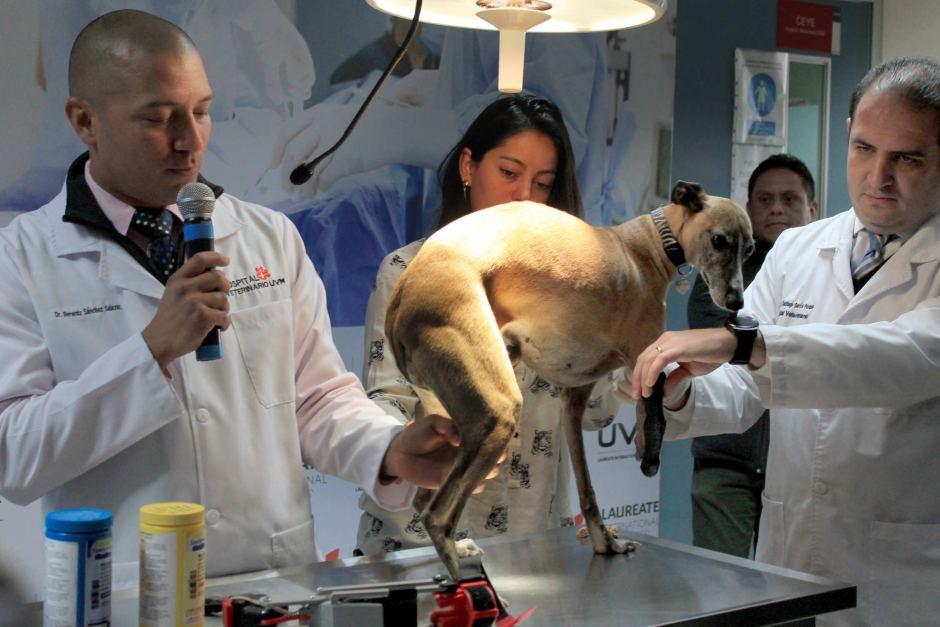
“When I put it on I see she feels happy with it, in spite of the fact she is learning to work with it,” said Silvia Valdez, the mother of Romina’s owner. “But I don’t see that it bothers her. She is trying to walk. She even supports herself more on the prosthesis and rests the other leg, so I’m happy about that. She’s starting to balance her weight on the other side.”
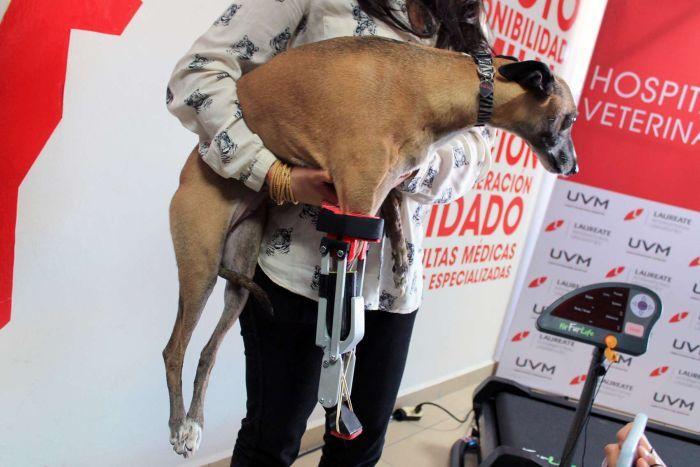
 Romina definitely has some challenges ahead; she’ll need a lot of practice before she learns to walk naturally with her new leg. The Veterinary Hospital has a rehabilitation and physiotherapy clinic, where Romina will spend some time while she adjusts.
“When she flexes her elbow, the whole prosthesis flexes and so she has to learn to make this movement in order to learn how to use it,” said Fernanda Ortiz, head of the department of rehabilitation. “Obviously, we’re unable to tell her ‘flex and walk normally with your elbow’, because she doesn’t understand. So it’s very important for us — through exercises and indications — to show her how to do it.”
UVM created two prototypes for the prosthesis: one printed with ABS, the other with polycarbonate. Once Romina has fully adjusted to walking with a prosthetic limb, a final model will be printed out in aluminum and covered with a skin-like material, so it will not only function like a real leg but look like one as well. It’s amazing how far animal prosthetics have come, in such a short amount of time. Not long ago, prosthethic limbs for animals were stiff or sometimes minimally flexible devices that allowed the animals to walk, but not to restore natural movement. Without 3D printing, it’s unlikely that fully jointed prosthetics like Romina’s could exist.
“When we have the 3D model of the patient’s limb, we are able to adjust the size of the piece to the patient, in terms of millimetres,” said Santiago Garcia, great species coordinator at UVM and an expert in prosthetics. “It’s a prosthesis which is designed especially for this patient. Secondly, and this is very important, it allows us to adjust it quickly. If I re-print a piece and I detect it has, for example, 2 millimetres in size I have to repair, it’s much easier for me to print it in a 3D printer than to redesign it, the emptying, the mould and the whole traditional process.”
UVM’s capabilities aren’t limited to just dogs or cats, either. Veterinarians at the clinic have said that they expect to soon be able to design custom prosthetics for species like turtles and crocodiles. Tell us what you think about this wonderful new development for Romina in the 3D Printed Prosthetic for Romina forum over at 3DPB.com.
Subscribe to Our Email Newsletter
Stay up-to-date on all the latest news from the 3D printing industry and receive information and offers from third party vendors.
Print Services
Upload your 3D Models and get them printed quickly and efficiently.













You May Also Like
HG Laser & The Overlooked Sources of China’s Advanced Manufacturing Strength
Chinese state-owned enterprise (SOE) HGTech (Huagong Tech) just reported that it achieved record revenue in H1 2026, amounting to just over $1 billion. The company credited the results to success...
3D Printing Financials: $28M in China, U.S. Deals and a Metal AM Comeback
Money continues to go into additive manufacturing (AM). From a $30 million raise for a Chinese metal 3D printing company to new funding for naval AM and a European company...
AMAsia Pulse: AM Investment Picks Up Across Asia-Pacific
The first half of September brought fresh investment and expansion activity across Asia-Pacific’s additive manufacturing sector. China’s Xinjinghe secured funding for an aerospace AM hub, South Korea’s Lincsolution outlined plans...
3D Printing Market Hits $4.48B After Six Straight Quarters of Growth
The additive manufacturing market continued to grow in the second quarter of 2026, adding another quarter to what is becoming a much more consistent expansion for the industry. Worldwide revenue...