Fuel3D Presents Several In-Development Products at CES 2016


 CES 2016 is well underway, and announcements, revelations and releases are rolling in from every corner of the 3D industry. Several companies have announced the imminent release of brand new printers and printer materials, and others are teasing upcoming developments. One company to tease the promise of good things to come is Fuel3D, the corporation behind the successful SCANIFY handheld 3D scanner. At their booth in the Las Vegas Convention Center, Fuel3D shared with the public some interesting new technology to come out of their research and development department.
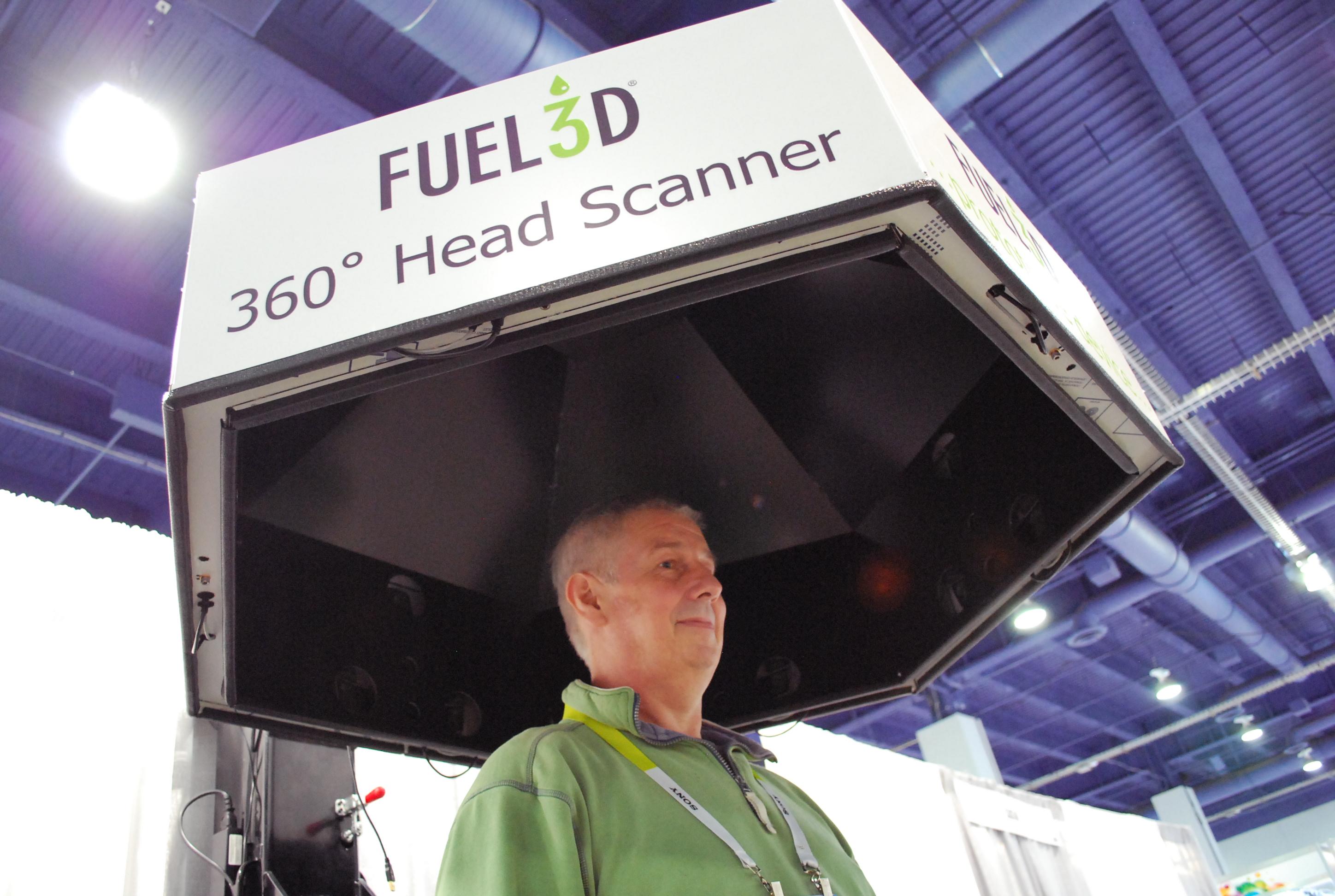
One of the developments on the table is a hand scanner, not to be confused with a handheld scanner like SCANIFY. This device will be designed to 3D scan the hand, for purposes such as the creation of prosthetics, custom jewelry and cosmetics. Another new introduction is a 360 degree head scanner, for which Fuel3D has already developed a prototype. The prototype, a large, umbrella-like device which rotates around the head of the person standing beneath it to get a full scan, is currently on display at CES. Potential applications, according to Fuel3D, are the design of visual effects, custom headgear, and equipment for gaming and virtual reality.
New software is in the works, too. Right now, it seems as though every 3D software provider has its eyes on the cloud, and Fuel3D is no exception. The company is working on the development of a cloud based system for the purpose of processing 3D images for web based 3D scanning applications. Currently Fuel3D offers a desktop software suite, Studio, but more and more companies seem to be drifting away from desktop software and into the cloud. I don’t expect that desktop 3D software will become obsolete anytime soon, but there’s definitely a noticeable shift right now, and more and more companies seem to be realizing the need to keep up.
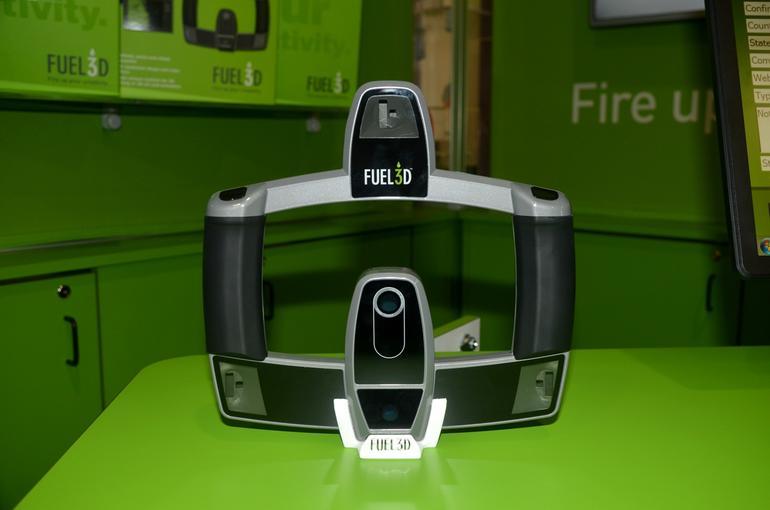 Fuel3D is another one of those companies that seemingly came out of nowhere to shoot to the top of the 3D industry. The founders began developing their technology as early as 2003 at Oxford University, but it wasn’t until a 2013 Kickstarter campaign that the company really burst onto the scene. SCANIFY won a lot of fans for its ease of use, portability and inexpensive price, and since its release the company has been augmenting it with accessories to make it even more appealing to customers.
The fact that Fuel3D is branching out into other types of scanners is intriguing. The company is far from being a one trick pony; they’ve built a lot of successful partnerships through their technology services, and their tech has been used in a wide range of industries from archaeology to medicine to fashion. As far as products go, however, Fuel3D is pretty much known for SCANIFY. But the success of that scanner, which was a Best of Innovation Awards Honoree at CES 2015, is a pretty good indicator that the company’s future product releases will be ones to pay attention to.
Subscribe to Our Email Newsletter
Stay up-to-date on all the latest news from the 3D printing industry and receive information and offers from third party vendors.
Print Services
Upload your 3D Models and get them printed quickly and efficiently.













You May Also Like
3D Printing News Briefs, October 10, 2026: Drones, WAAM, Ceramics, & More
We have a packed 3D Printing News Briefs for you this weekend! First, America Makes celebrated the recent National Manufacturing Day with 3D printed drones, and then it’s on to...
3D Printing News Briefs, October 3, 2026: Hypersonics, Hotends, & More
We’re starting off with defense in this weekend’s 3D Printing News Briefs, as Titomic was awarded a $5 million U.S. defense contract, and VulcanForms announced a partnership with Specter Aerospace...
The Part Is Only Half the Story: Why 3D Printing Needs a Digital Thread
A 3D printed part can generate a lot of information. The challenge is keeping track of it. Manufacturers need to know which design was used, what material went into the...
Advanced Manufacturing at IMTS 2026: 3D Printing and AI and Drones, Oh My!
Last week’s International Manufacturing Technology Snow (IMTS) in Chicago welcomed over 90,000 attendees to the jungle that is McCormick Place. With over 1.17 million square feet of exhibit space, and...