GRiP: University of Florida Student Follows Her Passion & Changes Teen Lives with 3D Printed Prosthetics

 Follow your passion. You’ve probably heard this as Oprah’s mantra, seen it on countless Facebook memes, and maybe even have it needlepointed on a pillow somewhere–but does that plan actually ever really lead anywhere? In the case of Jessica Bergau the answer is yes, undeniably so, and a number of teens can attest to this now that they are outfitted with 3D printed upper limb prosthetics.
Jessica was indeed actively looking for her passion, and found it. In the process she has made a profound difference in the lives of numerous teenagers who had spent their entire lives without a prosthetic limb, unable to do many of the tasks you and I take for granted on a daily basis–from holding a fork to grasping a videogame controller.
Motivated by an inspiring article she read in BuzzFeed, Jessica began exploring the idea of 3D printed prosthetics, and going far beyond just offering support or getting involved, she created an entire club specializing in making 3D printed hands and other assistive devices. A zoology major in her junior year at the University of Florida at the time, Jessica created the club, Generational Relief in Prosthetics (GRiP), with the support of UF.
“When you find that thing that you are super passionate about and you can just throw yourself into it, that feels great. It feels amazing,” says Jessica.
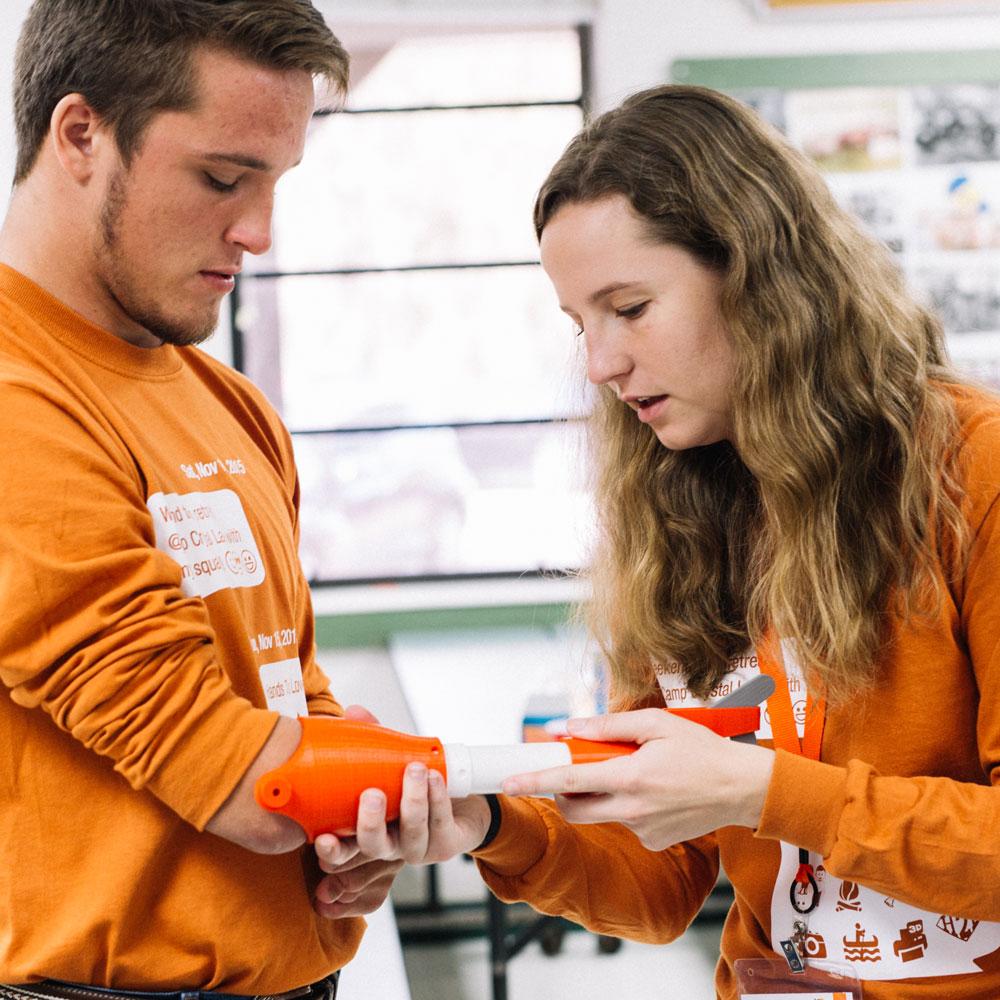
Jessica helping to fit Samuel Monarch with his 3D printed prosthetic from GRIP. [Photo: Thomas Mosely]
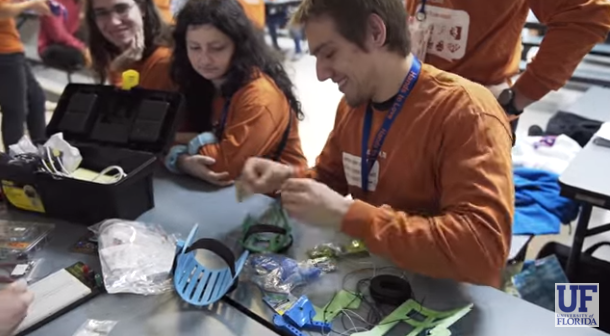
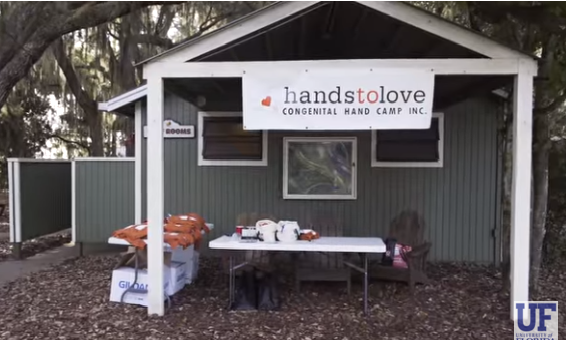
Those receiving the limbs are included in the process, making it even more inspiring for all involved. They get to help choose the colors and can even help assemble the 3D printed devices. Jessica instituted a camp called Hands to Love through the club as well, and during their first weekend camp, teens were able to gather from around the southeast trying on their new arms as well as learning about the incredible technology that was making such a difference in their lives.
“Many of these teens have gone their whole lives without prosthetics,” Jessica said. “Even if it isn’t something they are using every minute of every day, it still makes an impact.”
With student involvement and learning, the camp, and allowing recipients to be so involved, GRiP is making a comprehensive and unique difference.
“GRiP is such an amazing club. It’s such a blessing to have them come out and make us prosthetics with which we can do things–and things we’ve never done before,” says Samuel Monarch, a high school senior. “This afternoon I was able to grab a cup with a right hand and I’ve never been able to do that.”
 Monarch also understands the incredible benefit in the technology in that if a recipient grows out of their prosthetic, getting a new one is as easy as just tweaking the digital file a bit and 3D printing a new one. For previous and traditional prosthetics, this was often a time consuming, expensive, and arduous task–and to make matters worse, sometimes by the time a new prosthetic arrived, the young person would have grown again, deeming the device already too small, with all the effort gone to waste.
All of the devices are 3D printed, and Jessica says that sometimes they do incorporate different hardware into them as well.
“The main way that this was started was for kids, because kids don’t typically prosthetics because they grow so quickly,” says Jessica. “So when the 3D printing technology came about, they started using them for prosthetics because they’re colorful, they’re confidence builders, and they’re cheap to make.”
“The technology is moving so fast, even in the last two months we’ve created new devices ourselves through UF and the more students we bring into the club, the more growth opportunity we have.”
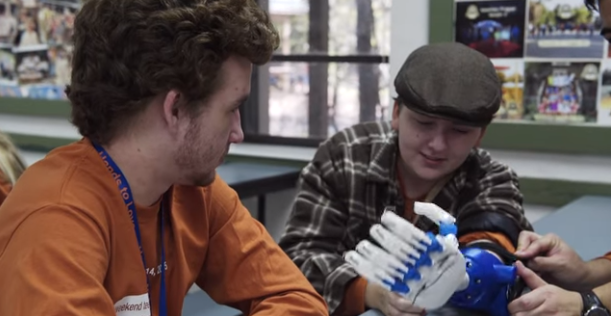 These aren’t the prosthetics most of us are used to seeing. Designers like Jessica have made the limb replacements cool and exciting for kids–and far beyond what we ever could have imagined previously. Often, those born missing limbs or with defects, or those who suffered accidents, were left with terrible self-esteem issues and a constant feeling of self-consciousness. Now, with a wide variety of 3D printed prosthetics available, kids often can’t wait to show them off. Rather than hiding, they are thrilled about displaying the devices and explaining how they were made. From beginning to end, the experience Jessica has created with GRIP is extremely positive and heartwarming–and there is a learning experience for all involved.
Subscribe to Our Email Newsletter
Stay up-to-date on all the latest news from the 3D printing industry and receive information and offers from third party vendors.
Print Services
Upload your 3D Models and get them printed quickly and efficiently.













You May Also Like
3DPOD 316: Beehive’s Gordie Follin on 3D Printed Engines and More
Gordie Folin had deep experience in engineering at Pratt & Whitney, GE, and GE Aviation before becoming the Chief Product Officer at Beehive Industries. Among his achievements, he served as the...
3DPOD 315: Dirk Simon, from BASF to Farsoon to FKM, and now Square New Business
Dirk Simon had already spent years in the chemicals industry before joining and pioneering BASF‘s 3D printing effort. We get to hear how that firm looked at 3D printing and...
Printing Money Episode 42: Q2 2026 Public Markets 3D Printing Earnings Analysis with Troy Jensen, Cantor
Welcome to Printing Money Episode 42. Troy Jensen (Managing Director, Cantor) returns, joining Danny Piper (Managing Partner, NewCap) to review Q2 2026 publicly traded 3DP/AM company earnings reports. Troy’s quarterly...
3DPOD 314: Debinding, Sintering, and Metal Binder Jetting with Stefan Joens, Elnik Systems and DSH Technologies
Stefan Joens of Elnik Systems sells ovens. Their debind and sintering equipment powers a lot of high-volume binder jet and MIM production. We learn about Elnik and its origins. But...