SpaceX Reveals That They 3D Printed One of The Main Oxidizer Valves in January’s Falcon 9 Rocket Launch

Elon Musk; some call him the Thomas Edison of our time, while others compare him to Tony Stark from Iron Man. Robert Downey Jr. even used Musk as his inspiration in portraying the character for the hit movie  series. There is no doubt about it, the man is the innovator of our time, the brains behind numerous advanced tech companies, and a hero to many.
Something you may not know, however, is that Musk is very excited about the future of additive manufacturing. In fact, he is so excited that his company, SpaceX, recently 3D printed the engine chambers for their new SuperDraco Thrusters which will be used to control their recently unveiled Dragon Version 2 spacecraft.
“Through 3D printing, robust and high-performing engine parts can be created at a fraction of the cost and time of traditional manufacturing methods,” said Elon Musk. “SpaceX is pushing the boundaries of what additive manufacturing can do in the 21st century, ultimately making our vehicles more efficient, reliable, and robust than ever before.”
Today, SpaceX revealed that prior to the use of additive manufacturing in fabricating the engine chambers for the SuperDraco, they had 3D printed another important engine component, which was used within the launch of the Falcon 9 rocket back in January of this year.

Falcon 9 Rocket Launch
The body of the main oxidizer valve, within one of the nine 1D engines found in the Falcon 9 rocket, was 3D printed. For those who are not rocket scientists, the main oxidizer valve is the valve which controls the flow of 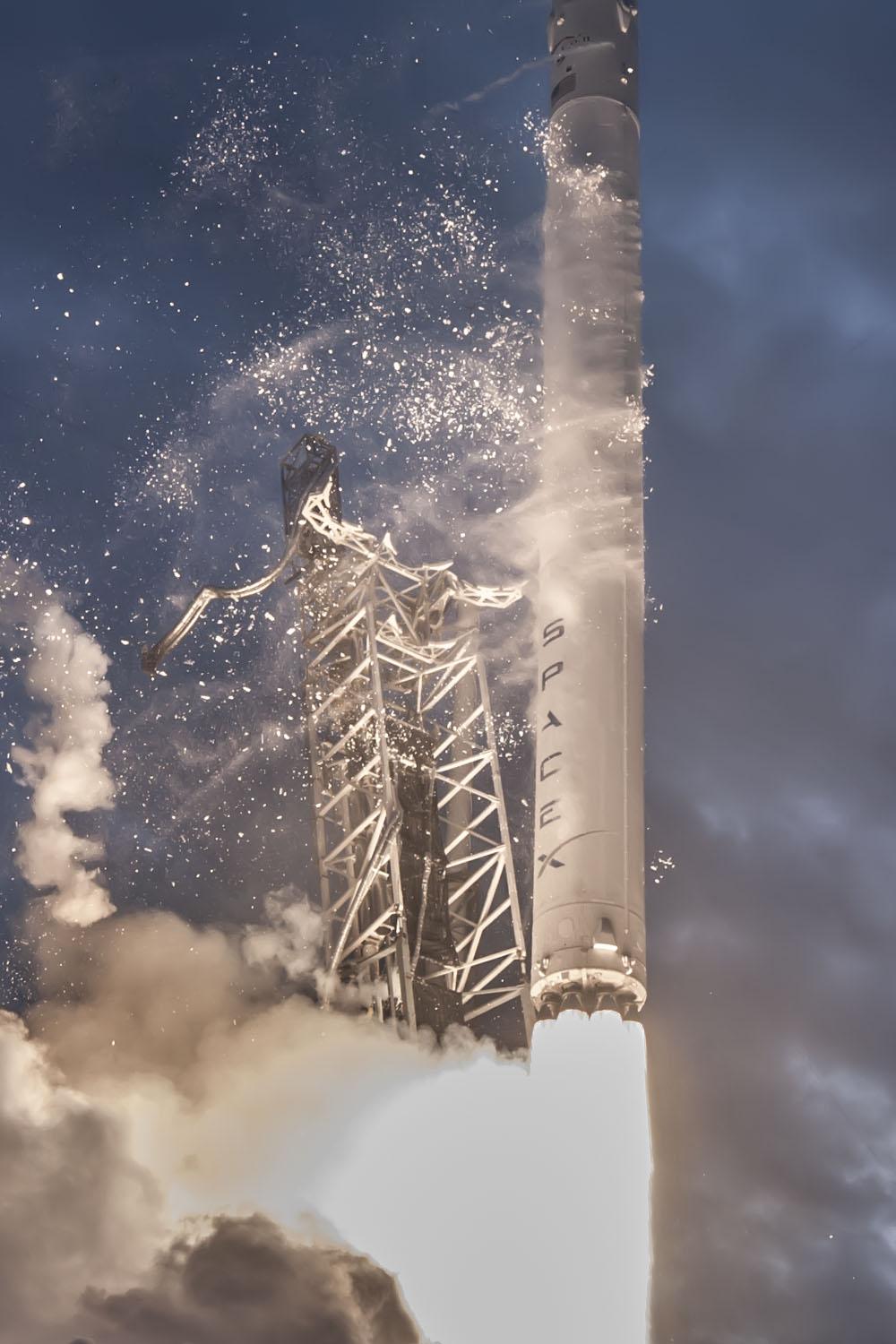 liquid oxygen as it enters the main combustion chamber within the engine. A faulty part could be catastrophic for any launch.
Needless to say, the mission back in January, tasked with lofting an Orbital-built satellite, namely the Thaicom-6 spacecraft, was a complete success. The 3D printed valve performed exceptionally well, under extreme temperatures and vibrations. SpaceX concluded, after a series of tests, that the 3D printed valve was actually superior to those valves manufactured by traditional means. It was stronger and had superior fracture resistance and ductility, while incredibly it took just 2 days to print, in comparison to traditional casting methods which would take months. The 3D printed valve will now be used on all Falcon 9 flights from here on out.
It certainly says something about the capabilities of additive manufacturing, when some of the most important components on some of the most high tech engines, are manufactured with such technology, under the watchful eye of one of the most intelligent engineers of our time.
Let’s hear your thoughts on this news in the 3D printing & SpaceX forum thread on 3DPB.com.
Subscribe to Our Email Newsletter
Stay up-to-date on all the latest news from the 3D printing industry and receive information and offers from third party vendors.
Print Services
Upload your 3D Models and get them printed quickly and efficiently.













You May Also Like
Bambu Lab Moves Beyond 3D Printing with R1 Laser Cutter
Bambu Lab has gone from one X1 printer, which did very well, to entry-level A1 systems, mid-market P2S systems, and larger H3Ds and more. They’ve also made systems that couple...
Stratasys Wins $27.6M in Patent Case Against Bambu Lab; Bambu Challenges Verdict
Update, September 21, 2026: This article has been updated with a statement from Bambu Lab responding to the verdict, along with additional information about the company’s ongoing patent challenges against...
Ski Lift Foundations Made With 3D Printing in Hemavan, Sweden
While most of the 3D printed construction hype has been around houses, we’re more bullish on infrastructure. By 3D printing in hard-to-reach areas, remote structures can bring infrastructure to new...
3D Printing News Briefs, September 12, 2026: Rebranding, Cybersecurity, Project Call, & More
We’ve got a lot of business news from ATLIX to start off this weekend’s 3D Printing News Briefs, with a new identify for its additive manufacturing (AM) portfolio and some...