This Instructable Converts MRI Scans to 3D Printable CAD Models to Improve Cancer Treatment

 We hear a lot here in 3D printing news about the great strides the technology has made in the medical field. I have personally written more than a handful of articles on how surgeons use 3D printed models to prepare for complicated surgeries. Sometimes these surgeries wouldn’t be possible if the doctor couldn’t access the totally accurate 3D model prior to the surgery. These models are also said to help calm anxious patients, as medical teams can sit down with patients and explain exactly what is going to be done to them in the operating room. Generally, because the 3D printed models are based on body scans, they take the mystery out of what might be found under the knife.
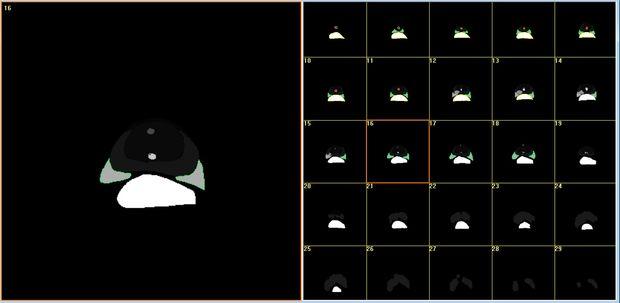
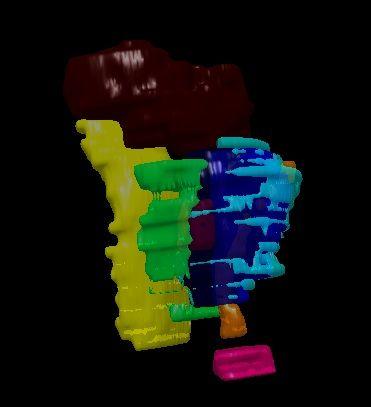
All that said, there are many MRI scans out there, and now, thanks to a recently posted Instructable, those scans can be turned into 3D CAD models thus making them 3D printable. This post is by “Selkey Moonbeam,” who is working with Professor Chris Lee at Olin College to turn 2D scans intro 3D models for use in cancer treatment (especially of the prostate). Beyond the aforementioned benefits of using 3D models, Moonbeam describes yet another way to use them:
“Before we 3D print the model, we make a slight modification: we extrude a series of small slots into the model: within the tumor, in the nearby prostate, in the neurovascular bundles. Then, when we print it out, we put tiny radiography chips into the model. This means that now we have a patient-specific device that we can shoot radiotherapy at. Doctors can use this to focus the beam and find out more about peripheral damage. The end goal of this process is to improve cancer treatment, particularly in prostates and through radiotherapy.”
I have read and written about a lot of 3D printed medical models, and this is the first reference I have heard to using radiography chips in models for exploring peripheral damage. What an excellent idea!
Moonbeam lays out thirteen steps to convert MRI scans into printable models. Step 1 shows that 3D Doctor, 3D Slicer, Netfabb, and Solidworks software is used, but in Step 2 Moonbeam also shows how free software can also be used in this conversion process. Step 3 shows how scans can be found on the Cancer Imaging Archive, which is a free searchable database of cancer images.
Steps 4-12 go into a lot of technical detail, taking you through the process of using your software to create your model. In Step 13, where 3D printing is involved, Moonbeam provides many ideas about how best to do this. There are challenges when it comes to changing CT scans to mesh data to a final printable STL file. Moonbeam proposes combining CT scan data from DICOM or a CT scan movie with free, open-source software such as InVesalius or Blender. Thankfully, there’s a Youtube video (see below) about converting a CT scan movie into a 3D mesh for this process.
Given the kind of dedication and innovation that Professor Chris Lee and Selkey Moonbeam show, we are that much closer to making cancer less traumatic for patients by making it easier for doctors to treat them. Discuss this story in the 3D Printing Cancer forum thread on 3DPB.com.
Subscribe to Our Email Newsletter
Stay up-to-date on all the latest news from the 3D printing industry and receive information and offers from third party vendors.
Print Services
Upload your 3D Models and get them printed quickly and efficiently.











You May Also Like
Scaling 3D Printing Takes More Than You Think; HP’s Webinar Looks at Making It Work Long Term
3D printing is no longer new. In fact, most manufacturers already know what it is, where it fits, and what it can do. But knowing the technology and actually scaling...
How AtomForm’s 12-Nozzle System Cuts Multi-Color FDM Transition Waste by Up to 90%
Pull up the print stats on multi-color FDM jobs. The number that stings isn’t time; it’s material efficiency. On six-color models, single-nozzle systems consume significant filament during transition flushing, expelling...
RAPID 2026: Democratizing Metal Laser Powder Bed Fusion 3D Printing with Mastrex
Aside from a quick mention in an episode of our Printing Money podcast, I didn’t know much about Mastrex. But when I heard that the company had developed a $39,000...
3D Printing News Briefs, April 25, 2026: Competition Winners, AI Platform, X2D Printer, & More
In this weekend’s 3D Printing News Briefs, AMUG announced the winners of its Technical Competition, and Authentise launched AI platform Whisper at RAPID. Bambu Lab wasn’t at RAPID, but launched...