New “3-D Printing: Design Solutions” Curriculum from Pitsco Education


 A targeted 3D printing curriculum is becoming more and more in demand, as educators gain exposure to the technology and see its numerous applications in the classroom. Mathematics, such as applied geometry, is highly compatible with 3D design and printing, but there are so many other educational applications as well in the fields of science, engineering, and fine arts.
There will probably be a time in the not-so-distant future when many schools have the equivalent of maker labs, and we will look back to our pre-3D printing schools days as that antiquated time period when students didn’t make their own projects. More companies are gaining traction in the curriculum development of STEM/STEAM education, and Pitsco Education is one of these emerging companies for 3D printing technology curricula.

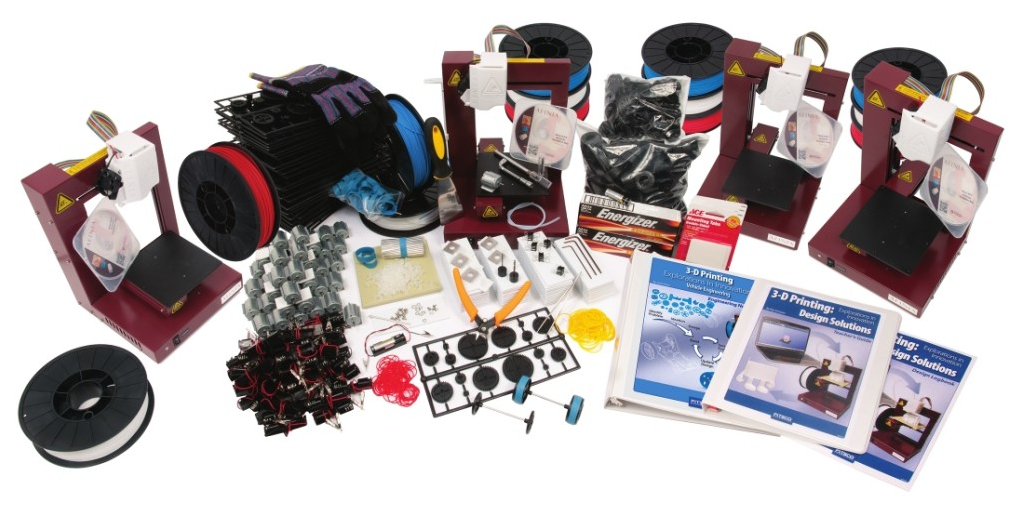
In 2013, Pitsco Education released “3-D Printing: Vehicle Engineering,” and it now offers a new curriculum, “3-D Printing: Design Solutions,” based on the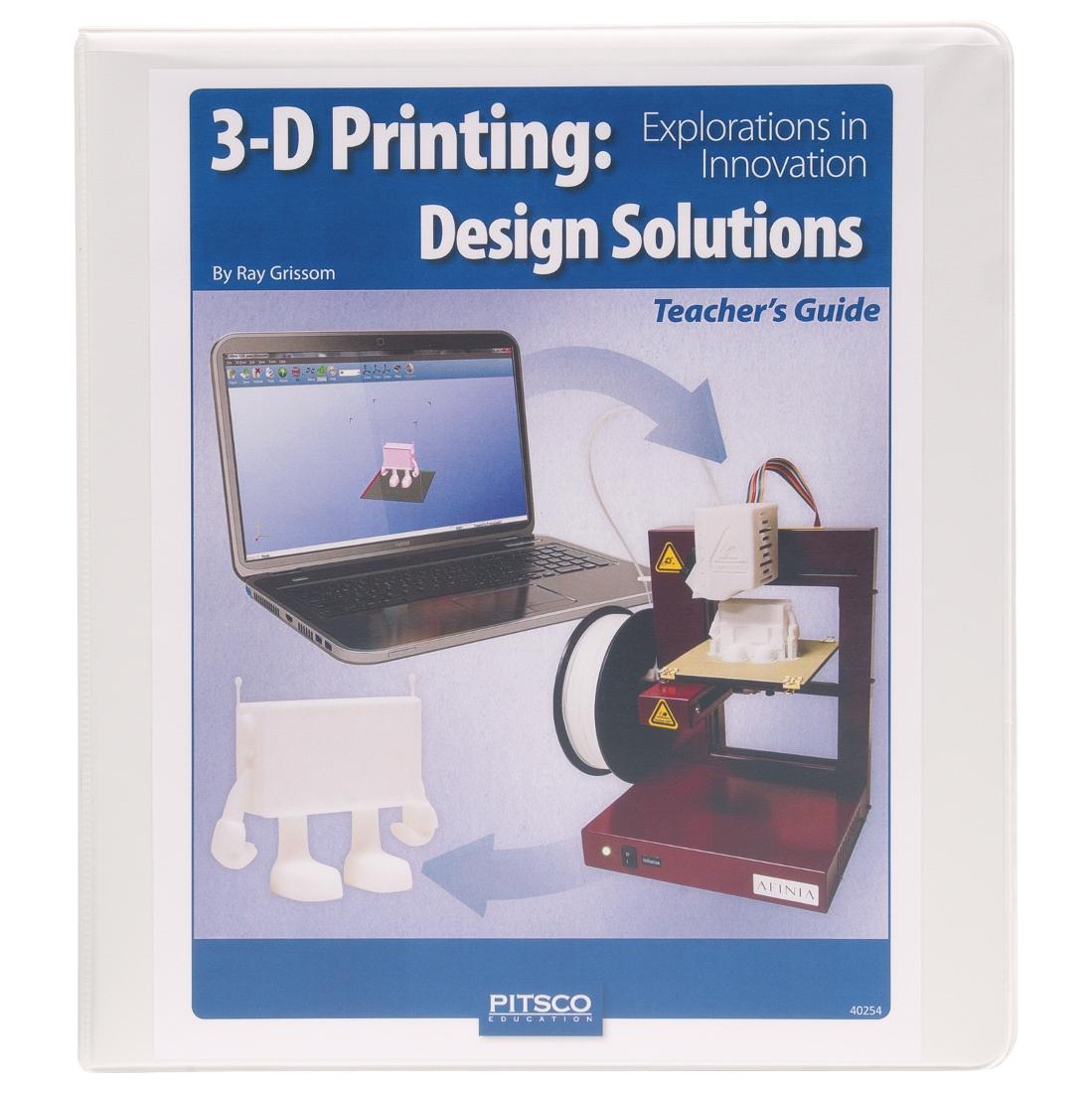 success of the initial curriculum.
“Design Solutions” teaches many different design facets for 3D printing and the unit uses Autodesk 123D Design software with cloud storage using a PC, Mac, or iPad. One aspect of the curriculum has students modifying an existing part and fitting it to a particular need. They then tackle a problem by teaming up to design parts from scratch as well. Students 3D print their designs and present them to the class as a way to both summarize the design and print experiences and learn from others too. One thing we know about 3D printing is how much can go right and wrong in the process, and students should be encouraged to experiment with this complex software and equipment as an engaged and open learning process that is ongoing.
Design is a big part of this curriculum, but what do you do once you’ve successfully printed your original prototype? As a major incentive and form of encouragement, there’s also lessons on how engineers prototype their 3D printed designs — covering patents, trademarks, and copyrights. Overall, it appears that the curriculum is intended to train students how to determine a need and function, design parts, print prototypes, and then pursue the necessary post-production paths to ensure patents are procured.
The author of the curriculum, Ray Grissom, summarizes his observations about why 3D printing is so special for educational projects in school. It helps children move beyond imagining to actually making the items they scribble, imagine, and dream about.
“It’s fascinating for kids,” says Grissom. “They can create different things and have them in their hand within an hour or so. If they can draw it, they can print it and hold it.”
Addressing ITEEA Standards for Technological Literacy, Pitsco’s newest 3D printing curriculum is available in a few different ways. You can purchase just the curriculum ($395) or a package ($8,945) that includes four 3D printers, filament, and other necessary items.
So if you are one of those teachers fortunate enough to have access to 3D printers already, or would like to convince your principal that it’s a wise investment, there’s no shortage of teaching ideas and materials available for all your 3D printing classroom needs.
Are you familiar with Pitsco Education, or have you used another 3D printing curriculum? Let us know what you think about 3D printing in schools in the Pitsco Education “3-D Printing: Design Solutions” Curriculum forum thread over at 3DPB.com.
Subscribe to Our Email Newsletter
Stay up-to-date on all the latest news from the 3D printing industry and receive information and offers from third party vendors.
Print Services
Upload your 3D Models and get them printed quickly and efficiently.













You May Also Like
UAS Additive Strategies Shows How Fast Drone Manufacturing Is Changing
The recent UAS Additive Strategies online event, hosted by 3DPrint.com and Additive Manufacturing Research (AM Research), brought together leaders from across the additive manufacturing (AM) and drone industries to discuss...
EOS, HP, Prusa, and Stratasys Sponsor UAS Additive Strategies Webcast on June 30
3DPrint.com and AM Research will present a live webcast, UAS Additive Strategies, on June 30, from 11 AM to 2:30 PM Eastern, and you can register here. The event is...
Why California’s 3D Printer Bill Worries the Industry: David Tobin Says “It Regulates a Tool, Not the Crime”
California’s AB 2047, a bill aimed at stopping the use of 3D printers to make firearms and illegal firearm parts, has passed the state Assembly and is now headed to...
RAPID Roundup 2026: New Machines and Market Moves
RAPID + TCT 2026 wrapped up yesterday, but the show floor proved there’s a lot happening across the additive manufacturing (AM) space, especially when it comes to new hardware and...