Ragnar Robotics to Release Open Source Educational Deltabot Platform – Details Revealed at RoboUniverse


Roboneer
Last Monday marked the start of the RoboUniverse Conference and Expo at The Javits Center in New York City. Twelve companies vied for a single cash prize, as well as complimentary investment and legal services. Voxel8 was the winner of the competition, and while all the entrants gave fascinating rapid-fire pitches for their startups, there was one company that stood out for me and has seemingly slipped under the radar in the 3D printing space. The company I’m speaking about is Ragnar Robotics.
Ragnar Robotics is a subsidiary of BlueWorkforce and is based in Denmark. They are developing a light industrial deltabot based robotic system, in collaboration with Aalborg University AAU, that features a parametric design and is configurable and scalable. This system is designed as a pick-in-place concept for the food industry, to handle foods in the last step of the manufacturing process and packaging. Their first offering is rather interesting. They are selling a limited number of prototypes for STEM programs, makers and researchers. Dubbed the Roboneer, it is an open-source hardware and software system for educational robot design. The files will be uploaded to Github, while the industrial version will be more closed off.
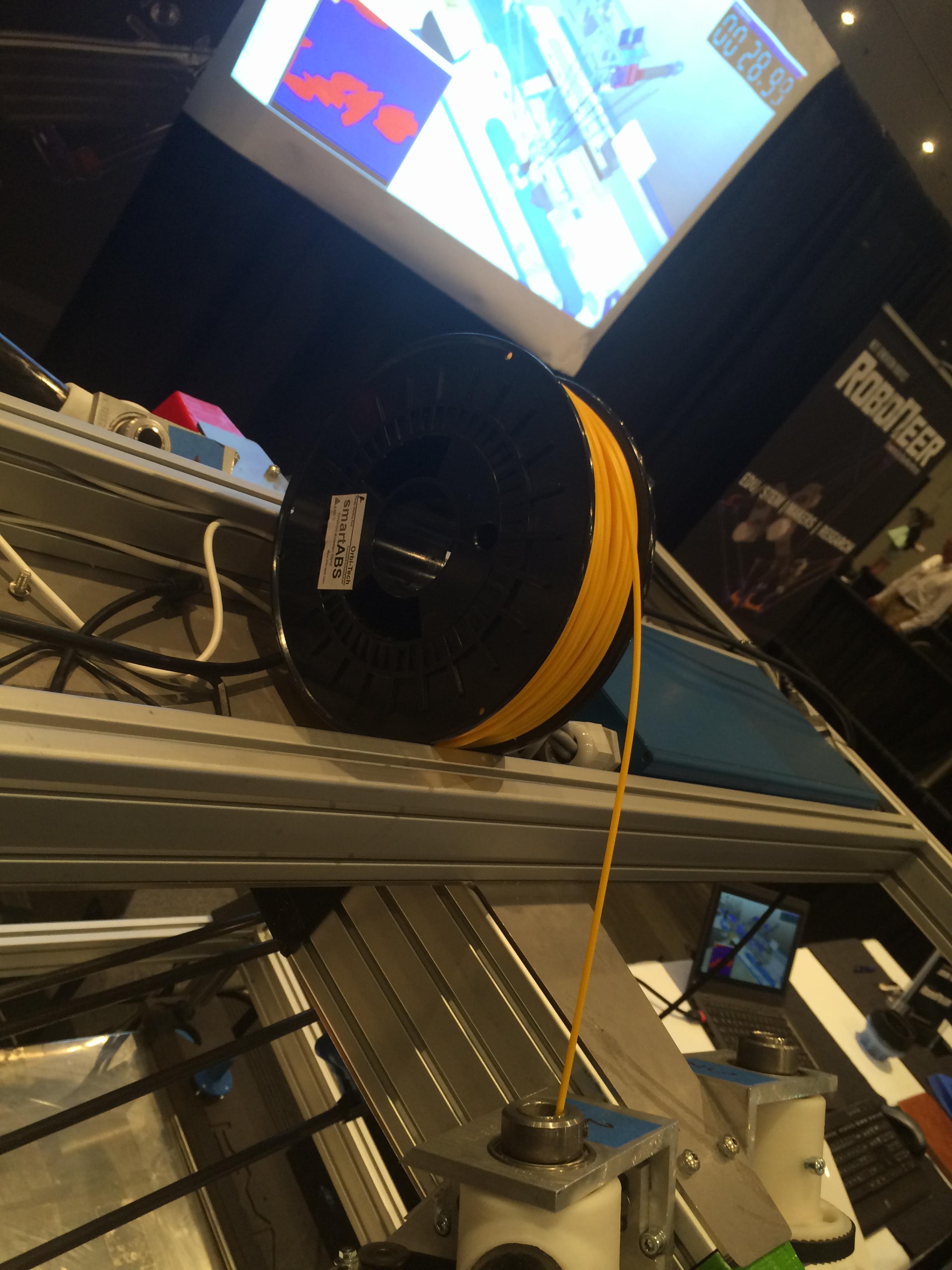
ABS on Roboneer frame
Ragnar has demonstrated the unit going through the motions of pick-and-place and has a video of the machine outfitted with a pen and drawing the company logo. At their booth in the Exhibitor Hall at RoboUniverse, they were not so subtly hinting at another use for their prototype. Mounted conspicuously on top of its 80/20 aluminum frame was spool of ABS filament. The filament was fed through the Roboneer’s hollow carbon fiber arms, but didn’t emerge out at the other end of the tube. There was nothing attached to the mounting plate at terminus of the arms. Clearly, an extruder would be a logical addition to this machine. Indeed, it was confirmed by one of Ragnar’s engineers that the Roboneer can be configured as a 3D printer.
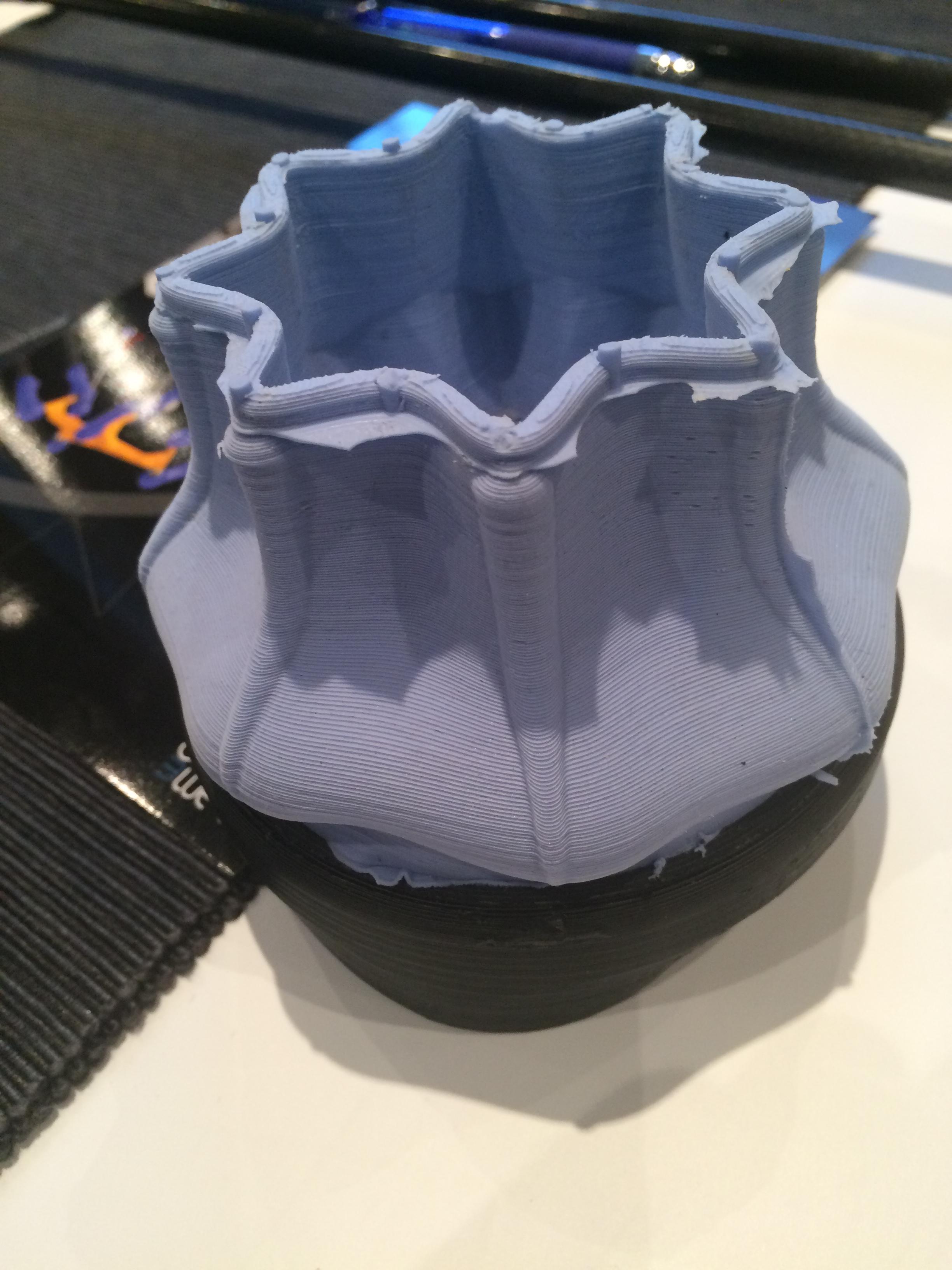
Soft robotic hand for pick-and-place of fruits and other delicate foods
The current prototype, as it debuted at RoboUniverse, was made with 3D printed parts, but the next version will replace that with molded fiber reinforced plastic. The machine’s tooth belts will also be upgraded, ensuring more fluid and precise movement. Unlike most deltabot printers, which generally have a circular workspace, Roboneer features an elliptical workspace within its rectangular frame. Notably, the deltabot’s arms protrude significantly from the top of the frame when it is in motion and its movement has to be somewhat restricted, so that the arms don’t crash into the frame. Since the platform is scalable and longer arms will increase its print area, the frame will most likely undergo a redesign, as well. The robot can also be hung from the ceiling and in their videos, Ragnar features a digital simulation of the bot operating without a supporting frame.
In the near future, Ragnar plans on 3D printing a full-scale surfboard in one piece with the Roboneer. Not coincidentally, the founder of BlueWorforce, Preben Hjornet, is an avid windsurfer. The Roboneer goes on sale on July 14th for $6,500.00 (including the 30% off show special) as a limited edition, starting with unit #11 and ending with unit #99. I think this is an excellent opportunity for creating a large format 3D printer at a reasonable price.
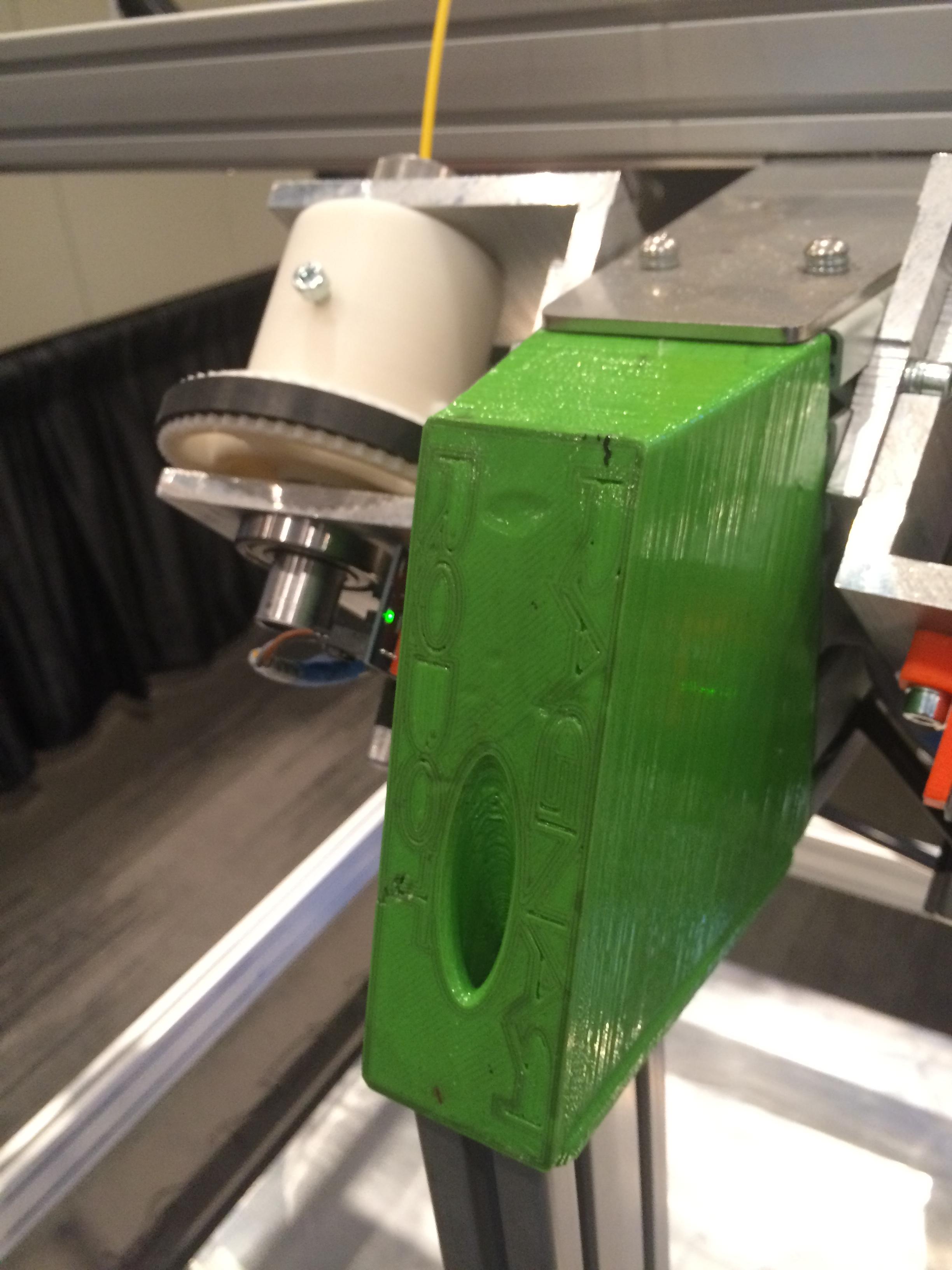
Roboneer 3D printed part
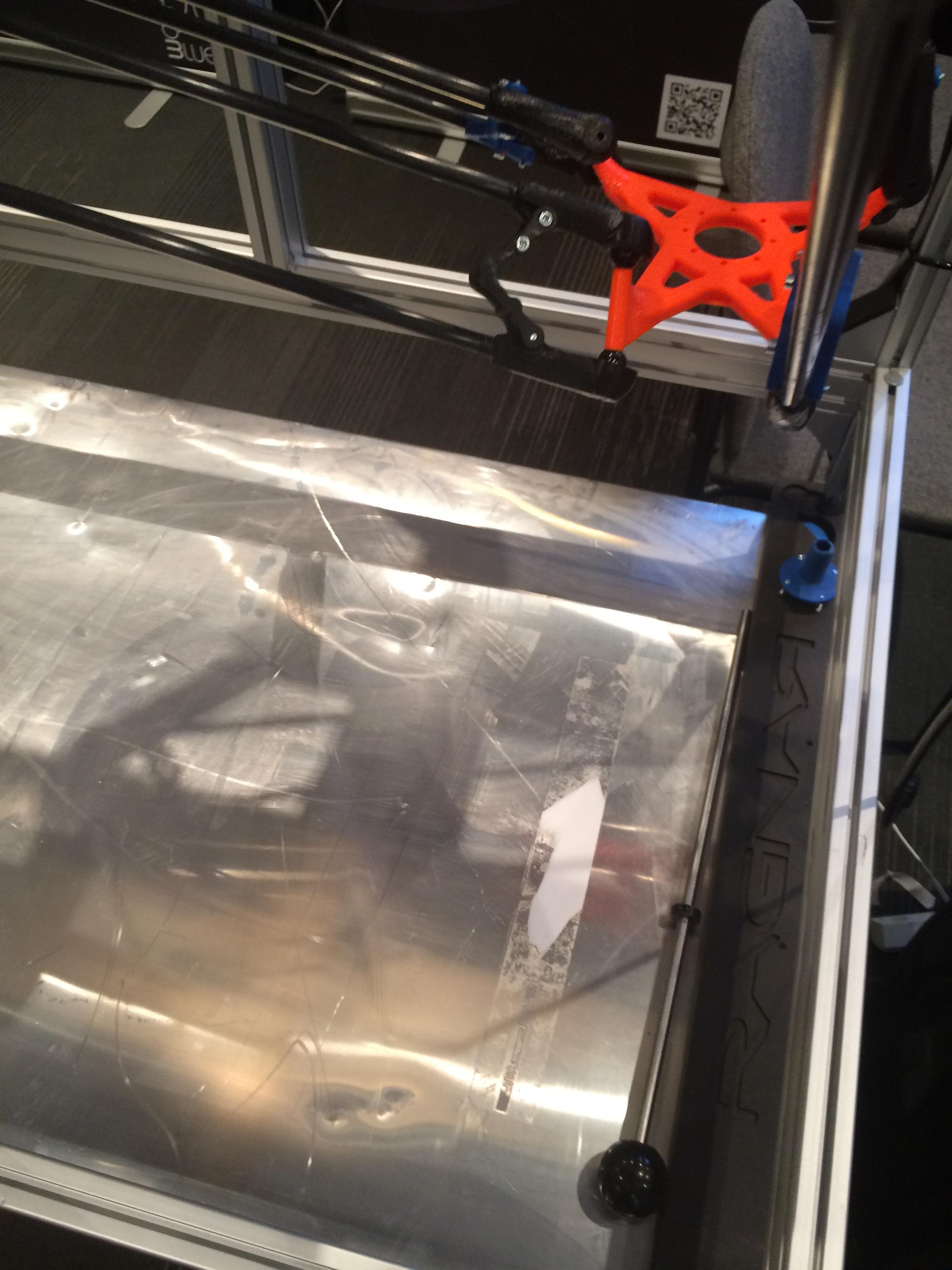
Roboneer print bed
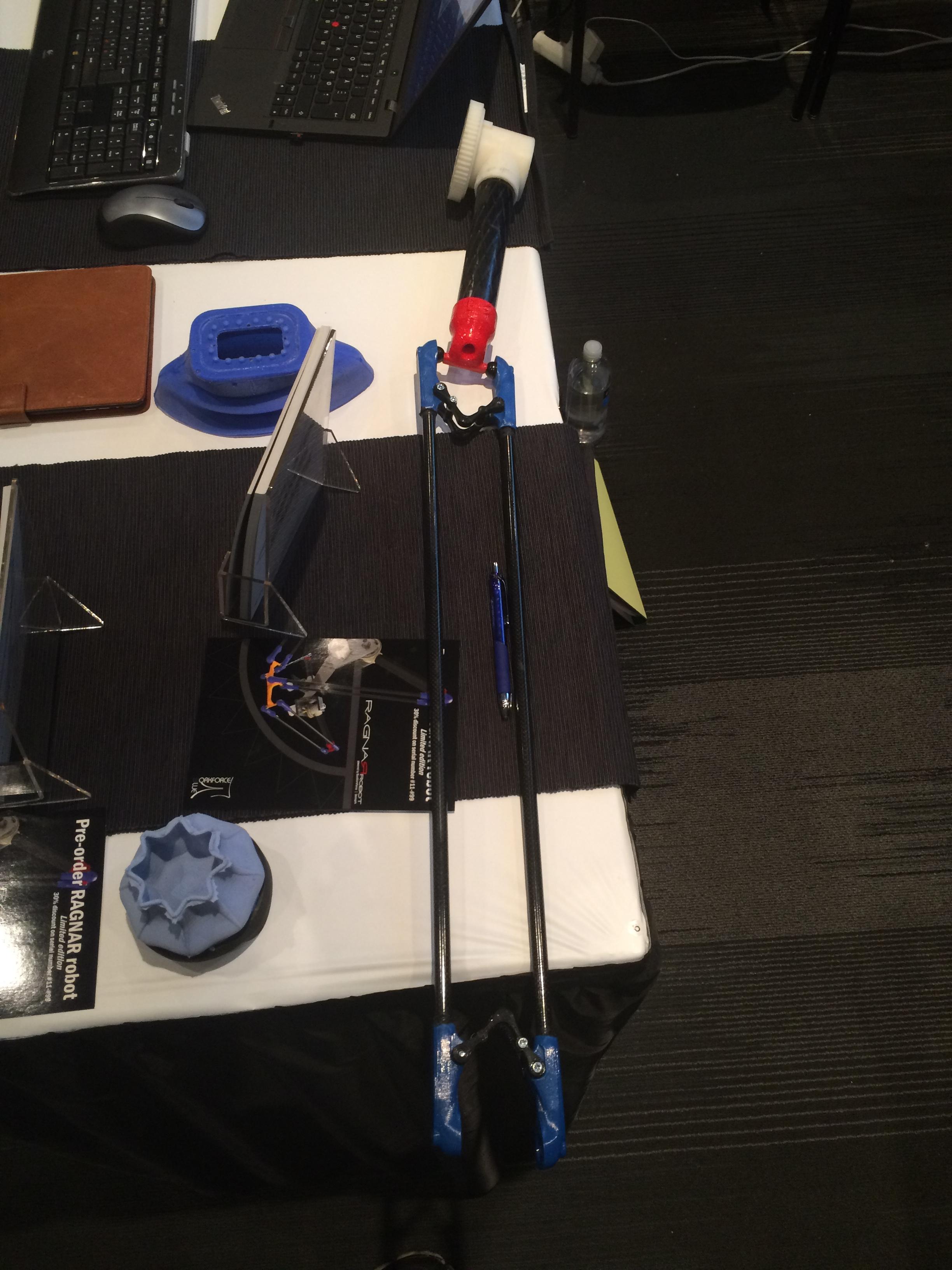
Roboneer delta arm
Subscribe to Our Email Newsletter
Stay up-to-date on all the latest news from the 3D printing industry and receive information and offers from third party vendors.
Print Services
Upload your 3D Models and get them printed quickly and efficiently.











You May Also Like
AM I Navigator and Leading Minds Launch AM Alliance at AMS 2026
At Additive Manufacturing Strategies (AMS) 2026, which just wrapped up in New York City yesterday, AM I Navigator and the Leading Minds consortium announced a new alliance aimed at accelerating...
Stratasys Unveils 3D Printed Dental Anatomical Model Preset
Stratasys has been working on digital anatomy for a number of years now. The company wants to make models that look and feel like the real thing. For doctors and...
The Real World Impact of Simulated Parts: Why Novineer and Stratasys Partnered on Performance Simulation for FDM
If one of the primary advantages of additive manufacturing (AM) is that it’s “digitally-native,” then the hardware will ultimately only be as good as the software guiding the process. That...
The Great AM Reset: Why Applications Will Decide Who Survives
For decades, the AM industry has been powered by an exciting narrative of endless growth and disruptive potential. We celebrated every new technology, every injection of capital, and every bold...